Every year, as board exams end, thousands of students across India start searching for one question: how to become a chef after 12th. And honestly, it is one of the best questions a food-loving student can ask. In 2026, India's food and hospitality industry is growing faster than almost any other sector, and the demand for trained, certified culinary professionals has never been higher.
But knowing that you want to be a chef and knowing exactly how to get there are two very different things. Most students have the passion. What they need is a clear, honest roadmap. That is exactly what this guide gives you.
This blog covers the complete 6-step journey from the day your boards end to the day you walk into your first professional kitchen. From choosing the right chef courses after 12th to landing your first hotel job, every step is laid out simply and clearly. Let us get started.
Let us address this directly because it is the first thing parents ask. Is a career as a chef a stable, well-paying, and realistic choice after 12th in India in 2026? The data says yes.
The gap between demand and supply of trained culinary professionals in India is one of the most significant in any industry right now. That gap is good news for students entering the field with the right training.
The students who thrive in culinary careers share three things: they chose the right course, they trained at a credible, accredited institute, and they took their fundamentals seriously. The students who struggle usually made at least one of these mistakes. This guide helps you avoid all three.
Most students think of a chef as a single career. In reality, there are several distinct paths, and the one you choose determines your course, your training, and your career trajectory. Here is a quick overview:
| Type of Chef | What They Do | Best Course to Start |
|---|---|---|
| Culinary Chef | Hot kitchen, savoury cooking, global cuisines | Diploma in Culinary Arts |
| Pastry Chef | Desserts, pastry, plated sweets, hotel pastry section | Diploma in Bakery and Pastry Arts |
| Bakery Specialist | Artisan breads, cakes, and commercial bakery operations | Diploma in Bakery and Pastry Arts |
| Private Chef | Cooking for individuals, families, or corporate clients | Certificate or Diploma in Culinary Arts |
| Food Entrepreneur | Running a restaurant, cloud kitchen, or food brand | Culinary or Bakery Diploma |
Do not rush this step. Think honestly about what excites you most. Is it a bustling hotel kitchen with savoury cooking and live service? Or the precision and creativity of a pastry section? The clearer you are here, the easier every subsequent decision becomes.
There are several chef courses after 12th in India available in 2026. Here is a clear comparison to help you match the right course to your specific goal:
| Course | Duration | Approx. Fees | Best For |
|---|---|---|---|
| Diploma in Culinary Arts | 12 Months | Rs 2.75L | Hotel, restaurant, and international kitchen careers |
| Diploma in Bakery and Pastry | 12 Months | Rs 2.95L | Pastry chef, bakery brand, and dessert specialisation |
| Certificate in Culinary Arts | 3 Months | Rs 1.25L | Quick career entry, upgrade to diploma later |
| Certificate in Bakery | 3 Months | Rs 1.50L | Fast bakery career start, test and upgrade |
The course level is only part of the decision. The four things that really matter are: first, is the certification internationally recognised? Second, how many hours per week do you actually spend in the kitchen? Third, do the faculty have real professional kitchen experience? Fourth, does the institute have active placement support after graduation?
Every culinary institute will tell you they are the best. Here is how to look past the marketing and evaluate what actually matters:
Before paying a single rupee, make sure you: visit the campus in person, speak to at least two current students, ask to see the kitchen, request a full fee breakdown including kit and certification, and confirm the accreditation directly with the institute.
TGCA's campus at Connaught Place, New Delhi, is open for free visits. Call 011-69240093 or visit tedcoeducation.com to book your slot before you make any decision.
Here is something every great chef will tell you: the best chefs in the world are masters of the basics. Not because they never learned advanced techniques, but because they spent so much time on fundamentals that those basics became effortless.
There is always a temptation to jump to the exciting advanced modules. Resist it. Executive chefs and hotel HR teams know exactly how to test a candidate's fundamentals in a practical assessment. Students who show strong basics get hired. Students who know impressive advanced techniques but cannot execute a perfect hollandaise do not.
Every culinary graduate applying for their first hotel job has a diploma. Not every culinary graduate has real professional kitchen experience. Your internship is what creates that difference.
Understanding how to become a chef in India after 12th includes understanding the role of an internship in your development. TGCA offers a structured international internship programme for eligible students. Graduates who complete international internships consistently earn more and progress faster than their peers. The global kitchen experience, professional network, and personal growth it provides are something no domestic training can fully replicate.
Your first job as one of the courses for chef after 12th grade will likely be as a Commis Chef or Kitchen Trainee. This is not a small role. This is where your real career begins. Here is how to stand out from day one:
Hotel HR teams and executive chefs shortlist candidates based on four things: the accreditation of your institute, your practical skill level, your attitude and kitchen discipline, and your internship experience. A City and Guilds-certified graduate from TGCA with a strong internship record ticks every box on that list.
Every step of this roadmap is supported by what TGCA offers. Looking for chef course in Delhi after 12th that actually delivers on its promises? Here is what TGCA brings to the table:
Applying to TGCA is simple. Visit the campus at M-72, Connaught Place, New Delhi, call 011-69240093, or go to tedcoeducation.com to fill in an enquiry form. A counsellor will guide you through choosing the right programme, understanding the fees, and confirming your 2026 batch date. EMI and instalment payment options are available.
Your first week at TGCA starts in the kitchen. Not in a lecture hall, not with textbooks, but in a real commercial kitchen environment with chef faculty who have worked in the same hotels you are aspiring to join. That is the TGCA difference.
Becoming a professional chef after 12th in India is a 6-step journey: decide your chef type, choose the right chef courses after 12th, pick a credible, accredited institute, master your fundamentals, complete a strong internship, and land your first kitchen job. Every step builds on the last, and every step is completely achievable for a motivated, passionate student.
The food industry is growing, the demand is real, the career paths are wide, and the students who act early are the ones who start building their careers while their peers are still deciding.
If you are genuinely serious about learning how to become a chef after 12th, the best thing you can do right now is visit TGCA's campus in Connaught Place, experience the kitchen, meet the faculty, and have an honest conversation about your goals. That single visit will give you more clarity than any amount of online research.
TGCA's 2026 batches are open now. Seats are limited. Book a free campus visit or demo class today and take the first step toward your chef career with confidence.
Yes, absolutely. No prior cooking experience is required. TGCA's curriculum starts from the very basics and builds you into a professional. Passion and commitment are the only real prerequisites for joining any of the programmes.
The fastest route is a 3-month Certificate in Culinary Arts from an accredited institute like TGCA. It gives you foundational professional training, a City and Guilds Level 1 certification, and placement support to enter the industry quickly.
Any stream works. Science, Arts, and Commerce students are all equally eligible for culinary programmes at TGCA. There is no stream requirement, no minimum percentage, and no entrance exam required for admission.
Freshers from accredited culinary programmes typically earn Rs 15,000 to Rs 28,000 per month. With 3 to 5 years of experience, this grows to Rs 40,000 to Rs 80,000, and senior chefs earn significantly more in top hotel chains.
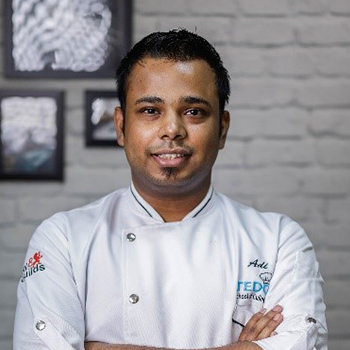
Bakery & Pastry Instructor
 Whatsapp
Click one of our representatives below to chat on WhatsApp or send us an email to
info@tedcoeducation.com

Counselor
Bakery and Pastry Courses
Counselor
Culinary Arts Courses
Click one of our representatives below to chat on WhatsApp or send us an email to
info@tedcoeducation.com
Counselor
Bakery and Pastry Courses
Counselor
Culinary Arts Courses

