Every April and May, something interesting happens across Delhi. The moment 12th board exams wrap up, search volumes for cooking classes in Delhi shoot through the roof. Students who have spent months buried in textbooks finally get a chance to think about what they actually want to do, and for thousands of them, the answer involves food.
Delhi in 2026 has one of the most diverse culinary education landscapes in India. From professional diploma programmes and short certificate courses to weekend hobby sessions and cooking and baking classes for enthusiasts, there is something for every kind of learner. The challenge is not finding a course; it is finding the right one for your specific goal.
This guide breaks down every option clearly, with fees, durations, what to look for, and how to pick the course that actually fits your life and career plans.
These are the most comprehensive programmes available and the best choice if you are serious about a professional kitchen career. A 1-year diploma in culinary arts or bakery and pastry arts covers everything from foundational techniques to advanced cooking, kitchen management, plating, and industry operations.
Best for students who want to work in hotels, restaurants, or start their own food business
Leads to internationally recognised certifications at accredited institutes
Includes placement support and often international internship opportunities
Hands-on kitchen training from the very first week
Certificate programmes are a great middle ground. They are shorter and more affordable than full diplomas but still give you structured, professional training in a specific area like bread baking, cake decoration, or culinary arts foundations.
Ideal for students who want to enter the workforce quickly
Can serve as a strong foundation before upgrading to a full diploma later
Fees are significantly lower than diploma programmes
Many students use certificate courses to test whether professional cooking is the right fit
Not everyone joining a cooking class wants to become a professional chef. Weekend and hobby cooking classes in Delhi are designed for home cooks, working professionals, or anyone who simply wants to improve their skills for personal enjoyment.
Typically run on Saturday and Sunday mornings or evenings
Cover specific cuisines, baking basics, or themed menus
Shorter commitment, usually 1 day to a few weeks per course
More affordable, typically ranging from Rs 2,000 to Rs 25,000
This is one of the most common questions students ask. Here is the honest answer:
| Factor | Online Courses | Offline Courses |
|---|---|---|
| Hands-on Practice | Limited, you cook at home with basic tools | Fully hands-on in a professional kitchen |
| Certification Value | Varies, often not industry-recognised | Stronger, especially from accredited institutes |
| Networking | Minimal | Strong, peers, chefs, and industry contacts |
| Career Placement | Rarely offered | Actively supported at good institutes |
| Best For | Hobby learning, personal skill building | Professional career launch |
One of the most searched questions in this category is cooking classes near me with fees, and for good reason. Fees vary widely in Delhi depending on the institute type, course level, and what is included. Here is a realistic overview:
| Institute Type | Course Type | Approx. Fee Range |
|---|---|---|
| Budget Institute | Short certificate, basic cooking | Rs 20,000 to Rs 60,000 |
| Mid-Range Institute | 6-month certificate, culinary or bakery | Rs 80,000 to Rs 1,80,000 |
| Premium Accredited | 1-year diploma, culinary or bakery | Rs 2,50,000 to Rs 7,50,000 |
| Hobby and Weekend Class | 4 to 8 week hobby programme | Rs 5,000 to Rs 25,000 |
| Online Course | Self-paced or instructor-led | Rs 2,000 to Rs 30,000 |
Chef uniform and kit, knives, tools, and baking equipment
Ingredients used during practical sessions
Course materials, recipes, and reference guides
Examination and certification fees
Access to the professional kitchen throughout the programme
Minimum 60 to 70 percent of course time should be practical, in-kitchen sessions
Faculty should be working professionals with real hotel or restaurant experience, not just academic instructors
Batch sizes should be small enough for individual attention, ideally 10 to 15 students per chef
The kitchen should be equipped with commercial-grade, professional tools, not domestic appliances
Internationally recognised certification, City and Guilds (UK), NSDC, or equivalent
Dedicated placement cell with active connections to hotels, restaurants, and food brands
Resume building and interview preparation workshops
Internship opportunities, domestic or international
Alumni network for ongoing career support
Delhi in 2026 offers a genuinely wide range of cooking courses, from professional diplomas and career-focused certificates to weekend hobby sessions and cooking and baking classes for passion learners. The key is matching the right course to your specific goals.
If a real culinary career is what you are after, do not just search for cooking classes in Delhi online and pick the first result. Visit a campus, talk to current students, sit in on a demo class, and experience the kitchen for yourself. That is the clearest way to know you are making the right decision.
Tedco Global Chefs Academy (TGCA)'s doors are open. 2026 batch seats are filling up right now. The sooner you visit, the better your chances of securing a spot in the batch that changes your life.
Book a free demo class or campus visit at TGCA, Connaught Place, New Delhi. The 2026 batches are open now, and seats are limited.
This prestigious 2-year chef program is specifically designed for individuals passionate about mastering the art of bakery and culinary sciences. Offering hands-on training through industry leaders, the program will help students gain valuable real-world experience along with an in-depth understanding of international culinary trends. Perfect for those looking to become pastry chefs, executive chefs, or hospitality managers, this culinary course is your gateway to a thriving global career.
Within the 24-month duration of this course featuring four semesters, you will take up:
Basic Culinary and Bakery Training.
Domestic Internship in India
Advanced Culinary & Bakery Training
International Internship
Focus study areas during the first two semesters include:
Essential culinary methods, like cooking techniques, knife skills, and flavor pairing
Food safety and hygiene practices
Basic bakery skills, like pastry preparation, cake decoration, and bread making
Students completing the first semester will be eligible to take up domestic internships at leading 5-star hotels and popular bakeries across India. During an internship, they can apply learned skills while working in real-world settings alongside top chefs.
Focus study areas during the third semester of the course include:
Advanced culinary methods like molecular gastronomy, menu engineering, and sous vide.
Business skills, like cost control, menu planning, and kitchen management.
Complex bakery concepts like fine pastries, chocolate work, and artisan bread.
Your intentional internship in the fourth semester gives you the flexibility to choose from top culinary destinations, such as France, the USA, Mauritius, Thailand, or GCC.
This IVQ Level 2 Diploma in Culinary Arts is specifically designed for those aspiring to become successful chefs. This is a 1-year culinary course covering modules like:
Understanding the hospitality industry
Professional workplace standards
Food safety
Providing guest service
Mise en place
Meeting guest requirements through menu planning
Understanding your own role in self-development
Understanding food commodities
Understanding business success
Preparing, cooking, and finishing soups, sauces, vegetables, fruits, pulses, meat, offal, rice, grain, bakery, and egg dishes.
Cooking methods, techniques, and commodities, like steaming, poaching, shallow frying, deep frying, stewing, braising, and boiling.
To further enhance the student’s learning experience, a 6-month industrial training program has been designed during which the student undergoes training at a prestigious 5-star hotel or a popular culinary kitchen. Additionally, chosen candidates will get the scope for a paid 6-month internship in well-known culinary arts locations across the world, including the UAE, Germany, and France. Exclusive advantages of the course include:
Regular campus visits by reputed chefs, training managers, human resource managers, and learning and development managers from 4/5-star hotels across India.
Students get to visit the professional kitchens of 4/5-star hotels, which helps them gain first-hand experience and an in-depth understanding of the real-time work environment.
International career assistance by industry experts helps students achieve their goals on a global scale.
Students learn about maintaining a safe work environment, including a clear understanding of implementing proper hygiene practices, handling ingredients and equipment responsibly, and following all safety regulations.
Students learn to use proper cooking techniques and handle ingredients.
Focused on promoting healthy eating habits, the course helps students gain knowledge about balanced diets, nutrition, and the significance of catering to special dietary requirements.
With modules like Kitchen Operations, Kitchen Commodities, Italian, Mexican, and French Cuisines, Hygiene & Food Safety, Preparations of Appetizers, Main Course, Pastas, and Desserts, this culinary course offers all-inclusive learning. It is a 3-month, 250-hour course specifically designed for aspiring chefs with genuine passion for cooking.
Delhi has always been known for its food culture, but in recent years, it has evolved into something much bigger. Today, Delhi is no longer just a city that loves food. It is becoming the center of professional culinary learning, innovation, and career growth in India. From aspiring chefs to food entrepreneurs, more people are choosing Delhi as the starting point of their culinary journey.
The rise of professional kitchens, structured education, and industry exposure has positioned Delhi as India's fastest-growing culinary hub. This shift is driven by education, opportunity, and a rapidly expanding food ecosystem.
Delhi offers a rare combination of tradition and modernity. On one side, it represents the depth of Indian regional cuisine. On the other hand, it embraces global food trends, modern techniques, and experimental dining concepts. This balance makes it an ideal learning environment for anyone serious about food as a profession.
The food industry in Delhi has expanded beyond restaurants. It now includes cloud kitchens, bakery brands, catering companies, luxury hotels, café chains, packaged food startups, and international franchises. Each of these segments requires trained professionals, not just cooks.
One of the strongest reasons Delhi is emerging as a culinary hub is the availability of professional education. Students are no longer dependent on informal learning or trial-and-error methods. They can now enroll in a structured culinary arts course that focuses on technique, discipline, and real kitchen exposure.
Professional training emphasizes:
Ingredient science
Kitchen hygiene
Knife skills
Global cuisines
Time management
Consistency and workflow
Delhi is home to some of the best culinary schools in Delhi, offering advanced infrastructure, experienced chef faculty, and industry-aligned curriculums. These institutes focus on hands-on learning rather than theoretical knowledge.
Students spend more time in the kitchen than in the classroom. They learn how professional kitchens operate under pressure, how menus are planned, and how food quality is maintained at scale. This type of exposure is difficult to find in smaller cities.
The presence of these institutes has created a steady pipeline of skilled chefs, strengthening Delhi’s position as a national culinary center.
A major reason students move to Delhi is career access. The chef career in Delhi is not limited to hotels alone. Graduates find opportunities across multiple formats.
Fine dining restaurants
Luxury hotels
Bakery and pastry kitchens
Cloud kitchens
Catering companies
Food startups
International restaurant brands
Professional kitchens are demanding. Speed, accuracy, coordination, and consistency are non-negotiable. Delhi’s food ecosystem allows students to observe and experience these realities early.
Internships, part-time kitchen roles, and industry collaborations expose learners to real challenges such as:
High-volume service
Ingredient sourcing
Time pressure
Customer expectations
Many learners enter culinary education after facing failures in home kitchens. Cakes collapse, breads turn dense, and textures fail repeatedly. Understanding common baking mistakes becomes part of professional growth.
Delhi’s culinary institutes address this directly by teaching:
Why recipes fail
How ingredients behave
How temperature impacts structure
How to correct errors logically
Delhi is one of the few Indian cities where food innovation is encouraged. Experimental menus, fusion cuisines, plant-based concepts, and global flavors are widely accepted.
This openness allows chefs to develop personal styles and experiment without fear. Culinary students benefit from exposure to food festivals, pop-ups, chef collaborations, and international dining trends.
Innovation is a key reason why professionals choose Delhi to grow creatively.
Delhi provides visibility. Chefs, restaurateurs, food consultants, and entrepreneurs are actively connected through events, workshops, and collaborations. Students studying here gain access to professional networks early in their careers.
This visibility often leads to:
Job referrals
Internship opportunities
Business partnerships
Mentorship access
While other cities have food cultures, Delhi combines education, opportunity, and scale. It offers:
Advanced culinary institutes
High demand for skilled chefs
Diverse food businesses
Career mobility
Entrepreneurial opportunities
As India’s food industry continues to expand, Delhi’s role will grow stronger. More professional kitchens, international collaborations, and food ventures will emerge. Culinary education will become more specialized, and chefs trained in Delhi will continue to lead across the country.
For anyone serious about building a long-term career in food, Delhi offers the strongest foundation.
Yes, culinary courses provide structured training and hands-on experience that help students develop essential cooking skills and build strong foundations for starting careers in the hospitality and culinary industry.
The food industry in Delhi offers internships, part-time kitchen work, and exposure to restaurants, bakeries, and cloud kitchens. This real-world experience helps students apply skills and build strong professional networks early.
Yes, baking fundamentals are essential. Understanding cakes, breads, and pastry basics helps chefs avoid common baking mistakes and increases versatility, making them more employable across hotels, cafés, and modern food businesses.
Delhi offers unmatched exposure, education, and job opportunities. With top institutes, a strong food industry in Delhi, and diverse cuisines, it provides faster learning, better networking, and wider career options than most Indian cities.
Some culinary institutes in Delhi do have tie-ups with nearby hostels or PG accommodations, though very few have on-campus hostel facilities. If you are relocating to Delhi for a cooking course, it is best to ask the institute directly about accommodation options or recommended PG facilities near the campus. TGCA's Connaught Place location is well-connected by metro, making it accessible from most parts of Delhi and NCR without needing to relocate.
Most professional cooking institutes in Delhi accept students who are 17 years or older at the time of joining. There is no upper age limit. Whether you are a fresh 12th pass student or a working professional looking to switch careers, you are welcome to apply. What matters most is your interest in the craft and your commitment to learning.
For most professional diploma and certificate courses, a 12th pass qualification is the standard minimum requirement. However, for hobby and weekend cooking classes, there is typically no educational qualification required at all. If you are still in the process of completing your 12th or waiting for results, you can apply to TGCA using your admit card and submit final mark sheets once results are declared.
The best approach is to shortlist 3 to 4 institutes based on accreditation, reviews, and location, then visit each one in person. Ask for a detailed fee structure that includes kit, uniform, ingredients, and certification costs, not just the base tuition. TGCA provides a transparent, all-inclusive fee breakdown and also offers a free counselling session to help you understand exactly what you are paying for before you commit.
A hobby cooking class is designed for personal enjoyment; it covers a few recipes or cuisines over a few weekends and does not lead to an industry-recognised certification. A professional culinary course is a structured, full-time programme that trains you for a career, includes placement support, and leads to a certificate or diploma that employers and hotels recognise. If your goal is a career in food, a professional course is the only real option.
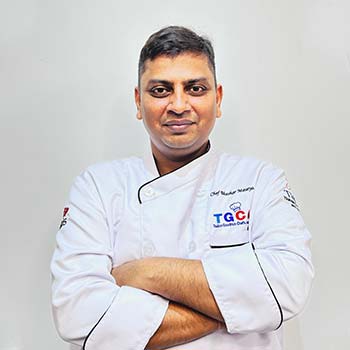
Culinary Instructor
 Whatsapp
Click one of our representatives below to chat on WhatsApp or send us an email to
info@tedcoeducation.com

Counselor
Bakery and Pastry Courses
Counselor
Click one of our representatives below to chat on WhatsApp or send us an email to
info@tedcoeducation.com
Counselor
Bakery and Pastry Courses
Counselor

