We live in the golden age of the "Instagram Chef." You scroll through your feed and see perfectly plated dishes, viral 30-second recipe reels, and self-taught cooks becoming overnight sensations. It’s inspiring. It makes you look at your own kitchen and think, "I can do this. I don't need a classroom."
And to an extent, you are right. You can learn to make a killer pasta dish from a video. You can master a sourdough starter by reading a blog. But here is the hard truth that we, as educators and industry veterans, have to share: Cooking at home is a hobby. Being a chef is a discipline.
When aspiring students walk through the doors of Tedco Education they often ask, "Is it really worth the investment?" They want to know if formal training is just a piece of paper or if it’s the rocket fuel their career needs.
If you are standing on that ledge, debating between going it alone or enrolling in one of the culinary schools in India, Tedco Education is here to give you the honest, unvarnished reality. Let’s talk about why the classroom is still the best kitchen you will ever work in.
Anyone can memorise a recipe. If you can read, you can cook. But a professional culinary school doesn't just teach you what to cook; we teach you how to cook.
There is a massive difference between following instructions and understanding the science of food. Why did your sauce split? Why is your steak tough? Why didn't your soufflé rise? A YouTube video can’t taste your food and tell you that you over-salted it. A mentor can.
In a chef training institute, we strip you back to the basics. We talk about knife skills until your hands move faster than your brain. We talk about heat control, the chemistry of baking, and the anatomy of meat. We build your foundation so strong that eventually, you don't need recipes anymore, you just cook. This depth of knowledge is the primary distinction between a cook and a chef.
Cooking for your family on a Sunday is lovely. Cooking for 200 guests on a Saturday night when the printer is jamming, the fryer is down, and the waiter just dropped table 4's order? That is a different beast entirely.
One of the main benefits of culinary school in India is that it simulates this pressure in a safe environment. You learn the "Brigade System, the hierarchy that keeps a professional kitchen from descending into anarchy. You learn to say "Yes, Chef," not out of subservience, but out of respect for the workflow.
We simulate service times. We teach you how to prep (mise-en-place) so that you aren't running around like a headless chicken when the orders start flying. You simply cannot learn this workflow in a home kitchen. You need the heat, the noise, and the equipment of a commercial setup to truly understand what you are signing up for.
Let’s talk about the job market. The culinary world is surprisingly small. Head Chefs talk to each other. Hotel General Managers rely on recommendations.
When you attend a top-tier culinary school in India, you aren't just paying for education; you are paying for access. We have spent years building relationships with five-star hotels, luxury resorts, and top-rated restaurants. When our students graduate, they don't just send cold emails to HR departments; they get introduced.
A reputable chef training institute acts as a vetting mechanism for the industry. Executive Chefs know that if they hire a graduate from a recognised academy, that student already knows food safety, hygiene, and basic discipline. It reduces their risk. This network is invaluable and is often the difference between starting at a local diner vs. starting at a global hotel chain.
In the real world, if you burn a rack of lamb, that is money lost for the restaurant. The chef screams, the owner is unhappy, and your job is on the line.
In a professional culinary school, if you burn the lamb, we stop. We look at it. We analyse what went wrong. Did you not render the fat enough? Was the pan too hot? Then, we do it again.
School is the only place in your career where failure is celebrated as a learning tool. You get to experiment with expensive ingredients, try weird flavour combinations, and mess up without the fear of being fired. This freedom to fail allows you to find your unique culinary voice before you step into a high-stakes job.
The landscape of culinary education in India has changed drastically in the last decade. It used to be that if you wanted to be a serious chef, you had to fly to France or Switzerland. That is no longer the case.
Today, culinary schools in India are world-class. The curriculum has evolved to meet global standards while respecting our rich local heritage. We are seeing a boom in the food and beverage industry in India, from cloud kitchens and food trucks to fine dining and molecular gastronomy.
By studying here, you gain a dual advantage. You master international cuisines (French, Italian, Oriental) while also understanding the complex, spice-heavy profile of Indian cuisine, which is in high demand globally. A culinary school in India prepares you for a market that is exploding with opportunity.
You might think a Professional Chef Course is all about chopping onions and grilling steaks. But 50% of the job is what we call "soft skills."
Time Management: How to juggle five tasks at once.
Teamwork: You are only as good as the person next to you.
Hygiene & Safety: This is non-negotiable. Understanding HACCP and food safety standards is what keeps customers safe and restaurants open.
Cost Control: A chef who can cook delicious food is good; a chef who can cook delicious food while keeping food costs low is a superstar.
We drill these into you. We teach you menu planning and costing so that you understand the business side of food. Because eventually, you won't just want to cook; you’ll want to lead.
This is the classic debate: why choose culinary school when you could just start washing dishes and work your way up?
The "apprentice" route is valid, but it is slow. You might spend two years peeling potatoes before anyone lets you near a stove. You only learn what that specific chef knows. If your mentor has bad habits, you learn bad habits.
Formal education is an accelerator. In one year of intense training, you cover what might take five years to learn on the job. You get a broad, standardised education. You aren't just learning "how we do it at this restaurant"; you are learning the global standards of culinary arts in India and beyond. It fast-tracks your promotion from a prep cook to a line cook and beyond.
So, is a degree or diploma necessary? If you want to be a hobbyist, no. But if you want a career that commands respect, offers global mobility, and gives you the confidence to run a kitchen, then the answer is a resounding yes.
The benefits of culinary school in India extend far beyond the classroom. It is about discipline, community, and the unshakeable knowledge that you have earned your place at the pass.
At our academy, we don't just train cooks; we shape the future leaders of the food industry. We take your passion and give it a structure. We take your raw talent and polish it until it shines.
If you are ready to stop dreaming and start doing, we are ready to teach you.
Strictly speaking, no. However, most top-tier hotels and high-end restaurant groups prefer candidates with a formal education. It proves you have the technical foundation and discipline required for management roles. Without it, the climb up the corporate ladder is significantly slower and harder.
Great question. Hotel management covers the entire hospitality spectrum, from front desk, housekeeping, marketing, and food. A culinary school in India focuses 100% on food production. You spend your time in the kitchen, not in lecture halls learning about room service protocols.
Absolutely. In fact, many students enrol specifically for this reason. Beyond cooking, we teach menu engineering, food costing, and kitchen management skills that are essential for any entrepreneur who wants to run a profitable food business.
Yes, most reputable institutes have dedicated placement cells. Because the industry is booming, there is a high demand for trained chefs. We connect our students with 5-star hotels, cruise lines, and top restaurants for internships and permanent jobs upon graduation.
Not at all. We see many "career changers" in their 30s or 40s leaving corporate jobs to follow their passion for food. Culinary arts is skill-based, not age-based. If you have the stamina and the passion, you can succeed regardless of when you start.
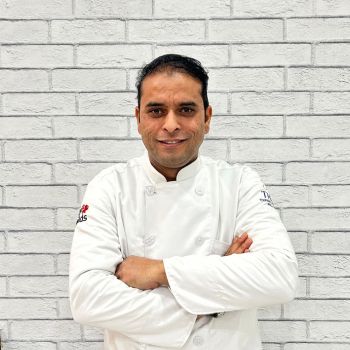
Pastry Instructor
 Whatsapp
Click one of our representatives below to chat on WhatsApp or send us an email to
info@tedcoeducation.com

Counselor
Bakery and Pastry Courses
Counselor
Culinary Arts Courses
Click one of our representatives below to chat on WhatsApp or send us an email to
info@tedcoeducation.com
Counselor
Bakery and Pastry Courses
Counselor
Culinary Arts Courses

