There is a moment that happens for a lot of baking students, somewhere around their third or fourth month of training, when they stop thinking about baking as just a skill and start seeing it as a business. The ingredients are there: a professional qualification, real technical knowledge, an understanding of food costs and margins, and a market that is growing faster than most people realise. What is missing, for most students, is a clear picture of which specific business idea makes the most sense and how to think about building it.
That is exactly what this guide provides. Whether you are currently enrolled in bakery classes in India or you have just graduated from a professional baking programme, this blog walks you through five genuine, tested bakery business ideas that professional baking graduates are building successfully in India in 2026, with an honest look at what each one involves, what it costs, and what makes it work.
This blog is written for two types of readers. First, students currently completing bakery classes in India who want to understand their options before they graduate. Second, recent graduates from professional baking programmes who have the skills but are still figuring out which business path makes the most sense for their specific situation, budget, and goals. If either of those describes you, you are in the right place.
Already know which business idea you want to pursue? Skip to the relevant section and then come back to Section VIII for the business fundamentals every baking entrepreneur needs to understand before launching.
The timing for a bakery business launch in India in 2026 is genuinely favourable, and the numbers support that. India's bakery and confectionery market is valued at over Rs 10,000 crore and growing at approximately 9 percent annually. But the really important shift is not just the overall growth; it is the direction of that growth. Indian consumers are increasingly moving toward premium, personalised, and health-conscious baked products, artisan sourdoughs, custom celebration cakes, gluten-free options, and specialty desserts that the mass bakery market simply cannot supply at the quality level these consumers want.
This is where graduates from professional baking classes have a structural advantage. The skills to produce these premium products, the technical knowledge to maintain quality at scale, and the professional credibility of a City and Guilds certified qualification position trained baking graduates to capture exactly the segment of the market that is growing fastest and paying the most.
What makes 2026 particularly interesting for bakery entrepreneurs is that the infrastructure for starting a food business has never been more accessible. Cloud kitchens have eliminated the need for expensive retail premises, meaning a professional baker can produce and sell to customers without a shopfront. Delivery platforms like Swiggy and Zomato have built the distribution infrastructure, so a home or cloud kitchen baker can reach thousands of customers without needing to build their own logistics. And social media, particularly Instagram and YouTube, has made it possible to build a brand and a following on a near-zero marketing budget if the product is compelling and the content is genuine.
The biggest barriers to starting a bakery business in India-premises, distribution, and marketing- have all been significantly lowered in 2026. The remaining barrier is skill. That is exactly what a professional baking course provides.
A custom cake studio is one of the most popular and accessible bakery business ideas for professional baking graduates in India, and for good reason. The model is straightforward: you create personalised, made-to-order cakes for celebrations, birthdays, weddings, anniversaries, corporate events, and baby showers. Every cake is designed and executed to the client's specific brief, which means no two orders are identical, and the creativity and technical skill of the baker are the entire product.
The business model works at different scales. Some custom cake businesses operate from a home kitchen with low overhead and a focused client base built through word of mouth and Instagram. Others grow into small studios with a team, serving a wider range of occasions and offering more elaborate designs. The common thread is that custom cake businesses reward exactly the skills that a professional baking diploma builds: precision, creativity, knowledge of decoration techniques, and the ability to work to a client brief under a deadline.
There are thousands of home bakers in India who make custom cakes without formal training. What separates a trained baker from an untrained one, in a client's eyes, is not just the quality of the final product, though that matters; it is the credibility and confidence that comes with professional certification. A custom cake baker with a City and Guilds certified diploma from an accredited best bakery course in India programme can price their work at a premium and justify it. Clients who are spending Rs 5,000 to Rs 50,000 or more on a custom wedding or corporate cake want confidence that the person they are trusting has been formally trained. That confidence is worth real money in this business.
A cloud kitchen bakery is a delivery-only food business that operates from a rented commercial kitchen space without a customer-facing storefront. The model has become one of the most attractive bakery business formats in India precisely because it strips away the two biggest cost centres of a traditional bakery, rent in a high-footfall retail location and the staffing required to run a front-of-house operation.
For graduates from bakery courses in Delhi and other cities, a cloud kitchen allows them to start producing and selling professional-quality baked goods without the capital required for a traditional shopfront. The products, cakes, pastries, artisan breads, and specialty desserts, are listed on Swiggy and Zomato, ordered online, and delivered directly to customers. As the business grows, it can scale by adding capacity at the same cloud kitchen, expanding the menu, or opening additional production units in different delivery zones.
Cloud kitchen profitability depends more heavily on food costing and pricing discipline than almost any other bakery business model. Because delivery platforms take a commission of 20 to 30 percent on every order, a cloud kitchen baker who has not calculated their costs precisely will quickly find that they are generating revenue but not profit. This is where the food costing and kitchen management training from a professional baking programme, particularly one that incorporates these business fundamentals into the curriculum, becomes genuinely valuable. Understanding ingredient cost per unit, factoring in packaging and delivery fees, and setting prices that maintain a healthy margin after platform commissions are skills that separate profitable cloud kitchen bakeries from ones that generate activity but not income.
Among all the bakery startup ideas after the baking course in India 2026, artisan bread and sourdough are one of the most exciting, fastest-growing, and genuinely underserved niches in India's premium food market right now. The global sourdough and artisan bread movement, driven by health consciousness, a growing appreciation for fermentation, and a consumer desire for food with provenance and craft, has arrived in India's metro cities. Premium supermarkets, specialty food stores, and direct-to-consumer delivery models are all seeing significant demand for quality artisan breads that the industrial bakery sector cannot produce at this quality level.
Artisan bread making is one of the most technically demanding areas of professional baking. Sourdough in particular requires a deep understanding of fermentation science, hydration ratios, shaping techniques, scoring, and the precise management of proving and baking temperatures. These are not skills that can be reliably self-taught to a professional standard. A professional baking programme that covers artisan bread making in depth gives graduates the technical foundation to produce sourdough and specialty breads consistently, which is the non-negotiable requirement for building a brand and a repeat customer base in this niche.
A home bakery and social media brand is the most accessible starting point for most professional baking class graduates, particularly those who are building their business while still working or immediately after graduating. The model combines producing baked goods from a home kitchen with building an audience and customer base through Instagram content and food delivery platforms.
The Instagram component is not optional in this model. It is the primary marketing and sales channel. A home baker who posts high-quality photos and videos of their products, shows their process, engages with their audience, and builds a consistent aesthetic and brand identity can grow a meaningful customer base without any paid advertising. Many of India's most successful independent bakers built their entire business this way, starting from their home kitchen with a phone camera and genuine skill.
The home bakery market in India is genuinely competitive. There are thousands of home bakers across every city, and most of them are talented. What separates the ones who can charge premium prices from those who compete on the lowest cost is credibility. A professional baking certificate from an accredited programme, particularly a City and Guilds qualification from a reputable bakery course in Delhi Institute, gives a home baker the credentials to position their business as professional, not hobbyist. That distinction translates directly into the ability to charge more, attract better clients, and build a business with genuine margins rather than one that operates at hobby-level pricing.
Corporate gifting is one of the most consistently lucrative and underexplored segments for professional baking graduates in India. Companies spend significant budgets on gifts for clients, employees, and business partners, particularly around festivals, annual day events, and product launches. Premium baked goods, artisan cookie boxes, custom dessert hampers, branded chocolate bars, and specialty cake collections, are increasingly preferred over generic gift items because they feel personal, they are consumable, and when done well they are genuinely impressive.
The margins in corporate gifting bakery work can be significantly higher than in retail or delivery sales, because corporate clients are paying for quality, presentation, and reliability, not just the lowest price. A single corporate order can represent the revenue equivalent of many individual consumer orders, and repeat corporate clients can provide a stable base of predictable revenue that consumer-facing businesses often lack.
Positioning a bakery for the corporate gifting market requires a specific approach. Custom packaging and branding capability is essential, corporate clients want their company name and logo on the packaging. A minimum order quantity that makes economic sense, typically starting from Rs 500 to Rs 1,000 per hamper with minimum orders of 20 to 50 units, establishes the business as a corporate supplier rather than a retail operation. And a portfolio that demonstrates professional quality, creative presentation, and the ability to customise across different budgets and occasions, built on the foundation of bakery business after professional baking course training, is the most powerful sales tool for this market segment.
Baking skill alone does not make a bakery business successful. There are four foundational business requirements that every baking graduate needs to address before launching:
Tedco Education's TGCA is one of the few culinary institutes in Delhi where food costing and kitchen management are genuine components of the curriculum, not afterthoughts. The reason is straightforward: technical baking skills are necessary but not sufficient for a successful bakery career or business. Graduates from the best bakery course in India programmes at TGCA leave with an understanding of how to cost a recipe, how to price for different market segments, and how to run a kitchen as a business, not just as a creative space. That business awareness is exactly what baking entrepreneurs need to make smart decisions from day one.
Tedco Education's placement cell also provides entrepreneurship guidance for graduates who want to pursue the business route rather than employment, connecting them with resources, advice, and a network that can support the early stages of a bakery launch.
The five bakery business ideas covered in this guide, custom cake studio, cloud kitchen bakery, artisan bread and sourdough brand, home bakery and social media brand, and corporate gifting bakery, represent the most accessible and genuinely viable opportunities for bakery classes in India graduates in 2026. Each one has different capital requirements, skill demands, and growth trajectories, which is why the right choice depends on your specific goals, situation, and the strengths you have built through your professional training.
What they all share is this: they reward the skills that a professional baking course builds, technical precision, product quality, food costing knowledge, and the credibility of a formally recognised qualification. The barrier to entry for a talented, trained, and professionally certified baker has never been lower. The market has never been more receptive. The timing in 2026 is genuinely good.
If entrepreneurship is part of why you want to pursue baking, the single best investment you can make is in the quality of your training. The deeper your technical skills, the more credible your qualification, and the stronger your understanding of food costs and kitchen management, the better positioned you will be to launch a bakery business that actually makes money, not just one that keeps you busy. Start with the right training, and keep the entrepreneurship goal in clear view throughout.
TGCA's 2026 batches are open now. Whether you plan to work in a professional kitchen first and build a business later, or to go straight into entrepreneurship, your baking education starts here.
TGCA's City and Guilds-accredited baking programmes give you the technical foundation, food costing skills, and professional credibility to launch a successful bakery business. 2026 batches are open now.
Visit tedcoeducation.com to apply or book a Free Counselling Session Today!
The best starting point depends on your budget and goals. A home bakery and social media brand require minimal investment and are ideal for building an initial client base. A custom cake studio suits those with strong decoration skills. A cloud kitchen suits students ready to scale quickly.
A home bakery can start with Rs 20,000 to Rs 50,00,0 covering basic equipment and initial ingredients. A cloud kitchen typically requires Rs 1 lakh to Rs 3 lakh for kitchen rental, equipment, and packaging setup. A custom cake studio depends significantly on equipment quality and space requirements.
Yes. Many successful bakery businesses are founded by people with baking skills but no formal business background. What matters most is costing discipline, pricing confidence, and FSSAI compliance. Courses at institutes like TGCA that include food costing and kitchen management modules give graduates a practical foundation.
Yes. Any food business in India, including home bakeries, requires FSSAI registration. Home bakeries typically qualify for a basic FSSAI registration at very low cost. Corporate clients and delivery platforms increasingly require this as a condition of doing business with you.
A professional baking certificate from an accredited institute increases pricing power and client confidence, particularly for custom and premium products. It signals that your skills have been formally assessed against a professional standard, which matters to clients paying premium prices for weddings, corporate orders, and specialty products.
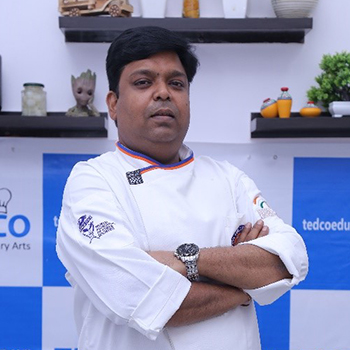
Centre Head & Head of Department
 Whatsapp
Click one of our representatives below to chat on WhatsApp or send us an email to
info@tedcoeducation.com

Counselor
Bakery and Pastry Courses
Counselor
Culinary Arts Courses
Click one of our representatives below to chat on WhatsApp or send us an email to
info@tedcoeducation.com
Counselor
Bakery and Pastry Courses
Counselor
Culinary Arts Courses

