Becoming a successful chef requires much more than a passion for food. The professional kitchen is a high-octane environment that demands discipline, technique, speed, creativity, and consistent performance. As the culinary world evolves rapidly, the expectations for modern chefs are higher than ever. It is no longer enough to simply cook good food; today’s chefs must be managers, artists, scientists, and leaders all rolled into one.
Strong foundational skills help chefs adapt to different cuisines, kitchens, and job roles, from fine dining establishments to high-volume catering. This is why structured training from institutes like Tedco Global Chefs Academy plays a major role in shaping a chef’s long-term success. Whether you are an aspiring home cook or a culinary student, mastering these ten essential skills is non-negotiable for a thriving career.
Tedco offers industry-oriented culinary arts courses in India for aspiring chefs.
Professional kitchens operate with military-like precision. Every motion, decision, and technique affects the final dish. A fraction of a second can mean the difference between a perfectly seared scallop and a rubbery disappointment. Chefs must master essential skills to perform confidently under pressure and meet industry standards. Whether you dream of working in a five-star hotel, running your own cloud kitchen, or creating signature dishes, these skills determine how far your culinary journey will go.
Below are the ten essential skills every modern chef must master.
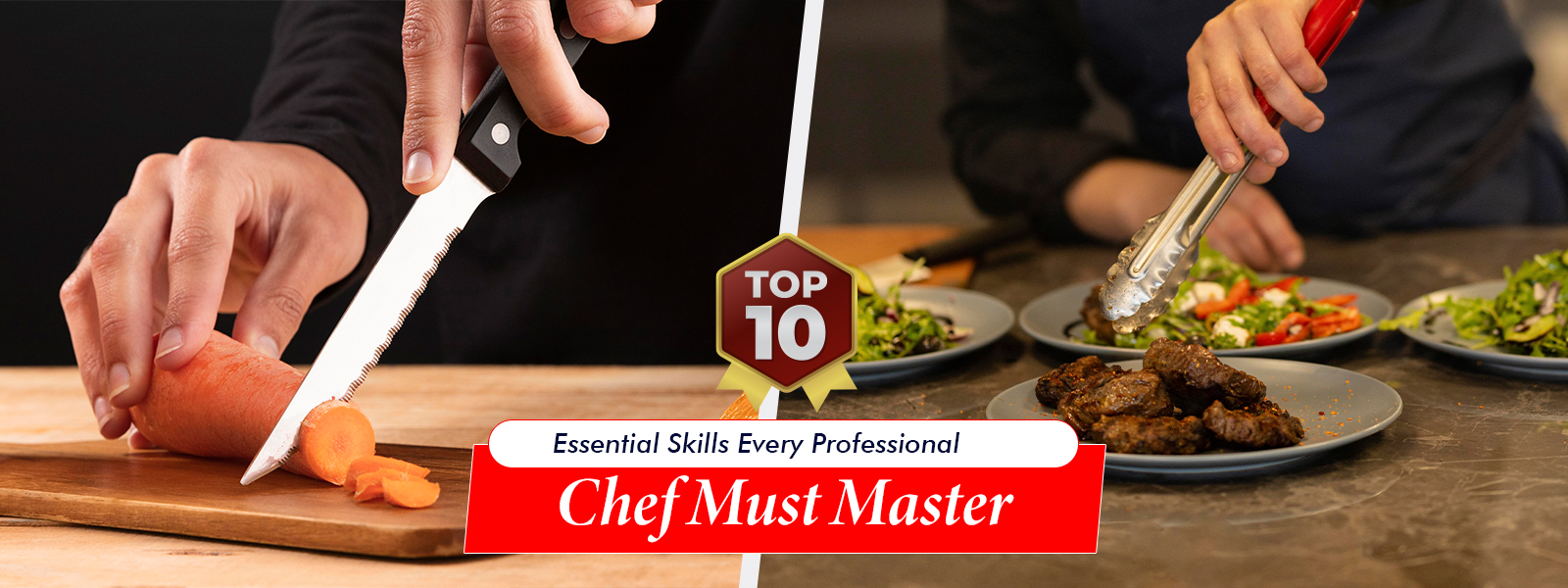
Knife mastery is the foundation of every chef’s journey. It is often said that you can judge a chef’s experience simply by watching them chop an onion. Proper handling improves speed, accuracy, and safety, reducing wastage and ensuring even cooking. In a professional setting, cutting vegetables to exact dimensions (julienne, brunoise, chiffonade) isn't just about aesthetics; it ensures that ingredients cook at the same rate. Students enrolled in a culinary arts course learn cuts, chopping techniques, and blade control that help them work efficiently in fast-paced kitchens. Without this fundamental skill, a chef will struggle to keep up with the relentless pace of service.
A chef must understand how ingredients behave, react, and enhance each other. This allows them to build balance, depth, and texture in dishes. It is about knowing that acid cuts through fat, or that salt can amplify sweetness. From spices to herbs to global ingredients, flavour understanding is the heart of cooking. This skill also involves sourcing, knowing how to select the freshest produce and how to handle delicate proteins. Top culinary arts colleges in India emphasise sensory training, teaching students to trust their palate and adjust seasoning intuitively, a skill that separates a cook who follows a recipe from a chef who creates one.
Every chef must learn the science behind sautéing, grilling, roasting, steaming, simmering, blanching, and frying. Correct technique ensures consistent results and professional quality. For instance, knowing the difference between a hard sear and a gentle poach can completely change the texture of a dish. With training from Tedco Global Chefs Academy, students practice these methods systematically. They learn "dry heat" vs. "moist heat" cooking methods and how to apply them to different ingredients to maximise flavour and texture retention.
We eat with our eyes first. Food presentation influences taste perception and value. Chefs must learn plating styles, symmetry, colour balance, and portion control. This skill creates visual appeal and elevates even simple dishes into memorable experiences. Modern plating has moved beyond simple garnishes; it now involves negative space, height, and texture contrast. Learning these artistic principles is a core component of advanced chef courses, where students are taught to treat the plate as a canvas.
Chefs handle multiple tasks simultaneously while maintaining speed and accuracy. You might be searing a steak, reducing a sauce, and plating a salad all at the same time. Proper time management ensures a smooth workflow, especially during peak hours when the ticket machine is relentless. This skill distinguishes professional chefs from amateurs. It involves mental mise-en-place organising your mind just as you organise your station, so that every movement is purposeful and efficient.
Cleanliness and safety are essential in every kitchen. Chefs must follow hygiene protocols such as temperature control, food storage, sanitation, and contamination prevention. In a post-pandemic world, this is more critical than ever. Strong food safety understanding protects both customers and the business from legal and health risks. Reputed culinary arts colleges in India drill these standards into students, ensuring that hygiene becomes a habit rather than a chore.
Want to know more? Fill this form and our team will contact you soon.
A chef must design menus that balance flavour, cost, and creativity. Recipe development requires knowledge of ingredients and proportions, but menu planning requires business acumen. You must understand food cost percentages, seasonality, and waste management. A dish might taste amazing, but if it takes too long to prep or costs too much to make, it won't work on a menu. Students who take specific chef courses often explore new flavour combinations and modern concepts while learning the mathematics of profitability.
Kitchens depend on coordination. The brigade system used in professional kitchens is built on hierarchy and clear communication. Chefs must communicate clearly with team members, respect roles, and support smooth operations. Good teamwork reduces mistakes and improves kitchen efficiency. A chef who cannot communicate effectively will cause bottlenecks, no matter how good their cooking is.
Professional kitchens move fast, and things will go wrong. Ovens break, deliveries arrive late, or a VIP guest has a sudden allergy requirement. Chefs face unexpected challenges daily. Staying calm and thinking quickly is essential to maintain quality and consistency. This resilience is often built through the rigorous environment of a structured culinary arts course, where students are put in simulated pressure situations to build their mental fortitude.
The culinary world changes every year. From molecular gastronomy to the farm-to-table movement, trends shift rapidly. Chefs must stay updated with global trends, modern techniques, and innovative dishes. Adaptability ensures long-term relevance and career growth. The best chefs are eternal students, always reading, tasting, and exploring new cultures to refine their craft.
While passion is the starting point, formal education acts as an accelerator. Self-taught chefs often have gaps in their knowledge. Perhaps they can cook beautifully but don't understand costing, or they have great knife skills but lack safety knowledge. Enrolling in a comprehensive culinary arts course ensures a holistic education.
Top institutes provide not just cooking lessons but a complete ecosystem of learning. They offer state-of-the-art infrastructure, access to master chefs, and internships that provide a foot in the door of the industry. For those serious about this career, investing in education is investing in their future.
Knife skills improve speed, accuracy, and safety in the kitchen. Proper cuts ensure even cooking, better presentation, and efficient workflow. Mastering knife handling is essential for any chef aiming to perform confidently in professional environments.
Chefs can improve ingredient knowledge by experimenting with flavours, studying food pairings, observing texture changes, and practising cooking techniques. Hands-on training helps identify how ingredients behave in different conditions and create balanced flavour profiles.
Both are important. Techniques provide structure and consistency, while creativity adds personality and uniqueness. A skilled chef must combine strong technique with innovative ideas to create dishes that satisfy customers and stand out professionally.
Training teaches colour balance, portion control, height, symmetry, and plating logic. Students practice creating visually appealing dishes that enhance taste perception. Strong presentation skills help chefs elevate meals and improve overall dining experiences.
Kitchens require synchronised effort. Teamwork ensures smooth operations, reduces errors, and helps chefs meet time-sensitive demands. Good communication allows tasks to be completed efficiently, especially during high-volume service periods.
Yes, practical training exposes chefs to real kitchen challenges. With experience, chefs learn to adapt quickly, make smart decisions, and maintain quality even under pressure. Problem-solving improves with time, exposure, and confidence.
Chefs can follow global food platforms, attend workshops, watch demonstrations, explore new cuisines, and experiment with seasonal ingredients. Continuous learning helps chefs evolve creatively and stay competitive in the rapidly changing culinary industry.
Pastry Instructor
 Whatsapp
Click one of our representatives below to chat on WhatsApp or send us an email to
info@tedcoeducation.com

Counselor
Bakery and Pastry Courses
Counselor
Culinary Arts Courses
Click one of our representatives below to chat on WhatsApp or send us an email to
info@tedcoeducation.com
Counselor
Bakery and Pastry Courses
Counselor
Culinary Arts Courses

