Every year around board exam season, the same question comes up in households across India: "Is culinary arts actually a good career?" Parents want stability. Students want passion. And both want to know whether the investment of time, money, and energy into culinary arts in India will actually pay off in 2026 and beyond.
The answer, backed by industry data and the real career stories of graduates, is a clear yes. But let us go deeper than just a yes. This guide lays out the full picture, the industry numbers, the career paths, the salary ranges, and the factors that determine whether your culinary career thrives or stalls.
A culinary career in 2026 is not what it was a decade ago. It is not just about standing behind a hotel stove. It is about running a cloud kitchen brand, leading a luxury resort pastry section, creating food content for millions of viewers, developing recipes for FMCG companies, or heading the kitchen of a Michelin-calibre restaurant. The scope has expanded dramatically, and trained culinary professionals are at the centre of all of it.
India's food service industry is one of the largest and fastest-growing sectors in the country. Here are the numbers that matter for anyone considering a culinary career:
Beyond the numbers, three cultural shifts are permanently changing the demand for trained culinary professionals in India:
The most established career path after a culinary arts course is working in the hotel and restaurant industry. The kitchen hierarchy in India's hospitality sector offers a clear, merit-based progression ladder:
| Role | Experience Required | Where You Work |
|---|---|---|
| Commis Chef | 0 to 1 year | Hotels, restaurants, resort kitchens |
| Chef de Partie | 2 to 4 years | 5-star hotels, fine-dining restaurants |
| Sous Chef | 4 to 6 years | Luxury hotels, flagship restaurants |
| Head Chef | 6 to 10 years | Premium restaurants, hotel F&B divisions |
| Executive Chef | 10 plus years | 5-star hotel chains, luxury resort groups |
What makes the culinary arts career opportunities India landscape truly exciting in 2026 is the range of non-traditional paths available to trained culinary graduates:
This is the section parents read most carefully, and rightly so. Here is an honest, stage-wise picture of what culinary arts professionals earn in India in 2026:
| Career Stage | Role | Monthly Salary (India) |
|---|---|---|
| Fresher (0 to 1 year) | Commis Chef, Kitchen Trainee | Rs 15,000 to Rs 25,000 |
| Early Career (1 to 3 years) | Chef de Partie, Station Chef | Rs 28,000 to Rs 50,000 |
| Mid-Level (3 to 6 years) | Sous Chef, Senior Pastry Chef | Rs 50,000 to Rs 90,000 |
| Senior (6 to 10 years) | Head Chef, Executive Pastry Chef | Rs 90,000 to Rs 1,80,000 |
| Top Level (10 plus years) | Executive Chef, Corporate Chef | Rs 1,80,000 to Rs 4,00,000 plus |
| International Placement | Chef Abroad, Cruise Ship, Luxury Resort | Rs 1,50,000 to Rs 5,00,000 plus |
When it comes to chef salary growth India 2026, two factors consistently separate high-earning culinary professionals from average ones: the quality of their institute and their international exposure.
The hospitality sector remains the largest employer of culinary arts graduates in India. Here is a breakdown of where the jobs are:
Beyond traditional hospitality, new-age food businesses are creating a parallel job market for culinary graduates:
For students pursuing culinary arts in India, the domestic career landscape in 2026 is stronger than it has ever been. The combination of rapid hospitality sector growth, expanding cloud kitchen businesses, and a booming food media industry means there are more culinary career opportunities available today than at any point in India's history.
The domestic salary ceiling has also risen considerably. Executive chefs at top hotel chains now earn between Rs 1.8 lakh and Rs 4 lakh per month, and culinary entrepreneurs with successful food brands can earn well beyond that.
Graduates from internationally accredited culinary arts colleges in India, particularly those holding City and Guilds (UK) certifications, are eligible for culinary roles in over 100 countries. The most active international markets for Indian culinary graduates in 2026 include:
Here is something most career guides do not tell you: the gap between the demand for trained culinary professionals and the actual supply of qualified graduates is significant. India produces far fewer formally trained, accredited culinary graduates than its hospitality sector needs. This means:
The traditional narrative that culinary arts is a risky or unstable career choice simply does not hold up against the 2026 data. Consider this:
TGCA's diploma in culinary arts is built specifically to prepare students for the full scope of what the industry demands in 2026, not just the traditional hotel kitchen route but the complete range of opportunities the modern culinary world offers.
What makes TGCA's approach to culinary arts in India genuinely different is what happens after graduation. The institute's placement cell actively connects graduates with top hotels, restaurants, and food brands. The international internship programme gives eligible students real kitchen experience outside India. And the alumni network continues to open professional doors long after graduation.
The scope of culinary arts in India in 2026 is not just good, it is exceptional. A growing industry, a genuine shortage of trained talent, rising salaries, international career pathways, and new-age opportunities in food media, product development, and entrepreneurship have made culinary arts one of the most versatile and future-proof career choices available to students today.
The question is no longer whether culinary arts has scope. The question is whether you have the right training from the right institute to capture that scope fully.
If you are a 12th pass student with a passion for food, or a parent who wants to understand what this career actually looks like in practice, TGCA's counselling team is the best starting point. No pressure, no sales pitch, just an honest conversation about your goals and what it takes to achieve them.
TGCA's 2026 batches are open now. The scope is wide, the demand is real, and the seats are filling up fast. Book a free counselling session or demo class today.
The future scope of culinary arts in India is genuinely strong and growing. India's food service industry is expanding at approximately 9 percent annually, new hospitality properties are opening across the country every month, cloud kitchen businesses are multiplying, and food media has created entirely new career categories. Trained culinary professionals from accredited institutes are in high demand and short supply, which means job security, salary growth, and career advancement opportunities are all positive for the foreseeable future.
Executive chefs and corporate chefs at top hotel chains command the highest salaries in the culinary arts field in India, typically between Rs 1.8 lakh and Rs 4 lakh per month at the senior level. Among specialisations, pastry chefs in luxury settings and culinary professionals with international experience tend to earn significantly above the industry average. Food product developers working with FMCG brands also command strong salaries relative to their years of experience.
Yes, if the diploma is from an internationally accredited institute. A City and Guilds (UK) certified diploma from an institute like TGCA is recognised in over 100 countries and is respected by culinary employers across the Middle East, Europe, Southeast Asia, and on international cruise lines. Graduates with this credential are eligible to apply for international kitchen roles and internships, and many TGCA alumni have successfully built careers outside India on the strength of this qualification.
The minimum qualification for most culinary arts programmes in India is a 12th pass from any stream, Science, Arts, or Commerce. There is no stream restriction, no entrance exam at most reputed institutes, and no prior cooking experience required. If you have results awaited, you can apply using your admit card and submit your final mark sheets once results are declared. TGCA welcomes all 12th pass students regardless of their academic background.
It depends on the level of course you choose. A Certificate in Culinary Arts takes 6 months, making it the fastest professional entry point. A Diploma in Culinary Arts takes 1 year and is the most comprehensive option for a full career launch. An Advanced Diploma takes 18 months and is ideal for students targeting senior roles and international placements. At TGCA, all three levels are available, and a counsellor can help you choose the right one based on your specific goals and timeline.
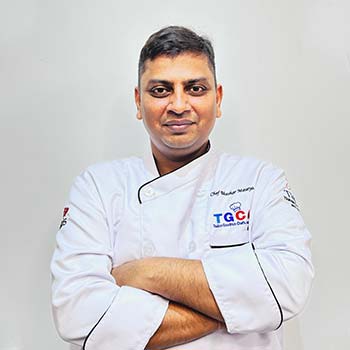
Culinary Instructor
 Whatsapp
Click one of our representatives below to chat on WhatsApp or send us an email to
info@tedcoeducation.com

Counselor
Bakery and Pastry Courses
Counselor
Culinary Arts Courses
Click one of our representatives below to chat on WhatsApp or send us an email to
info@tedcoeducation.com
Counselor
Bakery and Pastry Courses
Counselor
Culinary Arts Courses

