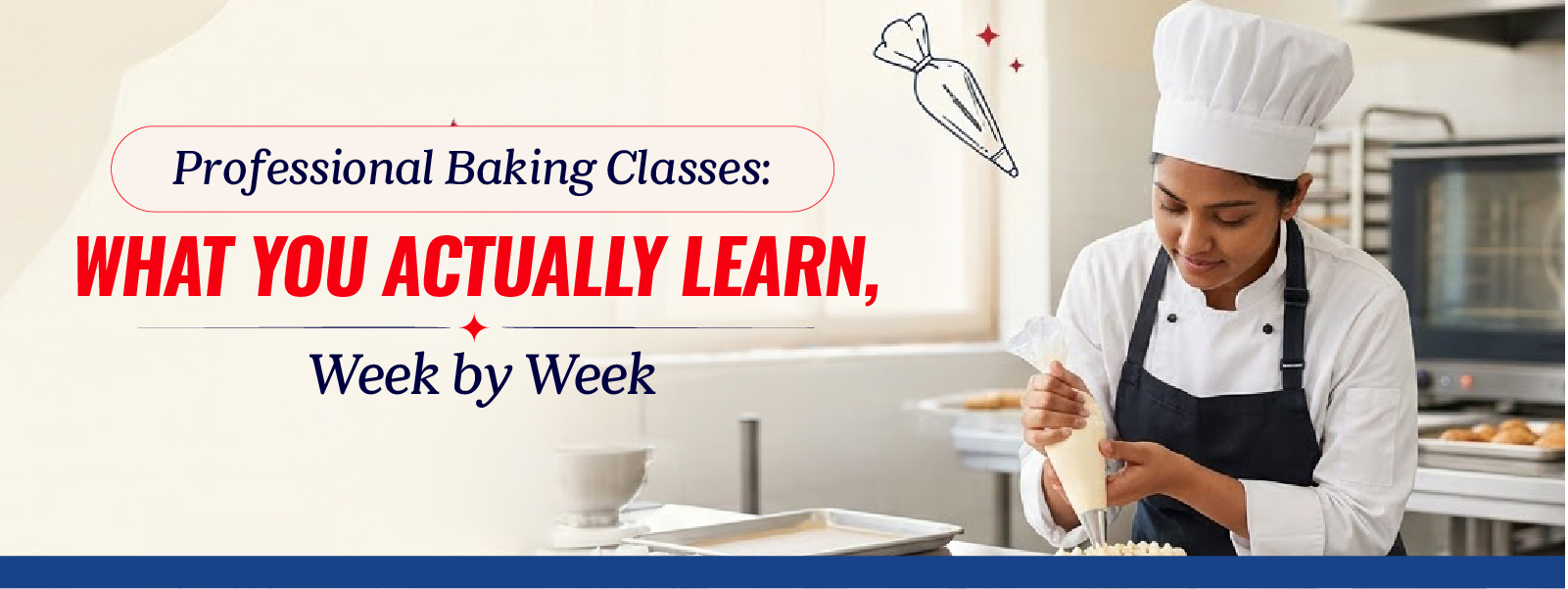
Choosing professional baking classes is very different from learning a few recipes at home. A structured Professional Baking Course is designed to take students from basic baking knowledge to practical skills that can be applied in professional bakery and pastry environments. For students considering a bakery chef course, this type of structured training can provide a stronger understanding of ingredients, techniques, equipment, presentation, and professional kitchen discipline. For those exploring baking classes in Delhi, the important question is not simply how many recipes a programme teaches, but how effectively it prepares students to work in a real bakery or pastry kitchen.
At TGCA, the learning journey can be viewed as a progression. Students begin with fundamentals, gradually move towards specialised preparations, and eventually learn how baking works within a professional production environment.
So, what can students actually learn week by week?
Professional baking classes are structured programmes designed to develop both practical and technical baking skills. Unlike hobby-focused workshops that may concentrate on preparing a few recipes, professional training introduces students to baking science, ingredient functionality, equipment handling, production methods, presentation,n and the consistency expected in a professional kitchen.
For students who want a more comprehensive route into the bakery and pastry industry, TGCA's Diploma in culinary arts provides structured training that goes beyond individual recipes. The programme covers essential areas of professional baking, helping students build practical experience across cakes, breads, pastries, desserts, chocolate, confectionery and cake decoration, while also developing an understanding of professional kitchen practices.
Students learn how ingredients behave, how recipes are measured and scaled, how professional equipment is used, and how products are prepared to consistent standards.
The difference becomes easier to understand when you picture two kitchens.
In a home kitchen, a baker might spend an afternoon preparing one cake and make small adjustments based on personal preference. In a professional bakery, several products may need to be prepared simultaneously, often in larger quantities and according to a defined production schedule.
A professional baking programme helps students make that transition from following recipes to understanding professional production.
The first week establishes the foundation for everything that follows.
Students are introduced to the professional kitchen environment, including equipment, workstations, ingredients, and basic operating procedures. Hygiene and safety are also introduced because cleanliness is not an optional part of professional baking.
Students can begin learning about:
A professional baker needs to understand what ingredients actually do.
Students explore the functions of flour, sugar, eggs, butter, dairy products, yeast, leavening agents,s and other ingredients commonly used in baking.
Flour contributes structure. Sugar affects sweetness, colour, moisture and texture. Eggs can contribute structure, richness and colour. Fats influence tenderness and mouthfeel, while yeast and chemical leavening agents help create different forms of aeration.
Students also begin understanding how changing proportions can affect the finished product.
This knowledge becomes particularly useful when something does not turn out as expected. Instead of simply repeating the recipe and hoping for a different result, students can begin analysing the possible cause.
That is an important step towards becoming a technically confident baker.
Cake making introduces students to several fundamental baking methods.
Students learn how to weigh ingredients, prepare batters, apply appropriate mixing techniques, and understand the importance of baking time and temperature.
They also learn about cooling and handling after baking.
The objective is not simply to produce a cake that looks acceptable. Students need to understand texture, structure, moisture and consistency.
For example, overmixing can affect the texture of certain cakes, while incorrect baking temperatures can influence the rise, colour and internal structure.
Repeated practical work allows students to recognise these differences through experience rather than theory alone.
After learning the foundations of cake production, students can progress towards more advanced cakes and finishing techniques.
This stage introduces layered cakes, fillings, frostings and professional finishing.
The process can be visualised as building a carefully balanced structure. The cake layers need to be even, the filling needs the correct consistency, and the final coating needs to provide a clean surface for decoration.
Students learn to work more carefully with:
Bread introduces students to the fascinating relationship between ingredients, time, and fermentation.
Students learn about yeast, dough development, fermentation, shaping, proofing and baking.
Unlike a cake batter, bread dough changes considerably during the process. It develops elasticity, expands during fermentation,n and responds to temperature and handling.
Students learn to observe the dough and understand how factors such as hydration, temperature and fermentation time can influence the final loaf.
This practical understanding is valuable because bread making cannot always be reduced to a fixed number of minutes. Bakers need to understand what the dough is telling them.
Pastry requires precision and controlled handling.
Students are introduced to different pastry preparations and learn how to roll, shape, fill and bake pastry products.
The way dough is handled can significantly affect its final texture and appearance. Excessive handling, incorrect thickness, ss or poor temperature control can produce very different results.
Students therefore work on developing a lighter and more controlled approach.
They also learn the importance of consistency when producing multiple pastries for a professional display or service.
Ten products should not look like ten completely different products.
Cookies, biscuits and small baked products provide an excellent opportunity to develop precision.
Students explore different preparations while learning about portioning, shaping, texture and baking.
Imagine a bakery tray containing dozens of cookies. Customers expect the products to look consistent. One should not be twice the size of another or noticeably different in colour.
Students therefore learn how accurate portioning and controlled shaping affect the final result.
They also explore how ingredient ratios, baking temperature and preparation methods can influence whether a cookie is crisp, soft, chewy or tender.
Chocolate introduces students to another area where temperature and precision matter.
Students are introduced to chocolate handling, confectionery preparations, fillings, decorations and finishing techniques.
Chocolate can appear deceptively simple. A smooth, glossy finish, clean decoration, or well-formed confection requires careful handling.
Students begin developing an understanding of how chocolate behaves and how it can be incorporated into bakery and pastry products.
This area can also encourage creativity because chocolate can function as both an ingredient and a decorative element.
Professional pastry work extends beyond bakery counters.
Students can also learn how desserts are assembled and presented for restaurant and hospitality settings.
A plated dessert is often built like a small landscape on a plate. There may be a central component, a sauce flowing alongside it, a crisp element providing contrast, and a garnish completing the presentation.
Students learn to consider:
Cake decoration allows students to combine technical skill with creativity.
Training can introduce techniques such as piping, buttercream decoration, fondant work, and decorative elements.
Students learn that professional decoration requires control. Piping needs consistent pressure. Buttercream needs the right texture. Decorative elements need to complement the shape and design of the cake.
The most effective decoration is not necessarily the most complicated.
A clean design with balanced colours, controlled piping and precise finishing can often create a stronger visual impression than excessive decoration.
At this stage, the focus begins shifting from individual preparations towards professional production.
In a commercial bakery, products need to be prepared according to a schedule. Ingredients have to be organised, equipment needs to be available, and several preparations may need to happen simultaneously.
Students can learn about:
Professional baking also involves understanding the commercial side of production.
Students can be introduced to recipe costing, portion control and waste management. A product may be delicious, but a professional bakery also needs to know what it costs to produce.
Quality control is equally important.
Students can assess products based on appearance, texture, flavour, structure, consistency and presentation.
Final practical work provides an opportunity to bring together the skills developed throughout the programme.
The aim is to demonstrate that techniques can be applied consistently rather than successfully only once.
Professional baking education can also involve vocational qualifications such as City & Guilds, depending on the programme structure and qualification pathway.
For students, professional certification can provide an additional way of demonstrating structured vocational learning.
However, certification should not be viewed in isolation.
A certificate can support a student's profile, but professional competence comes from combining knowledge with repeated practical training. A baker still needs to know how to prepare products, use equipment safely, maintain hygiene, work consistently, and function effectively within a kitchen team.
There is a major difference between learning about commercial baking and experiencing a professional production environment.
Industrial training can expose students to larger-scale production, professional equipment, workflow, time constraints,s and workplace expectations.
Consider a bakery preparing products for a busy morning. Cakes, breads, pastries, es and other items may all have different preparation times. Some products need to be prepared the previous day, while others need to be finished shortly before service.
The kitchen has to function almost like a carefully timed sequence.
Industrial exposure helps students understand this reality.
It also teaches lessons that are difficult to learn from recipes alone, including teamwork, communication, speed, organisation and consistency.
At The Global Culinary Academy (TGCA), professional baking education focuses on developing practical skills alongside an understanding of professional kitchen standards.
Students can build their knowledge progressively across baking, cakes, breads, pastry, chocolate, confectionery, desserts and cake decoration.
The emphasis on structured practical training helps students understand not only how products are prepared but also how professional bakery operations function.
Exposure to industry-oriented practices can help students become familiar with the expectations they may encounter when entering professional bakery and pastry environments.
Classroom learning provides the foundation, but professional development continues through exposure to real working environments.
Industrial training, internships, and professional kitchen experience can help students understand what employers expect from entry-level bakery and pastry professionals.
Students learn that professional work requires more than creativity.
They need to arrive prepared, maintain hygiene, follow instructions, manage time, communicate with colleagues,s and produce consistent results even when the kitchen becomes busy.
Career preparation can therefore include practical exposure, professional guidance and an understanding of workplace expectations.
Professional baking training can be suitable for several types of learners.
It may be particularly relevant to:
Choosing a programme should involve more than looking at photographs of beautifully decorated cakes.
Students should investigate the actual learning experience.
Important questions include:
Professional baking course is about much more than learning recipes.
It is about understanding ingredients, controlling temperatures, developing techniques, working with professional equipment, producing consistent products, and learning how a bakery operates as a team.
Across a structured programme, students can progress from basic baking fundamentals to cakes, breads, pastry, cookies, chocolate, desserts, cake decoration and professional production.
City & Guilds, industrial training,g and practical exposure can further support this journey, while training at TGCA can help students develop an industry-oriented understanding of baking and pastry.
Will this training teach me how to bake professionally, not just how to bake?
Professional baking classes can cover cakes, breads, pastry, cookies, chocolate, confectionery, desserts and decoration, alongside ingredient knowledge, food safety, costing and professional production practices.
A Professional Baking Course can progressively develop practical baking skills, ingredient knowledge, cake and pastry techniques, chocolate work, decoration, production planning, quality control and professional kitchen discipline.
Yes. Industrial training can expose students to commercial production, professional equipment, larger quantities, production schedules, teamwork consistencyn, consistency, and the practical expectations of real bakery environments.
City & Guilds provides vocational qualifications that can recognise structured knowledge and practical skills. Its relevance depends on the specific qualification and programme through which a student studies.
Professional training can help students develop foundational skills for opportunities in bakeries, hotels, pastry kitchens, cafés, resorts, catering operations and other professional food-production environments.
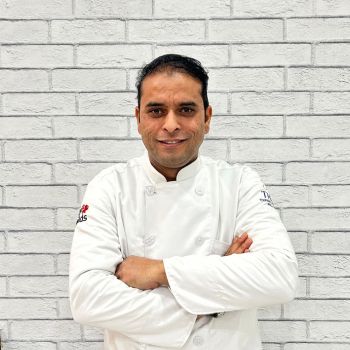
Pastry Instructor
 Whatsapp
Click one of our representatives below to chat on WhatsApp or send us an email to
info@tedcoeducation.com

Counselor
Bakery and Pastry Courses
Counselor
Culinary Arts Courses
Click one of our representatives below to chat on WhatsApp or send us an email to
info@tedcoeducation.com
Counselor
Bakery and Pastry Courses
Counselor
Culinary Arts Courses

