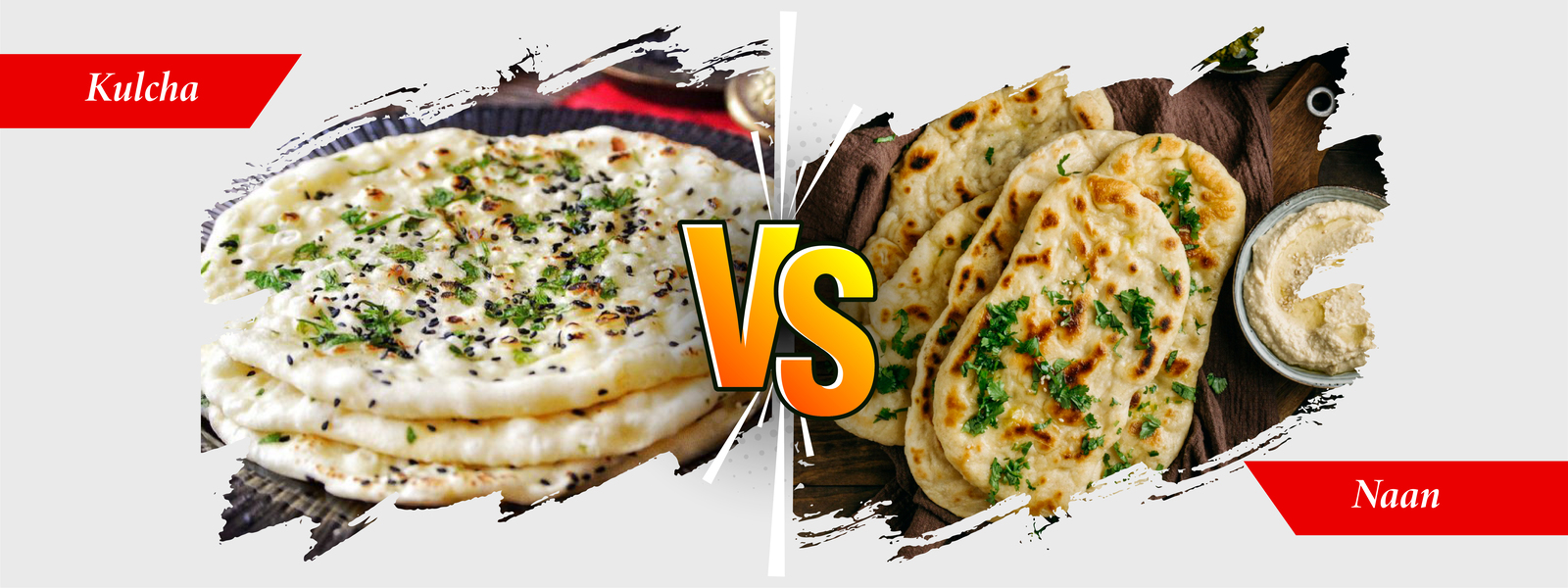
You know that feeling. You’re sitting at a table in your favourite North Indian restaurant, the smell of charcoal and melting butter is teasing your senses, and you’re staring at the bread section of the menu. It’s always the same dilemma. You want something to scoop up that rich, creamy gravy, but you get stuck, Kulcha vs naan. The debate starts brewing in your head: What to eat today?
To the untrained eye, in terms of food knowledge, they look like twins. They are both flat, hot, and carb-heavy circles of joy. But if you’ve ever taken a bite of a rubbery bread when you were expecting something soft and crumbling, you know the struggle is real. The difference between kulcha and naan isn't just about the shape or the price tag; it’s about the essence of the dough.
It’s actually a topic that comes up surprisingly often, not just at dinner tables but in professional kitchens too. Whether you are just scrolling through food blogs or actually sitting in culinary classes trying to keep your dough from sticking to your fingers, or looking for culinary arts courses in India to learn making breads at home, understanding the mechanics of these flatbreads changes how you appreciate them.
Overall, we just want to know which one tastes better with our Butter Chicken. So, let’s break this down properly, minus the boring textbook definitions.
Before we start picking sides, we need to know what we are dealing with. Both of these breads rule the roost in North India, but they come from very different backgrounds.
Think of Naan as the international superstar. It’s the one everyone knows. The word itself comes from Persian, meaning "bread." Historically, it was a luxury item because making it required a Tandoor (that massive clay oven) and refined white flour, which wasn't always cheap. Naan is the "leavened" bread, meaning it uses yeast or a sourdough starter to rise. That’s why it has those beautiful, big air bubbles and a slightly chewy, elastic pull.
If Naan is the international star, Kulcha is the local hometown hero. It hails specifically from the Punjab region. It’s often seen as the earthier, more comforting cousin. You’ll find this everywhere from high-end restaurants to street carts in Amritsar. The key here is that it’s usually leavened with baking powder or soda rather than yeast, giving it a completely different vibe when you bite into it.
If you’re interested, simply fill out the enquiry form and our team will contact you with complete details.
Okay, let’s get into the nitty-gritty. If you put them side by side, how do you tell them apart without taking a bite? And more importantly, why does the dough behave so differently? Here’s how you perform an effective Indian bread comparison:
This is the biggest technical difference.
Naan is high-maintenance. It relies on yeast (or fermented curd). Yeast is a living organism; it needs time to feed on the sugar in the dough and release gas. This fermentation process creates a complex flavour and that signature stretchiness.
Kulcha is a bit more immediate. It uses chemical leavening, baking powder and baking soda. When you mix these with yoghurt (which is acidic), they react instantly to create bubbles. This makes the Kulcha texture more "bready" or cake-like, rather than chewy.
You’d think it’s just flour and water, right? Not quite.
Naan Mix: It’s usually Maida (all-purpose flour), yeast, water, a pinch of sugar, and sometimes milk or an egg to keep it soft.
Kulcha Mix: It’s Maida, but the magic ingredients are yoghurt, baking powder, and soda. The yoghurt isn't just for fluffiness; it adds a subtle tang that distinguishes the flavour profile.
When doing an Indian bread comparison, you have to look at the oven.
Naan demands a Tandoor. Traditionally, the dough is slapped onto the blisteringly hot inner walls of a clay oven. Gravity pulls it into that iconic teardrop shape, and the heat puffs it up in seconds.
Kulcha is versatile. While it loves a Tandoor, it’s just as happy on a Tawa (griddle) or in a regular oven. This makes Kulcha way easier to replicate in a home kitchen than Naan.
When you tear into a fresh Naan, there is resistance. It stretches. That’s the gluten and yeast working together. The naan vs kulcha taste is distinct because of the char. Since it cooks against the clay wall of a Tandoor, one side is usually crispy and smoky, while the top is pillowy. It’s robust. You can scoop up a heavy meat curry, and the Naan won't fall apart.
Kulcha is softer, almost spongier. It doesn't fight back when you tear it. Because of the yoghurt and soda, it melts in your mouth a bit faster. It lacks the intense smokiness of Naan but makes up for it with a comforting, soft texture. Also, Kulchas are the kings of stuffing. A plain Kulcha is great, but a Stuffed Kulcha (with potatoes or paneer) is a meal all by itself.
Go for the Naan if you are having a gravy that is rich, spicy, and thick, like a Paneer Butter Masala or Roghan Josh. You need the chewy bread to hold up against the sauce. Also, if you are at a place that has a visible Tandoor, always get the Naan. Fresh tandoori Naan is unbeatable.
Pick the Kulcha if you want something that feels more like a complete meal. An Amritsari Kulcha with a side of spicy Chole (chickpeas) is breakfast, lunch, and dinner rolled into one. It’s also the better choice if you prefer a softer bread that doesn't give your jaw a workout.
This is the crowd favourite. The burnt garlic bits on top add a bitterness that cuts through creamy sauces perfectly.
This one is sweet! It’s stuffed with raisins, coconut, and nuts. It sounds weird to eat sweet bread with curry, but trust us, it works.
Crisp on the outside, soft on the inside, and stuffed with spicy onions.
This is the holy grail. Stuffed with spiced potatoes, crushed coriander seeds, and pomegranate powder, then baked until crisp.
At the end of the day, the difference between kulcha and naan comes down to the vibe you want. Do you want the smoky, chewy drama of the Tandoor (Naan)? Or do you want the soft, yoghurt-tangy comfort of the Punjab (Kulcha)?
If you love cooking, Tedco education would suggest trying to make Kulcha at home first. It’s forgiving. You don’t need a fancy oven, just a hot skillet and some patience. Naan is a bit trickier to master without the right equipment, but when you get it right, it feels like magic.
Ultimately, whether you are a student browsing culinary arts courses in India or just a hungry soul looking for dinner, the best way to decide is to order both. Life is too short to choose just one bread.
So, next time that menu arrives, you’ll know exactly what you’re getting into.
Most of the time, especially in restaurants, Kulcha is made from Maida (refined flour) because that’s what gives it that soft, stretchy texture. However, if you are making it at home or visiting a health-conscious café, you can definitely find or make "Atta Kulcha" using whole wheat flour.
Absolutely. You don't need a clay oven in your living room. You can use a heavy iron skillet (Tawa). The trick is to wet one side of the Naan so it sticks to the pan, then flip the whole pan upside down over the gas flame to char the top. It works surprisingly well!
Roti wins the health battle, hands down. Roti is made from whole wheat flour and is usually roasted dry (without oil). Naan is made from refined flour and often involves sugar, oil, and a generous brushing of butter, making it much higher in calories.
It’s all about the rise. Naan dough uses yeast (or a starter), which needs time to ferment and rise, creating that chewy texture. Kulcha dough uses baking powder and soda mixed with yoghurt for a quick, chemical rise that results in a softer, more cake-like crumb.
The classic combination is "Chole Kulcha." The spicy, tangy flavour of chickpea curry (Chole) pairs perfectly with the mild, soft texture of the Kulcha. It’s a match made in heaven, particularly if the Kulcha is stuffed with potatoes.

Pastry Instructor
 Whatsapp
Click one of our representatives below to chat on WhatsApp or send us an email to
info@tedcoeducation.com

Counselor
Bakery and Pastry Courses
Counselor
Culinary Arts Courses
Click one of our representatives below to chat on WhatsApp or send us an email to
info@tedcoeducation.com
Counselor
Bakery and Pastry Courses
Counselor
Culinary Arts Courses

