Walk into any professional kitchen in India and you will find Sous Chefs at very different points in their careers. Some reach this milestone in three years. Others take eight, sometimes longer. Same starting point, a 12th pass student with a passion for food. Same general goal, a successful culinary career. But wildly different timelines. Why?
The answer is not luck, and it is not raw talent alone. It comes down to a handful of specific, identifiable factors, and the single biggest one is the quality of training you receive at the start of your journey. Choosing the right culinary arts colleges in India is not just about getting a certificate. It is about setting the trajectory for how fast your entire career moves.
This guide breaks down exactly how the culinary career ladder works in India, what a Sous Chef actually does and why it matters so much, the five specific factors that accelerate career progression, and how the institute you choose influences every one of those factors. If you are serious about not just having a culinary career, but having a fast-moving one, this is the guide you need to read before you enrol anywhere.
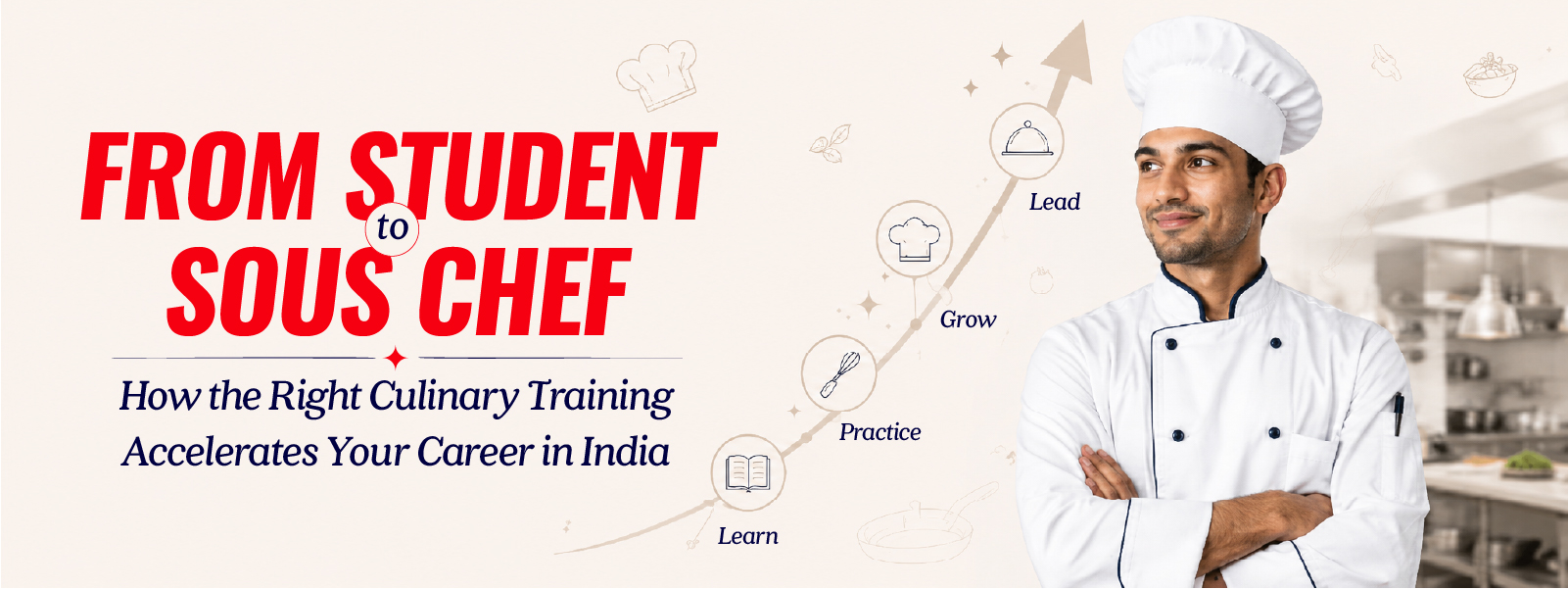
In a typical Indian hotel or restaurant kitchen, the career ladder looks like this. A Commis Chef starts at the entry level, focused on learning fundamentals and executing tasks under supervision. This stage typically lasts one to two years. A Chef de Partie takes ownership of a specific section of the kitchen, managing that station's output independently. This stage can last anywhere from two to four years depending on the individual and the kitchen.
A Sous Chef coordinates across multiple stations, supports the Head Chef, and takes on real leadership responsibility. Reaching this level typically happens somewhere between three and eight years into a career, and that range is exactly where the variation we are talking about lives. From Sous Chef, the path continues to Head Chef and Executive Chef, often another five to ten years depending on ambition and opportunity.
Here is the important thing to understand. Kitchens are promoted based on demonstrated capability, not years served. A Commis Chef who consistently performs at a Chef de Partie level will get promoted faster than one who simply waits out the clock. This is genuinely good news, because it means the variables that determine your speed are largely within your control, starting with the diploma in culinary arts programme you choose.
Understanding how to become sous chef India 2026 starts with understanding what the role actually involves. A Sous Chef is the second-in-command of the kitchen. On any given shift, they may be running service directly, stepping in across multiple stations as needed, managing the team's performance in real time, and ensuring that the Head Chef's standards are being met consistently across the entire kitchen, not just one section.
This is a genuinely different kind of role from anything before it on the career ladder. Up to this point, a chef has been responsible primarily for their own output. As Sous Chef, they become responsible for everyone else's output too. That shift, from individual contributor to leader, is why this milestone matters so much.
Reaching Sous Chef is significant for three reasons. First, it represents a substantial jump in salary and responsibility. Second, it is the role that most clearly demonstrates leadership capability, which is what opens doors to Head Chef and Executive Chef positions later. And third, it is often the point at which a chef has enough credibility and experience to consider other paths, consulting, opening their own venture, or moving into international kitchens. Reaching it faster compounds every opportunity that follows.
Through observing culinary careers across the industry, five factors consistently separate the chefs who progress quickly from those who progress slowly:
None of these factors operate in isolation. A strong institute leads to a stronger internship placement. A strong internship builds professional habits and technical depth faster. Technical depth and professional habits together are exactly what gets you noticed for early promotion. Each factor feeds into the next, which is why small differences at the start of a career can lead to dramatically different outcomes five years later.
This is where the choice of culinary arts colleges in India has its clearest, most measurable impact. Graduates from City and Guilds (UK) accredited programmes enter the workforce with a credential that hotel kitchens specifically recognise and trust. That recognition translates into being trusted with more responsibility sooner, which means reaching Chef de Partie level faster than peers from non-accredited backgrounds who may need more time to prove the same level of competence.
The differences show up in three concrete ways. Firstly, graduates from strong institutes are more likely to enter directly into roles with more responsibility rather than the most basic entry positions. Second, starting salary, accreditation and demonstrated skill level directly influence the initial offer. And third, promotion timeline, the combination of better starting position and stronger fundamentals means the path to Sous Chef genuinely compresses. Among the best culinary schools in India, these differences are consistent and well-documented across the industry.
An internship is not just a graduation requirement to tick off. It is, in many cases, the single most influential experience in a culinary student's early career. A strong internship at a reputable property gives you real exposure to professional kitchen pace, builds relationships with chefs who may become your first employers, and in many cases converts directly into a job offer at that same property.
Students who perform well during their internship often find that their first promotion comes faster too, because the chefs they worked under during the internship already know what they are capable of and trust them with more responsibility sooner than they would trust an unknown new hire.
For students who complete an international internship, the acceleration effect is even more pronounced. Exposure to different kitchen standards, working alongside chefs from different culinary traditions, and the sheer adaptability required to thrive in an unfamiliar environment all build capability faster than a domestic-only experience typically can. Graduates who return from international internships frequently step into roles with more responsibility than their peers who did not have that exposure.
Beyond the foundational factors, there are specific behaviours that chefs making promotion decisions look for. Consistency means producing the same quality output every single service, not just on good days. Initiative means noticing what needs to be done and doing it without being asked, whether that is restocking a station or helping a colleague who is falling behind. Composure under pressure means maintaining quality and clear thinking during the busiest, most chaotic moments of service. And the ability to train others is often the clearest signal that someone is ready for a leadership role, because Sous Chefs spend a significant portion of their time developing junior staff.
These are not soft skills that exist separately from technical training. A well-designed culinary arts course builds them as an integral part of the curriculum, through live service simulations that demand consistency, through kitchen environments that reward initiative, through high-pressure practical assessments, and through peer mentoring structures where students train each other. By the time a graduate enters their first job, these behaviours are already habits, not aspirations.
Every factor discussed in this guide is built into TGCA's approach. City and Guilds (UK) accreditation gives graduates a credential that is recognised and trusted across the industry, addressing the institute quality and certification factors directly. Training in a real commercial kitchen at Connaught Place from week one builds technical depth that matches what employers expect. And TGCA's active placement cell and international internship programme directly address the internship factor, connecting students to opportunities that compress their career timeline from the very beginning.
Among culinary arts colleges in India, the combination of accreditation, hands-on training, and placement support is what allows TGCA graduates to consistently reach Chef de Partie and Sous Chef milestones ahead of the typical industry timeline. This is not about shortcuts. It is about removing the friction and gaps that slow other graduates down, the wrong certification, the weak internship, the underdeveloped professional habits, so that talent and effort translate directly into progression.
The journey from student to Sous Chef can take three years or eight, and the difference comes down to five factors: institute quality, certification level, internship quality, technical depth, and professional habits. Every one of these factors traces back, directly or indirectly, to the choice of culinary arts colleges in India you make at the very start of your career.
This is genuinely empowering information. It means your career speed is not determined by chance. It is shaped by decisions you can make right now, starting with where you choose to train.
If your goal is not simply to become a chef, but to become a Sous Chef, Head Chef, and eventually a culinary leader as quickly as your talent allows, your journey starts with the right foundation. TGCA's City and Guilds (UK) accredited programmes, commercial kitchen training, experienced chef faculty, international internship opportunities, and active placement support are designed to help students build careers that move faster than the industry average.
2026 admissions are now open. Book a campus visit, meet the faculty, explore the kitchens, and discover how TGCA can help you build the skills, confidence, and professional habits that accelerate your journey from student to Sous Chef and beyond.
Typically three to eight years, depending on institute quality, internship experience, and individual performance. Graduates from accredited institutes with strong internships often reach Sous Chef on the faster end of this range due to better starting roles and faster-developing professional skills.
Sous Chef salaries at 5-star hotels in India in 2026 vary by city, property, and experience but represent a significant jump from Chef de Partie level. The exact figure depends on the hotel chain, location, and the candidate's specific experience and certifications.
Yes, significantly. Institute accreditation, training quality, and placement support directly influence your starting role, starting salary, and the pace of early promotions. Graduates from internationally accredited institutes consistently progress faster than those from non-accredited programmes.
A Chef de Partie manages one kitchen station independently. A Sous Chef oversees multiple stations, coordinates overall service, manages the team, and supports the Head Chef directly, representing a major step up from individual contribution to genuine kitchen leadership.
International internships expose students to different kitchen standards and build adaptability faster than a domestic-only experience. Graduates often return with more responsibility-readiness, helping them step into roles and promotions ahead of peers without that exposure.
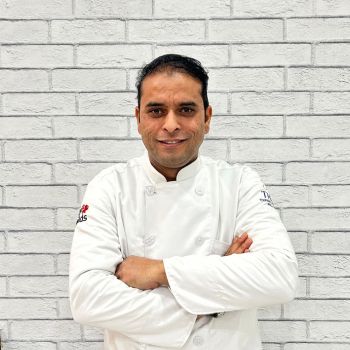
Pastry Instructor
 Whatsapp
Click one of our representatives below to chat on WhatsApp or send us an email to
info@tedcoeducation.com

Counselor
Bakery and Pastry Courses
Counselor
Culinary Arts Courses
Click one of our representatives below to chat on WhatsApp or send us an email to
info@tedcoeducation.com
Counselor
Bakery and Pastry Courses
Counselor
Culinary Arts Courses

