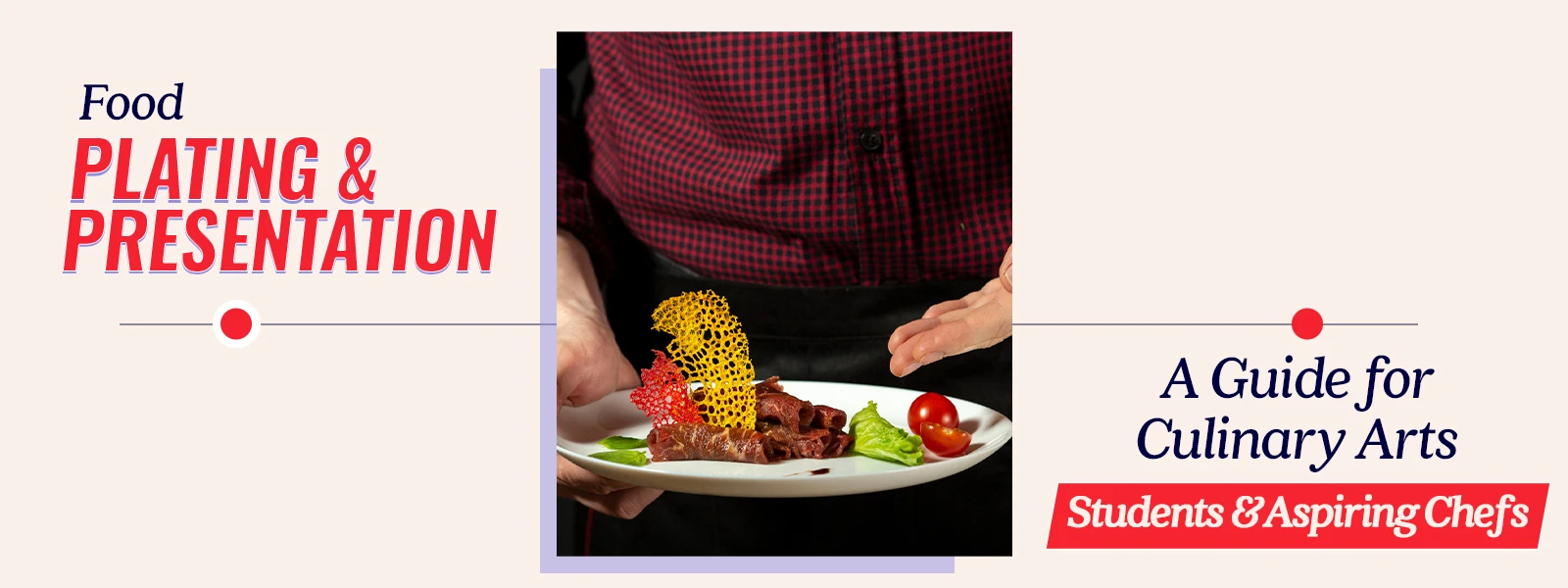
In professional kitchens, taste alone is never enough. Before a guest takes the first bite, the dish is judged by how it looks. This is why food plating and presentation has become a core skill for modern chefs. For culinary arts students and early career chefs, learning presentation is not about decoration. It is about structure, balance, intention, and clarity.
As the food industry in Delhi grows more competitive, chefs are expected to deliver visually refined plates alongside consistent flavors. Restaurants, cafés, hotels, and cloud kitchens now treat presentation as a standard, not a bonus. This guide explains the fundamentals of plating, modern approaches, and how students can build strong presentation skills from the start.
Food presentation directly affects how guests perceive quality. A well-plated dish communicates professionalism, care, and confidence. Poor presentation, even with good flavor, lowers perceived value.
For chefs, food presentation skills influence
Professional training does not separate cooking and plating. They are taught together. Students at culinary arts colleges in India learn early that plating begins during preparation, not at the final step.
Presentation decisions affect:
At its core, food plating and presentation is about control and intention. Every element on the plate should serve a purpose.
The basic principles include:
Professional kitchens today use a range of modern plating techniques that emphasize simplicity and clarity.
Some commonly used approaches include:
Consistency matters more than creativity in professional settings. A dish must look the same every time.
Effective plating techniques help chefs:
Presentation is a skill developed through observation and repetition. Students should actively practice plating, not treat it as an afterthought.
Key habits include:
Creativity does not mean complexity. Creative food presentation works best when it supports the dish, not distracts from it.
Creative choices may involve:
Many food presentation ideas look impressive online but fail in service environments. Students should focus on ideas that are practical and repeatable.
Examples include:
The food industry in Delhi plays a major role in shaping plating standards. With a mix of luxury hotels, modern cafés, and experimental restaurants, Delhi encourages both global and localized presentation styles.
Chefs here are influenced by:
For aspiring chefs, strong presentation skills open doors. Employers notice chefs who plate cleanly, consistently, and confidently.
Students should avoid copying blindly. Instead, they should understand why a plate works.
Training at professional institutes emphasizes:
Early mistakes are part of learning, but awareness speeds improvement.
Common errors include:
Plating is not decoration. It is communication. Through food plating and presentation, chefs express intention, quality, and professionalism. For culinary arts students, mastering presentation is as important as mastering technique.
As expectations continue to rise across the food industry in Delhi, chefs who understand the language of presentation gain a clear competitive edge. This is where structured training makes a real difference. At Tedco Education, students are trained to approach plating with purpose, combining technical skill with visual balance and modern presentation standards.
Food plating and presentation help students understand visual balance, portion control, and professionalism. Strong presentation improves guest perception, supports higher menu value, and prepares students for real kitchen expectations in restaurants and hotels.
Strong food presentation skills help chefs gain visibility, responsibility, and trust in professional kitchens. Employers value chefs who plate consistently because presentation reflects discipline, attention to detail, and understanding of modern dining standards.
Beginners should start with modern plating techniques like minimal layouts, negative space, clean sauce placement, and simple height building. These techniques focus on clarity and consistency, which are essential before attempting complex or artistic designs.
Yes, culinary arts colleges in India teach plating as part of practical training. Students learn plate composition, garnish control, portion sizing, and professional presentation methods aligned with hotel, restaurant, and contemporary food industry standards.
The food industry in Delhi sets high visual standards due to luxury hotels, modern cafés, and social media-driven dining. This pushes chefs to develop refined presentation styles that meet customer expectations and competitive market demands.
Common mistakes in creative food presentation include overcrowding plates, using unnecessary garnishes, inconsistent portions, and messy sauces. These errors distract from the dish and reduce professionalism, even when the food tastes good.
Students can practice food presentation by plating regularly, photographing dishes, studying professional examples, taking feedback from chefs, and focusing on balance and simplicity. Repetition helps develop speed, confidence, and consistency in real kitchen environments.
Culinary Instructor
 Whatsapp
Click one of our representatives below to chat on WhatsApp or send us an email to
info@tedcoeducation.com

Counselor
Bakery and Pastry Courses
Counselor
Culinary Arts Courses
Click one of our representatives below to chat on WhatsApp or send us an email to
info@tedcoeducation.com
Counselor
Bakery and Pastry Courses
Counselor
Culinary Arts Courses

