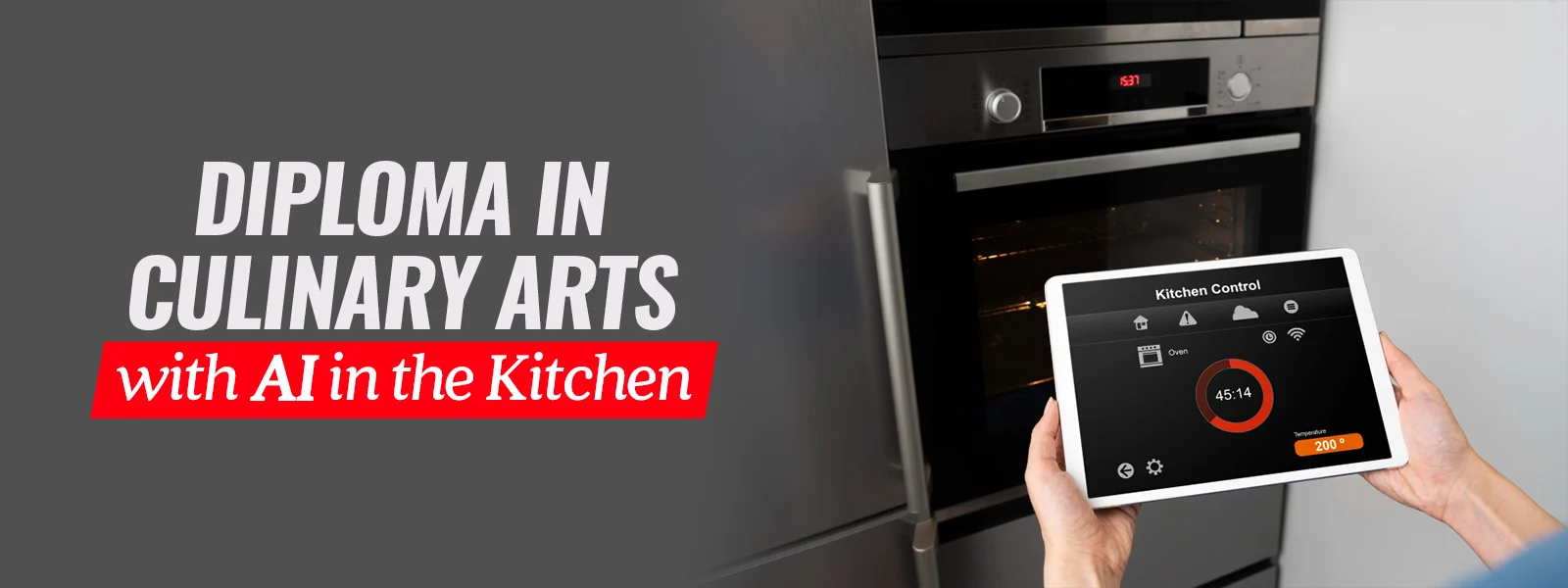
The professional kitchen is changing faster than ever. Alongside knives, pans, and traditional techniques, modern kitchens now use digital screens, automated ovens, temperature sensors, and data-driven tools. As technology enters hospitality, students often ask whether a diploma in culinary arts still focuses on core cooking skills or if training now includes artificial intelligence and smart kitchen tools.
The short answer is yes, but with balance. Culinary education is evolving, not replacing fundamentals. Understanding how technology supports chefs has become part of modern training, especially in large kitchens, hotels, and food production environments.
This guide explains how AI and smart technology fit into culinary education, what students actually learn, and what still matters most in professional kitchens.
Professional kitchens are no longer dependent only on manual processes. Hotels, large restaurant chains, and cloud kitchens now rely on digital systems to maintain consistency, improve speed, and ensure food safety.
This shift is driven by rising customer expectations, high production volumes, staff efficiency requirements, strict food safety regulations, and the need for better cost control. As a result, kitchen automation has become a standard part of modern food operations, particularly in large-scale and high-output kitchen environments.
Despite rapid technological advances, the foundation of a diploma in culinary arts remains unchanged. Students are trained first to think and work as chefs, not as operators of machines. Core learning continues to focus on knife skills, ingredient behavior, essential cooking techniques, flavor development, hygiene standards, and kitchen discipline.
Technology is introduced only after these fundamentals are mastered, because without strong culinary basics, even the most advanced tools cannot produce consistent or high-quality results.
AI does not cook on behalf of chefs. Instead, AI in cooking supports decision-making, consistency, and efficiency.
In training environments, AI exposure may include:
Many modern institutes now introduce students to smart kitchen technology during advanced modules or demonstrations.
Examples include:
A modern culinary arts course syllabus blends traditional techniques with awareness of new systems.
Typical syllabus elements include
Smart ovens are increasingly used in hotels and large bakeries. They ensure temperature accuracy, timing consistency, and reduced waste.
Recipe apps and digital systems help standardize production in multi-outlet kitchens. Students are introduced to these systems to understand workflow, not to replace creativity.
Apps assist with:
Exposure to modern kitchen equipment prepares students for real workplaces. Many graduates struggle when they encounter unfamiliar systems during their first jobs.
No. Technology supports chefs, but it cannot replace taste, judgment, creativity, or leadership.
Students considering a diploma should ask whether the program:
Culinary education will continue evolving. Technology will become more visible, but the chef’s role will remain central.
A diploma in culinary arts in today’s world is not about choosing between tradition and technology. It is about learning both in the right order. Chefs must understand food first, then learn how smart systems support professional kitchens.
As kitchen automation, AI in cooking, and smart kitchen technologies continue to evolve, culinary education is expanding to include awareness and practical application of these tools. At Tedco Education, this balance is central to training, where strong culinary fundamentals are reinforced while introducing students to modern kitchen workflows and emerging technologies.
Most programs focus on fundamentals first, then introduce technology concepts. A diploma in culinary arts may include exposure to automation tools, but core cooking skills, technique, and kitchen discipline remain the primary training focus.
Kitchen automation helps maintain consistency, reduce errors, and manage high volume production. It supports chefs by handling repetitive tasks while allowing professionals to focus on flavor, quality control, and kitchen leadership.
No. Smart kitchen technology is designed to simplify operations. Students learn basic controls, monitoring systems, and safety features easily once they understand cooking fundamentals and kitchen workflow principles.
AI in cooking supports planning, monitoring, and consistency. It does not make creative decisions. Chefs still control seasoning, texture, presentation, and final judgment, which machines cannot replicate.
Students may encounter modern kitchen equipment like smart ovens, digital thermometers, automated proofers, and inventory systems. Exposure helps them adapt faster to professional kitchens after graduation.
The culinary arts course syllabus evolves gradually. Fundamentals stay constant, while technology modules are updated to reflect industry usage, ensuring students remain relevant without compromising core cooking education.
Technology matters, but fundamentals matter more. Students should choose programs that balance technique, discipline, and modern awareness rather than courses that rely heavily on automation without strong culinary foundations.
Bakery & Pastry Specialist
 Whatsapp
Click one of our representatives below to chat on WhatsApp or send us an email to
info@tedcoeducation.com

Counselor
Bakery and Pastry Courses
Counselor
Culinary Arts Courses
Click one of our representatives below to chat on WhatsApp or send us an email to
info@tedcoeducation.com
Counselor
Bakery and Pastry Courses
Counselor
Culinary Arts Courses

