
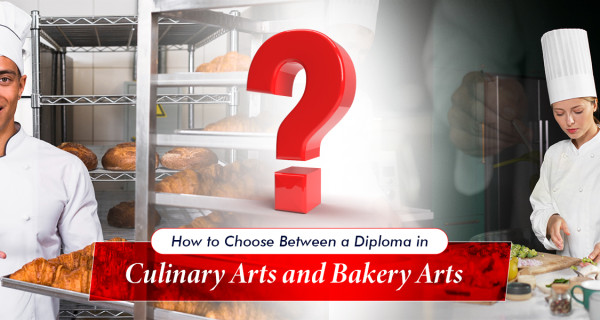
Standing at the crossroads of a culinary career is exciting, but let’s be honest, it can also be a little paralysing. You know you belong in the food industry. You know you want to trade a desk for a workstation and a laptop for a knife kit. But then comes the big question, the one that splits the food world right down the middle: Should you be cooking savoury feasts or baking delicate pastries?
At our academy, Tedco Education. We meet hundreds of students every year who are stuck in this exact dilemma. They love the adrenaline of the hot kitchen, but they also dream of the quiet precision of the pastry station. Choosing the right path is crucial because, while they both involve food, the day-to-day reality of a chef is vastly different from that of a baker.
If you are currently scrolling through culinary arts courses in India, trying to find your calling, you’ve come to the right place. Whether you are leaning towards a culinary diploma or just exploring options, we are here to break down the real differences. This guide will help you weigh the pros and cons of a diploma in culinary arts vs a diploma in bakery so you can enrol with confidence.
Before we talk about curriculums and exams, let’s talk about you. The biggest difference between these two fields isn't just the ingredients; it’s the mindset.
The Culinary Arts Mindset: Culinary arts is often about controlled chaos. It’s dynamic, fast-paced, and relies heavily on instinct and adjustment. If you are making a soup and it tastes bland, you add salt. If a sauce is too thin, you reduce it. You are constantly tasting, tweaking, and fixing things on the fly. It demands a personality that thrives on adrenaline, teamwork, and quick problem-solving.
The Bakery & Patisserie Mindset: Bakery is science. It’s chemistry you can eat. If you forget the baking powder or misjudge the oven temperature by 10 degrees, you can’t "fix" the cake halfway through baking. It’s ruined. A bakery diploma course teaches you discipline, patience, and precision. It appeals to people who are detail-oriented, artistic, and find peace in following a process to perfection.
To make an informed choice, you need to know what your days in class will look like.
When you enrol in a culinary arts diploma course, at Tedco Education, you are signing up to be a master of the savoury world. The curriculum is broad. You aren't just learning recipes; you are learning techniques that apply to thousands of dishes.
In contrast, a bakery diploma course is specialised. It’s about structure and transformation.
When students ask us to compare the diploma in culinary arts vs the diploma in bakery, we often describe it as the difference between a jazz musician and a classical musician.
The culinary chef (Jazz) knows the theory but improvises. They work with heat, fire and speed. The environment is loud, energetic, and hot. The service pressure is immediate; the guest is waiting now.
The pastry chef (Classical) follows the sheet music exactly. They work with cool marble surfaces and ovens. The environment is generally quieter, cooler (chocolate melts in heat!), and more focused. The pressure is in the prep; you have to have everything ready and perfect before the doors even open.
If you hate measuring ingredients down to the gram, a diploma in culinary arts is likely your home. If you hate the unpredictability of a dinner rush and prefer the meditative rhythm of kneading dough, stick to the bakery.
It’s important to look beyond the classroom. The culinary vs bakery career paths diverge quite a bit once you graduate.
Rôles : Commis Chef, Chef de Partie, Sous-Chef, Executive Chef.
Workplaces: Hotels, Restaurants, Cruise Ships, Catering Companies, and Private Household Chef.
The Ladder: You usually climb the ranks of the "Brigade System." It’s a hierarchy. The ultimate goal for many is running their own kitchen or becoming an Executive Chef who designs menus.
Roles: Pastry Chef, Baker, Cake Decorator, Chocolatier, Boulanger.
Workplaces: Bakeries, Patisseries, Cafes, Hotel Pastry Kitchens, Wedding Cake Studios.
The Ladder: You might start mixing dough, but you can specialise quickly. Many bakery graduates find it easier to start their own small businesses or home-baking ventures earlier in their careers compared to culinary chefs.
We often get asked, "Culinary arts or bakery, which is better for a secure future?"
The honest answer? Neither is "better." Both industries are booming. The food industry in India and abroad is seeing massive growth. People will always need to eat dinner (Culinary), and people will always celebrate with cake (Bakery).
However, if we look at versatility, a culinary arts diploma course covers a wider range of food. A culinary chef is often expected to know a little bit of pastry, whereas a pastry chef is rarely expected to know how to roast a duck. But the flip side is that good pastry chefs are rarer. Because the skill set is so specific and difficult to master, skilled pastry chefs are highly sought after and can command excellent salaries.
Want to know more? Fill this form and our team will contact you soon.
This is the secret option. Many successful professionals actually start with one and eventually learn the other. However, when you are just starting, we strongly recommend picking a specialisation. Trying to learn everything at once can be overwhelming.
If you are torn between a diploma in culinary arts or bakery, think about what you do in your free time. When you scroll through Instagram or watch YouTube, are you watching someone temper chocolate and frost a cake? Or are you watching someone sear a steak and plate a pasta dish? Your natural interest is the best compass.
Let’s talk logistics. In terms of course duration and cost, the diploma in culinary arts vs diploma in bakery comparison usually shows them as quite similar. Both require significant hours of practical training.
Tools: Culinary students invest in knife kits. Bakery students invest in piping nozzles, scrapers, and palette knives.
Physicality: Both are physically demanding. You will be on your feet for 8 hours a day. However, culinary arts tend to be more physically exhausting due to the heat of the stoves and the speed of service. Bakery is physically demanding with the lifting of different heavy flour sacks and repetitive motions (kneading, piping).
If you are still on the fence, here is our advice to you as a prospective student:
Visit the Kitchens: Come to our campus. Stand in the Hot Kitchen. Then stand in the Bakery. Close your eyes. Which smell makes you happier? The smell of roasting garlic and onions, or the smell of vanilla and yeast?
Analyse Your Patience: Do you have the patience to wait 4 hours for the dough to prove? If yes, Bakery. Do you want to see the result of your cooking in 20 minutes? If yes, Culinary.
Think About Lifestyle: If you want to work in a restaurant, be prepared for late nights (dinner service). Bakeries often start very early in the morning (fresh bread for breakfast), but they might finish earlier in the day.
Ultimately, the battle of culinary vs bakery career has no losers. Both paths allow you to express your creativity, work with your hands, and bring joy to people through food.
Choosing between a diploma in culinary arts and a bakery diploma is about finding where you fit in the ecosystem of the kitchen. Are you the conductor of the orchestra (Culinary) or the solo virtuoso (Bakery)?
Whichever path you choose, the most important step is getting the right foundation. At our academy, we don't just teach recipes; we build careers. We turn passion into professionalism.
So, are you ready to put on your apron?
Take the first step toward your dream kitchen. Whether you want to master the flame or the oven, we have a station waiting for you.
Technically, "Chef" is a rank, not just a job description. A Head Pastry Chef is still a Chef. However, if you choose a bakery diploma, you will be a Pastry Chef, not a Culinary (Savoury) Chef. You won't be trained to run the hot kitchen or cook main courses.
Neither is easier; they are difficult in different ways. Culinary Arts is physically gruelling and high-pressure during service hours. Baking requires intense mental focus, mathematical precision, and patience. Culinary is harder on the body; Bakery is harder on the details.
Entry-level salaries are similar for both. However, because expert Pastry Chefs are harder to find than general Culinary Chefs, specialised chocolatiers and sugar artists can often command premium salaries later in their careers, especially in luxury hotels.
It helps, but it’s not mandatory. Cake decorating and plating desserts do require an artistic eye. However, these are skills we teach. You don't need to be Picasso; you just need a steady hand and a willingness to practice your piping skills.
Yes, many chefs do this. Having a diploma in culinary arts gives you a great foundation in food safety and organisation. However, you would likely need to take a specialised short course in Bakery later to master the specific scientific techniques required for pastry.
Bakery & Pastry Specialist
 Whatsapp
Click one of our representatives below to chat on WhatsApp or send us an email to
info@tedcoeducation.com

Counselor
Bakery and Pastry Courses
Counselor
Culinary Arts Courses
Click one of our representatives below to chat on WhatsApp or send us an email to
info@tedcoeducation.com
Counselor
Bakery and Pastry Courses
Counselor
Culinary Arts Courses

