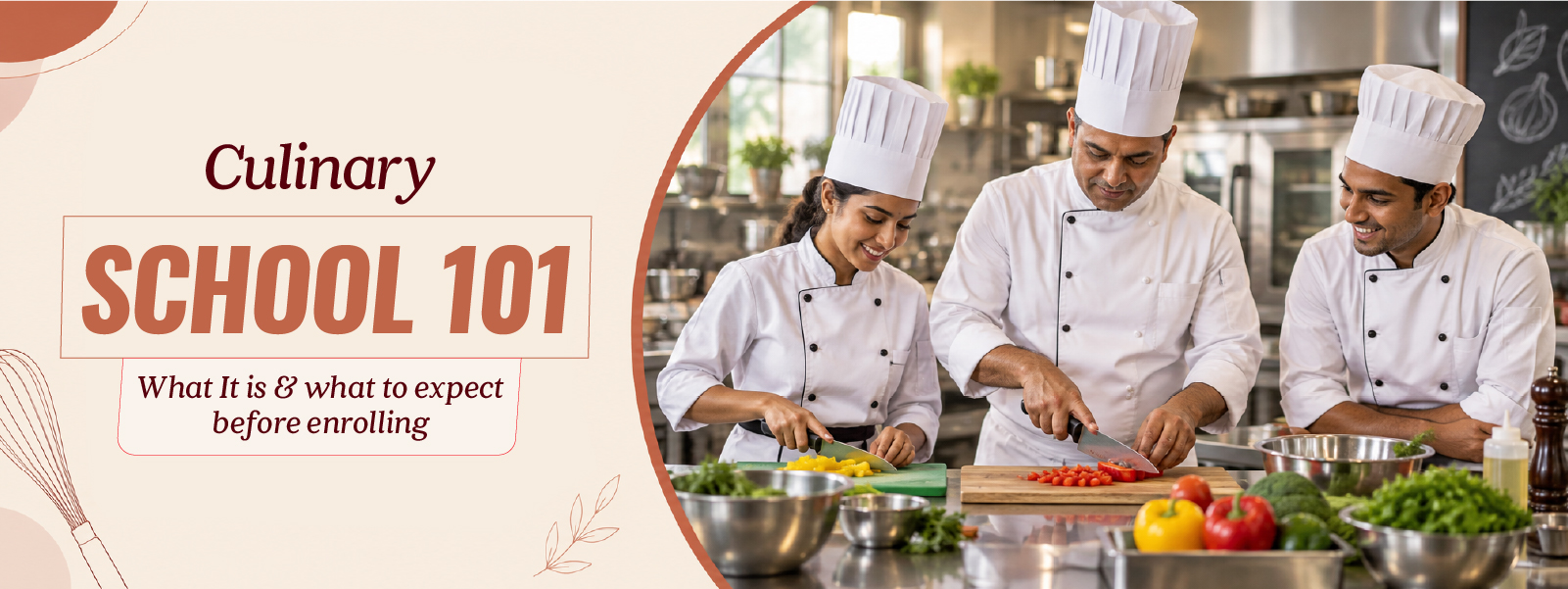
Choosing a culinary school is a significant decision, particularly if you are planning to turn your interest in food into a professional career. With so many culinary schools in India offering certificates, diplomas and other programmes, it can be difficult to know what actually happens after you enrol.
A culinary school is not simply a place where you learn recipes. A professional programme combines classroom learning, practical kitchen training, food safety, culinary techniques, discipline and exposure to professional kitchen operations. Before enrolling, it is worth understanding what you will study, what you will need to spend and what questions you should ask the institute.
Culinary education is not limited to one type of student.
It can be suitable for:
Parents should also understand what the programme involves. Professional kitchen training requires punctuality, discipline, practical work and a willingness to work with different ingredients, equipment and cooking methods.
A culinary school provides structured education and practical training in cooking, baking, food preparation and professional kitchen operations.
Unlike casual cooking classes, professional culinary programmes are designed around skills that can be applied in commercial food environments.
A structured programme may include:
The exact curriculum varies from one institution to another, which is why comparing the syllabus is important before enrolling.
Not every culinary programme serves the same purpose. The right option depends on your career objective, available time and level of commitment.
Certificate courses are generally shorter and can provide foundational or focused training.
They may suit students who want to build specific skills without committing to a longer programme.
For example, TGCA's Certificate Course in Culinary Arts is a three-month programme combining practical and theoretical learning. Its curriculum includes cooking methods, cuisines, kitchen operations, hygiene and food safety.
A culinary diploma usually provides a broader and more structured professional pathway.
At TGCA, the Diploma in Culinary Arts is a 12-month programme, with six months of classroom and practical delivery followed by six months of industrial training. The programme covers culinary fundamentals, cooking methods, bakery and desserts, food presentation, food safety and professional kitchen practices.
Bachelor's and other degree-level programmes generally involve a longer academic pathway and may include hospitality-related subjects alongside culinary training.
If your primary goal is to become a chef, compare the actual practical kitchen hours, curriculum and industry exposure rather than choosing a programme solely because it has a degree title.
This distinction is particularly important.
A hobby course may be designed around learning selected recipes or techniques for personal interest. A professional programme is more likely to include structured assessments, kitchen discipline, food safety, production planning and broader culinary skills.
Before enrolling, ask yourself what you actually want from the course.
Not everyone wants to work as a general chef.
If your interest is bread, cakes, chocolate, desserts or patisserie, a specialised bakery and pastry programme may be more relevant.
A dedicated programme can provide focused training in areas such as:
TGCA currently offers a 12-month Diploma in Bakery & Pastry Arts alongside its culinary programmes.
Eligibility varies between institutions and individual programmes, so always check the latest admission requirements before applying.
For example, TGCA's current Diploma in Culinary Arts information lists 12th pass and above as the eligibility requirement and states that English fluency is required.
Depending on the institution, you may need to:
Do not assume that every culinary school uses an entrance examination. Admission processes vary.
This is one of the most important questions to ask before enrolling.
Most professional culinary programmes begin with fundamentals.
These can include:
TGCA's Diploma in Culinary Arts curriculum includes knife skills, ingredient organisation, preparation, cooking methods, stocks, soups, sauces, bakery and desserts, salads, platters and food presentation.
Depending on the programme, students may also study bakery and pastry alongside cuisines from India and other parts of the world.
This broad exposure can help students understand how ingredients, techniques and cooking traditions vary across cuisines.
Professional culinary education is not only about cooking.
Students also need to understand:
TGCA's current Diploma curriculum specifically includes food safety, hygiene, HACCP principles, teamwork, time management and sustainability-related topics.
A culinary school day can be much more structured than students expect.
Depending on the timetable, a day may include theory followed by demonstrations and practical kitchen sessions.
Theory can cover subjects such as food science, hygiene, nutrition, menu planning or kitchen operations.
These lessons help students understand the reasoning behind the practical work.
This is where students put the concepts into practice.
A practical session may involve:
Professional kitchens operate according to clear standards.
Students should expect rules covering:
These habits matter because professional kitchens depend heavily on consistency and teamwork.
The course fee is not always the complete cost of culinary education.
Before enrolling, ask what is included and what you need to purchase separately.
These may include:
The exact costs vary considerably between institutions.
For example, TGCA currently lists registration, tuition, uniform and toolkit and applicable certification-related fees separately on its Diploma in Culinary Arts course page. Always check the latest fee structure directly with the institute before making a financial decision.
Accreditation can help you understand how a qualification is structured and who awards it.
However, do not judge a culinary school only by an accreditation logo.
Look at what the qualification actually covers, how assessments are conducted and how much practical training you receive.
TGCA's current Diploma in Culinary Arts programme is presented as an IVQ Level 2 qualification and identifies City & Guilds as the awarding body.
If you are considering working abroad, ask the institution how its qualification is recognised and what additional requirements individual employers or countries may have.
Recognition can support applications, but it does not replace practical ability, experience or employer-specific requirements.
Industry exposure is one of the areas students should investigate carefully before choosing a culinary school.
Some programmes include an industry-training component after the classroom and practical phase.
TGCA's Diploma in Culinary Arts currently describes a six-month industrial training period following six months of classroom and practical delivery. The academy also states that students can receive exposure through hotel kitchen visits and industry demonstrations.
The important question is not simply whether a brochure says "industry exposure".
Ask:
Some culinary schools provide support for students interested in opportunities outside India.
TGCA currently states that it provides international career assistance and guidance for students interested in global opportunities.
However, international opportunities can involve additional eligibility, immigration, employer and documentation requirements. Students should confirm the exact terms of any overseas opportunity before making plans.
A culinary qualification can lead to several different career paths.
Graduates may begin in entry-level kitchen positions and gradually take on greater responsibilities as their skills and experience develop.
Students with specialised bakery training can pursue roles in bakeries, patisseries, hotels, restaurants and dessert operations.
Catering businesses require professionals who can manage preparation, production, presentation and service for different event sizes.
Some hospitality employers recruit culinary professionals for international operations, although requirements vary by employer and location.
Culinary training can also provide a foundation for starting a food business, bakery, catering operation or other culinary venture.
Do not expect to become a head chef immediately after graduation.
Culinary careers usually develop through experience. Your first role may involve preparation, basic cooking, cleaning, mise en place and supporting senior chefs.
As you become more technically capable and reliable, you can take responsibility for more complex tasks and eventually progress into supervisory roles.
The course title is only one part of the decision.
Find out who teaches the practical sessions and what professional experience they bring.
Good culinary education depends heavily on demonstrations, feedback and supervised practice.
Ask to see the training kitchens.
Look at:
Also consider the student-to-station ratio. A beautiful kitchen is less useful if too many students have to share one workstation during practical sessions.
Ask for clear information rather than relying only on phrases such as "100% placement assistance".
Find out what placement support actually includes.
TGCA states that its placement support includes interview preparation, portfolio guidance and introductions to hospitality partners for domestic and international opportunities.
A campus visit can tell you things a website cannot.
During your visit, ask:
If possible, speak to current students as well as the admissions team.
Culinary school can be rewarding, but it is not simply about spending a few hours cooking dishes you enjoy.
You should be prepared for:
The students who benefit most are generally those who approach training with curiosity and consistency rather than expecting instant expertise.
Choosing between the many culinary arts colleges in India requires more than comparing course names and fees.
Before enrolling, understand the programme structure, eligibility, curriculum, practical hours, kitchen facilities, additional costs, accreditation and industry exposure. Most importantly, look at whether the school gives you enough opportunities to practise what you are learning.
If you are considering a culinary diploma, visiting the campus and speaking with the admissions team can help you understand what the experience will actually be like.
TGCA's Connaught Place campus offers professional culinary training in a practical kitchen environment, and the academy invites prospective students to enquire about visits and programme details.
The right culinary education should leave you with more than a certificate. It should help you develop the technical skills, discipline and kitchen confidence needed to take your first steps into the professional food industry.
Requirements vary by programme and institution. TGCA currently lists Class 12 completion and English fluency for its Diploma in Culinary Arts. Always check the latest eligibility criteria before applying.
A diploma generally provides a longer and broader professional programme, while a certificate course is usually shorter and more focused. The right choice depends on your career objective, available time and desired depth of training.
Yes. Cooking is a practical profession, so students need opportunities to practise techniques, use professional equipment, work in teams and follow kitchen procedures rather than relying only on classroom theory.
Ask about practical kitchen facilities, batch sizes, student-to-station ratios, faculty, curriculum, assessments, industry exposure, placement support, accommodation and costs beyond tuition.
Some programmes provide qualifications, industry exposure and career support that may assist with international applications. However, overseas employment depends on the employer, destination, qualification requirements, immigration rules and your professional experience.
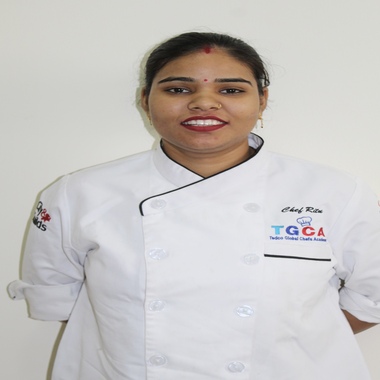
Bakery and Pastry Instructor
 Whatsapp
Click one of our representatives below to chat on WhatsApp or send us an email to
info@tedcoeducation.com

Counselor
Bakery and Pastry Courses
Counselor
Culinary Arts Courses
Click one of our representatives below to chat on WhatsApp or send us an email to
info@tedcoeducation.com
Counselor
Bakery and Pastry Courses
Counselor
Culinary Arts Courses

