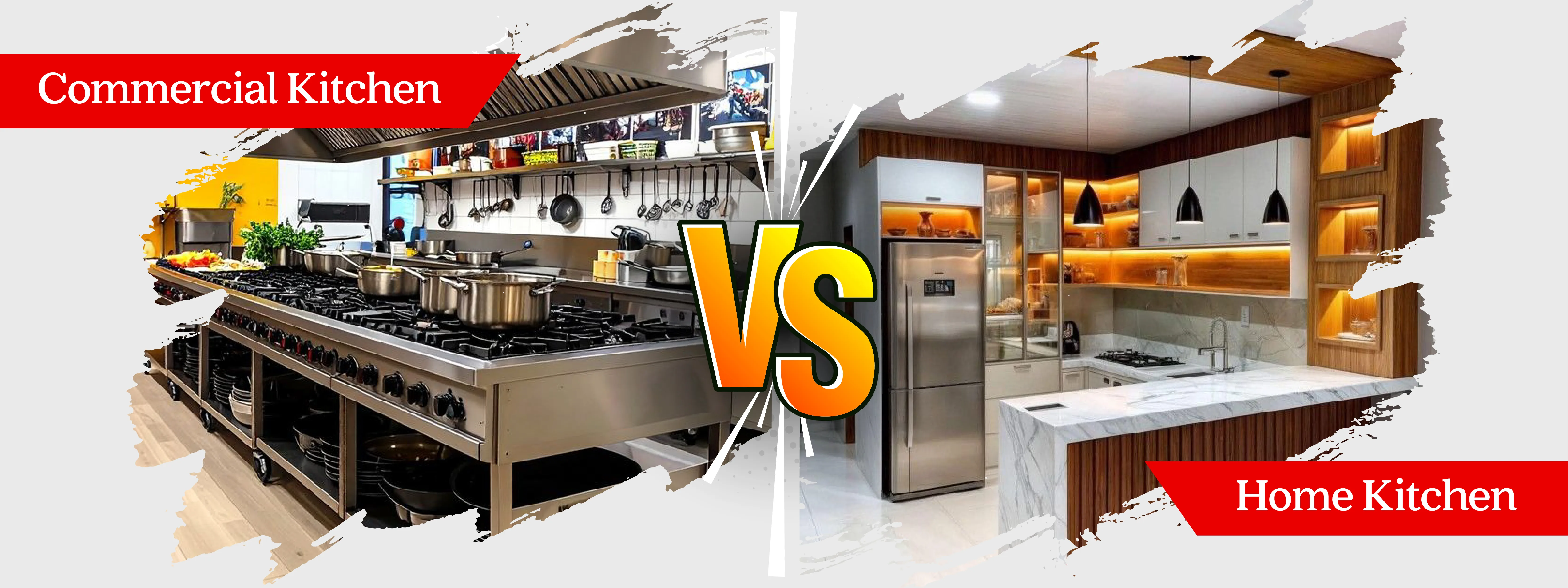

For aspiring chefs, stepping into a professional culinary environment is a transformative experience. While most students begin their cooking journey in a home kitchen, their career ambitions lead them toward commercial kitchens. The debate of commercial kitchen vs home kitchen is not about which one is better, but about understanding their distinct purposes, structures, and expectations. For students exploring culinary schools in India or searching for the best culinary schools in Delhi, knowing this difference is essential before beginning formal training. The transition from home cooking to professional kitchen operations requires discipline, technical awareness, speed, and adaptability. Understanding these differences prepares students for real-world culinary demands.
A home kitchen is designed primarily for personal or family cooking. It prioritizes convenience, comfort, and limited volume preparation. Equipment is basic, storage capacity is smaller, and workflow is flexible.
In a home kitchen, one person usually performs all tasks—from prep and cooking to plating and cleaning. There is minimal division of labor. Cooking pace is relaxed, and the focus is on nourishment and enjoyment rather than speed and consistency.
Home kitchens often lack specialized equipment such as industrial ovens, salamanders, blast chillers, or commercial-grade mixers. Space limitations also affect efficiency when preparing food for large groups.
For beginners, home kitchens provide foundational exposure. However, they do not simulate the intensity or structure of professional environments.
A commercial kitchen is designed for large-scale food production, efficiency, and strict hygiene compliance. It follows a structured layout to optimize workflow, safety, and productivity.
In professional kitchen setups, tasks are divided among chefs and kitchen staff. Stations are assigned for specific responsibilities such as garde manger, grill, pastry, or sauce preparation. Every movement is planned to maximize speed and minimize errors.
Commercial kitchens operate under time pressure. Orders must be prepared consistently, quickly, and safely. Equipment is industrial-grade, built to handle high volumes. This includes convection ovens, combi ovens, deep fryers, commercial refrigeration units, and stainless steel workstations.
Understanding commercial kitchen requirements in India is especially important for culinary students, as food safety laws and hygiene standards play a crucial role in professional training.
Home kitchens serve families. Commercial kitchens serve dozens or hundreds daily. Volume dramatically changes workflow, preparation planning, and ingredient management.
Kitchen equipment comparison reveals major contrasts. Home kitchens use domestic appliances. Commercial kitchens use heavy-duty, high-capacity equipment designed for durability and performance.
Professional ovens provide consistent heat distribution. Commercial refrigeration systems maintain strict temperature control. These tools are necessary for industry-level production.
In home kitchens, workflow is flexible. In commercial kitchens, workflow follows a brigade system with clearly defined roles. Every chef understands their station and responsibility.
Commercial kitchens must comply with food safety regulations. Surfaces are stainless steel for sanitation. Temperature logs, hygiene audits, and proper storage practices are mandatory.
Home kitchens follow general cleanliness but are not bound by commercial standards.
Home cooking allows flexibility. Commercial kitchens demand speed and precision. Time management becomes critical.
For students entering culinary schools in India, adapting to professional pace is one of the biggest challenges.
A culinary training kitchen replicates real industry environments. It teaches students how to function within structured teams, manage time, and maintain hygiene standards.
Hands-on training in professional kitchen setups builds discipline. Students learn station organization, plating consistency, mise en place preparation, and coordination under pressure.
Without exposure to commercial kitchens, students may struggle when transitioning to hotel or restaurant jobs.
In structured training programs, students are introduced to:
These elements are rarely experienced in home kitchens.
The best culinary schools in Delhi emphasize realistic training environments to bridge this gap.
Commercial kitchens in India must adhere to FSSAI guidelines, fire safety regulations, waste disposal systems, and proper ventilation requirements.
Understanding these legal standards prepares students for compliance in professional roles. Culinary schools in India integrate these standards into curriculum modules to ensure graduates meet industry expectations.
Employers look for candidates who understand professional kitchen dynamics. Experience in commercial setups demonstrates readiness for restaurant, hotel, or catering roles.
Students trained only in theoretical concepts may lack operational confidence. Practical exposure builds competence and employability.
Transitioning from home kitchen to commercial kitchen is not automatic. It requires guidance, mentorship, and structured curriculum.
At Tedco Education, students gain hands-on exposure in fully equipped training kitchens designed to simulate real-world restaurant environments.
The institution focuses on building technical skill, speed, hygiene awareness, and professional discipline. This prepares students to confidently enter the hospitality industry.
Home kitchens nurture passion. Commercial kitchens build professionals.
The real difference lies in scale, structure, equipment, speed, and compliance standards. Culinary students must understand both environments but train extensively in commercial setups to meet industry demands.
For aspiring chefs exploring culinary schools in India or searching for the best culinary schools in Delhi, selecting an institution that offers real commercial kitchen exposure is crucial.
Come get your hands dirty and master the art of professional cooking. Enrol today.
A commercial kitchen is designed for large-scale food production with industrial equipment and strict hygiene regulations, while a home kitchen focuses on small-scale personal cooking and basic appliances.
Commercial kitchen training prepares students for real restaurant environments, teaching workflow management, hygiene compliance, time control, and teamwork essential for professional culinary careers.
Yes. Commercial kitchens in India must follow FSSAI guidelines, fire safety standards, hygiene regulations, and food storage protocols to ensure consumer safety and operational compliance.
Home cooking builds passion but cannot replace structured professional training, which develops speed, coordination, equipment-handling skills, and the industry-level discipline required in commercial environments.
Students should choose schools with fully equipped training kitchens, experienced faculty, structured curriculum, hygiene compliance training, and practical exposure to real commercial kitchen operations.

Bakery & Pastry Instructor
 Whatsapp
Click one of our representatives below to chat on WhatsApp or send us an email to
info@tedcoeducation.com

Counselor
Bakery and Pastry Courses
Counselor
Culinary Arts Courses
Click one of our representatives below to chat on WhatsApp or send us an email to
info@tedcoeducation.com
Counselor
Bakery and Pastry Courses
Counselor
Culinary Arts Courses

