If you are a commerce student who has spent the last two years studying accountancy, business studies, and economics, while secretly spending your evenings watching cooking videos and imagining yourself in a professional kitchen, this blog is written specifically for you. And the first thing it needs to tell you is this: the idea that culinary arts is not for commerce students is one of the most persistent and most incorrect myths in Indian career counselling.
Every year, commerce students across India hold back from pursuing chef courses after 12th commerce because someone told them it was not the right stream for it. A parent suggested it was too risky. A teacher implied that science students were better suited. A friend said you need a different background to be taken seriously in a professional kitchen.
All of that is wrong. And this guide proves it, with facts, with logic, and with a genuine understanding of what the culinary and food industry actually values in the professionals it hires and promotes.
By the end of this guide, you will know exactly why any stream is eligible for culinary arts after 12th, why commerce students actually have a hidden advantage in culinary education, what career paths a commerce background plus culinary training uniquely qualifies you for, and how to apply to TGCA with your commerce stream background and no prior cooking experience. Let us get into it.
Let us settle this once and for all. Culinary arts programmes in India, including all courses at TGCA, are open to students from every academic stream. Science, Arts, and Commerce students are equally eligible. There is no stream restriction, no minimum percentage requirement, and no entrance exam. The only qualification you need to enrol in any of TGCA's culinary or bakery programmes is a 12th pass certificate, regardless of which subjects you studied.
This is not a compromise or a concession. It is by design. Professional cooking is a practical skill-based career. The subjects you studied in 11th and 12th, whether they were Maths, Economics, History, or Biology, have no bearing on your ability to master knife skills, develop a palate, understand kitchen management, or build a successful culinary career. What matters is your passion for food and your commitment to learning. Nothing else.
TGCA welcomes commerce students not despite their background but partly because of it. The food and hospitality industry in India is not just looking for technically skilled chefs. It is looking for culinary professionals who understand business, who can think about food as a product, who can manage costs, price menus, run operations, and build brands. Commerce students come into culinary training with exactly this kind of foundational business thinking already in place. That is not a disadvantage. It is a head start.
Here is something that most culinary career guides never mention: running a successful food business, whether it is a restaurant, a cloud kitchen, a catering company, or a bakery brand, requires as much business knowledge as it does cooking skill. And commerce students are already halfway there before they even pick up a knife.
Food Costing: Every professional kitchen operates on a food cost percentage. Understanding how to calculate the cost of a dish, manage ingredient waste, set portion sizes, and maintain profitability is a skill that commerce students learn almost instinctively because it is essentially applied accountancy. In a professional kitchen, this skill is rare and genuinely valuable.
Menu Pricing: Setting the right price for a menu item requires understanding fixed costs, variable costs, competitor pricing, and customer value perception. These are concepts that commerce students encounter in their Business Studies and Economics curriculum and that translate directly into practical menu engineering in a culinary context.
Business Fundamentals: Understanding how a business generates revenue, manages expenses, and sustains itself over time is something commerce students are trained to think about. In the food industry, where margins are tight and operational efficiency is critical, this thinking creates a significant advantage for commerce-trained culinary professionals.
Entrepreneurial Thinking: Commerce students who have studied economics and business often have a more developed sense of market dynamics, customer behaviour, and opportunity identification than students from other streams. In the food industry, where entrepreneurship is one of the most exciting career paths, this thinking translates directly into the ability to identify viable food business concepts and execute them effectively.
Think about what it takes to run a successful cloud kitchen or artisan bakery brand. You need to develop a menu that customers want, price it correctly, manage your ingredient supply chain, control your food cost percentage, market your brand effectively, and scale your operations profitably. A commerce student who has also completed a professional culinary arts course after 12th has the technical food skills and the business foundations to do all of this. That combination is genuinely rare and genuinely powerful in the food entrepreneurship space.
This is the worry we hear most often from commerce students considering chefs courses after 12th, and the answer is definitely yes, hotels will take you seriously. Hotel HR teams and executive chefs do not ask which subjects you studied in 11th and 12th. They ask which culinary institute you attended, what certification you hold, what your practical kitchen skills are like, and whether you completed a credible internship. A commerce student with a City and Guilds Level 2 diploma from TGCA is not at a disadvantage compared to a science student with the same qualification. They are exactly equal on every dimension that actually matters in a hotel kitchen hiring process.
The skills that get you shortlisted for a hotel kitchen role are knife technique, sauce knowledge, kitchen discipline, and professional composure under pressure. None of these have anything to do with whether you studied Commerce or Science in 12th. A year of professional culinary training at TGCA builds all of them from scratch, regardless of your academic background.
Absolutely not. And here is why this worry does not hold up. Professional culinary training starts from the very basics for every student, regardless of stream. Whether you studied Science, Arts, or Commerce, your first week at TGCA begins with the same knife skills session, the same kitchen orientation, and the same foundational technique modules. No prior cooking knowledge is assumed or required. The curriculum is designed to build every student from the ground up.
What makes a student successful in a culinary programme is not their 12th stream. It is their discipline, their focus, their willingness to learn, and their genuine passion for food. Commerce students who bring strong study habits, analytical thinking, and a business mindset into culinary training consistently excel because they bring additional dimensions of thinking that purely technical background students sometimes lack.
This is where the commerce plus culinary combination truly shines. The food entrepreneurship space in India in 2026 is one of the most exciting and accessible sectors for young professionals. Cloud kitchens, artisan bakery brands, specialty catering companies, and food product businesses are all growing rapidly, and they all need founders and operators who combine culinary skill with business acumen. A culinary arts after 12th commerce graduate is uniquely positioned to fill exactly this gap.
Cloud kitchen founder: Design a menu, set your food cost, price for delivery platforms, manage operations, and scale. Every one of these tasks draws on both culinary training and commerce knowledge.
Artisan bakery or patisserie brand: Develop your product range, price for profitability, manage ingredient procurement, and build a customer base. The combination of professional baking skills and business fundamentals makes this a genuinely achievable goal.
Catering company operator: Manage event menus, quote accurately for profitability, coordinate kitchen teams, and deliver consistently. This role requires both culinary competence and business management, exactly what a commerce-trained culinary graduate brings.
Food product development or brand management: Work with FMCG companies, food startups, or restaurant groups to develop new products, manage food brands, or lead culinary marketing initiatives. This career path is almost uniquely suited to commerce-trained culinary professionals.
Beyond the kitchen and the entrepreneurship space, commerce-trained culinary graduates are particularly well-suited to careers that sit at the intersection of food and business. Food content creators who understand marketing, audience building, and monetisation perform significantly better than those who only understand cooking. Culinary brand managers who can speak both the language of the kitchen and the language of the boardroom are rare and valuable. Culinary instructors who can teach both technique and food business principles are in demand at professional institutes across India.
These are careers that a purely culinary graduate and a purely commerce graduate can both aspire to, but that a cooking courses after 12th with a commerce background is uniquely equipped to excel in.
Every culinary programme at TGCA is available to commerce students on exactly the same terms as any other stream. Here is an overview of what is available for students considering chef courses after 12th commerce in 2026:
Diploma in Culinary Arts, 1 year: The most comprehensive culinary programme, leading to City and Guilds Level 2 certification. Fees range from Rs 2.75 lakh, inclusive of chef kit, uniform, ingredients, and certification. Best for students targeting hotel kitchen careers, restaurant roles, or entrepreneurship with a strong culinary foundation.
Diploma in Bakery and Pastry Arts, 1 year: A specialist programme for students who are passionate about baking, pastry, and desserts. Same fee range as the culinary diploma. Leads to City and Guilds Level 2 certification. Best for students targeting pastry chef careers, bakery brands, or dessert-focused entrepreneurship.
Certificate in Culinary Arts, 3 months: A focused, faster entry programme leading to TGCA certification. Fees range is Rs 1.25 lakh. Best for students who want to enter the industry quickly and upgrade to the diploma later.
Certificate in Bakery and Pastry Arts, 3 months: A shorter bakery-focused programme for students who want a quick, professional entry into the baking space. The fee is 1.5 lakh.
EMI and installment payment options are available for all programmes at TGCA. Contact the admissions team at tedcoeducation.com or call 011-69240093 for the most current fee breakdown.
Applying is straightforward. You need your 10th mark sheet, your 12th mark sheet or admit card if results are pending, a valid government-issued ID proof such as Aadhaar or passport, and two to four passport-size photographs. There is no entrance exam, no stream-specific requirement, and no minimum percentage. You can apply right now, even before your 12th results are declared, using your admit card. Submit your final mark sheets once the results are announced.
There is a widely observed pattern in the Indian food industry: many talented chefs who are technically exceptional struggle when they try to run their own businesses because they were never taught to think commercially. They create beautiful food but cannot price it correctly. They build loyal customers but cannot control their costs. They expand their menus but do not understand which items are profitable and which are not.
A culinary arts after the 12th commerce stream, India does not have this problem. Their commerce training has given them an instinct for numbers, a habit of thinking about costs and margins, and a familiarity with financial fundamentals that translates directly into better business decisions. In the food industry, that instinct is worth more than most people realise.
The most successful food entrepreneurs in India are not always the most technically skilled chefs. They are the ones who combine a solid culinary foundation with strong business thinking. They understand their customer, they know their numbers, they build systems that scale, and they make decisions based on data as well as instinct. A commerce student who has completed a professional culinary diploma at TGCA arrives at entrepreneurship with both sets of tools already in hand. That is a rare and genuinely powerful starting position.
TGCA is built on the principle that culinary excellence is not determined by the subjects you studied in school. It is determined by the quality of your training, the depth of your commitment, and the support you receive after graduation. For commerce students considering chefs courses after 12th, TGCA offers everything they need: open admission with no stream restriction, City and Guilds (UK) accreditation that is recognised in over 100 countries, a professional commercial kitchen at Connaught Place, New Delhi, small batch sizes that ensure individual attention, and an active placement cell with connections to India's top hotels, restaurants, and food brands.
The curriculum at TGCA also includes elements that are particularly relevant for commerce-minded culinary students, such as food costing, kitchen management, recipe scaling, and business fundamentals of running a professional kitchen. These modules are not afterthoughts. They are core components of the training because TGCA knows that culinary education in 2026 needs to produce complete food professionals, not just technically skilled cooks.
The best first step for any commerce student considering a career change to chef after 12th commerce is not reading more articles online. It is having a real, honest conversation with someone who knows both the culinary industry and the range of programmes available. TGCA's counselling team does exactly this. They will listen to your specific goals, whether you want to be a hotel chef, launch a food business, create culinary content, or build a bakery brand, and they will map the right programme to the right outcome for your individual situation.
No pressure. No sales pitch. Just honest guidance from people who want to see you succeed in the career that genuinely excites you.
If you are a commerce student who loves cooking and has been hesitating about joining a culinary arts course after 12th, the hesitation ends here. Your stream is not a barrier. Your commerce background is not a disadvantage. It is a genuine, practical advantage that the food industry values and that culinary training transforms into a powerful, versatile career foundation.
The combination of professional culinary skills and commercial business thinking is exactly what the most successful food businesses in India are built on. You already have one half of that combination. TGCA gives you the other. Together, they make you one of the most employable, versatile, and entrepreneurship-ready culinary professionals the industry produces.
Stop waiting for permission to pursue the career you actually want. Your stream does not define your future. Your choices do. And the choice to pursue culinary arts after 12th commerce, at an accredited, professional, placement-supported institute like TGCA, is one of the smartest choices a food-loving commerce student can make in 2026.
Book a free counselling session today. Visit the campus. See the kitchen. Meet the faculty. And walk away knowing that your passion for food, combined with your commerce background, is not a liability. It is your competitive advantage.
No stream barriers. No entrance exam. No prior cooking experience needed. Just your passion and your ambition. 2026 batches are open now at TGCA, Connaught Place.
Yes, absolutely. Any stream is eligible for culinary programmes at TGCA. Commerce, Science, and Arts students are all equally welcome. There is no stream restriction, no entrance exam, and no minimum percentage required to enrol in any TGCA culinary or bakery programme.
Yes, and commerce students often have a hidden advantage. Food costing, menu pricing, and business fundamentals from commerce training apply directly to kitchen management and food entrepreneurship, making commerce-trained culinary graduates particularly effective in business-facing culinary roles.
All TGCA programmes are open to commerce students, including the Diploma in Culinary Arts, Diploma in Bakery and Pastry Arts, Certificate in Culinary Arts, and Certificate in Bakery and Pastry Arts. A counsellor will help match the right programme to your specific career goal.
Certificate courses start from Rs 1.25 Lakh upwards. Full diplomas range from Rs 2.75 lakh, inclusive of kit, uniform, ingredients, and City and Guilds certification. Flexible EMI and installment payment options are available for all programmes at TGCA.
No prior cooking experience is required at any level. TGCA's curriculum begins from the very basics and systematically builds every student to a professional standard. Passion and commitment are the only prerequisites. Stream and prior experience make no difference to your eligibility or your potential.
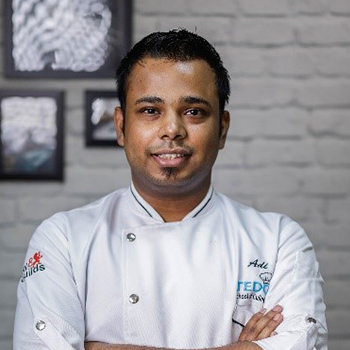
Bakery & Pastry Instructor
 Whatsapp
Click one of our representatives below to chat on WhatsApp or send us an email to
info@tedcoeducation.com

Counselor
Bakery and Pastry Courses
Counselor
Culinary Arts Courses
Click one of our representatives below to chat on WhatsApp or send us an email to
info@tedcoeducation.com
Counselor
Bakery and Pastry Courses
Counselor
Culinary Arts Courses

