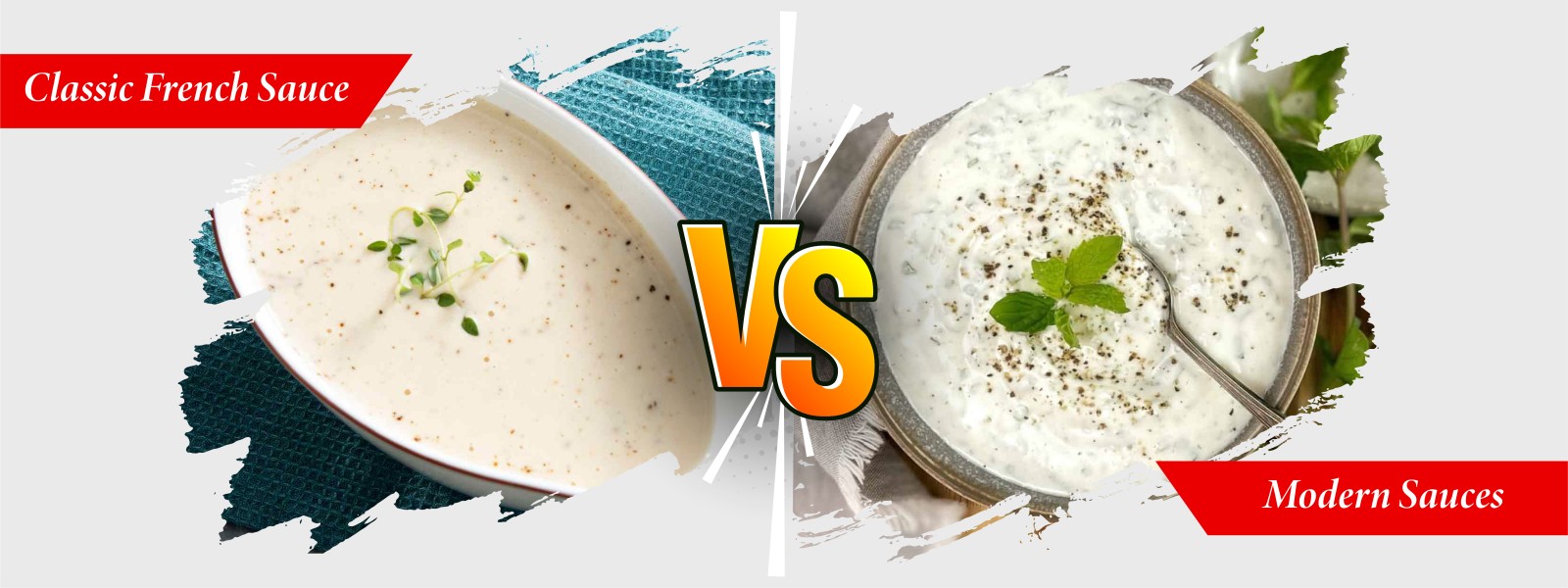
In every professional kitchen, sauces are the bridges that connect flavours, balance richness, and elevate a dish from ordinary to extraordinary. Whether you look at classic French cuisine or contemporary global cooking, sauce-making remains one of the most respected skills for any chef. Traditional culinary training focuses heavily on the classic French mother sauces, while modern culinary approaches introduce adaptable, flavour-forward sauces designed for speed, convenience, and global palates. For many students beginning their journey through structured programs or culinary arts courses in india, understanding the differences between classic and modern sauces becomes essential. But for beginners and aspiring chefs, the question is simple: Which type of sauce is easier to learn, classic French sauces or modern sauces?.
Classic French sauces are foundational sauces formalised in the 19th century. They form the base for hundreds of derivative sauces. Anyone serious about professional cooking needs to understand these bases, especially learners pursuing advanced programs, including specialisations like Cake Decoration Course and gourmet culinary modules. Traditionally, chefs recognise five mother sauces: Béchamel, Velouté, Espagnole, Hollandaise, and Tomato. Some culinary schools also include Mayonnaise and Demi-Glace, bringing the list to seven mother sauces. Regardless of whether you follow the five or seven-sauce classification, the purpose remains the same: master the base to create endless variations.
These sauces are the framework for derivative sauces, which include classics like Mornay, Supreme, Bordelaise, Choron, and Nantua. Learning these bases gives chefs the ability to create endless combinations.
Classic French sauces require a structured approach, precise technique, temperature control, and patience. For example, hollandaise demands steady whisking and controlled heat to prevent curdling. Espagnole requires slow browning of bones and vegetables for depth. Roux-based sauces require careful cooking of flour and fat to achieve the desired thickness and flavour. These sauces are not hard to learn, but they demand discipline and repetition. Once mastered, they give cooks exceptional control over texture, richness, and flavour complexity.
Modern sauces reflect contemporary culinary styles influenced by global cuisines, health considerations, and fast-paced restaurant environments. Unlike traditional French sauces, modern sauces often focus on freshness, quick preparation, and versatility. These sauces draw inspiration from Asia, Latin America, the Mediterranean, and fusion cuisines. Modern sauces can be chunky, smooth, raw, blended, cold, or warm. They include salsas, reductions, emulsions, drizzles, glazes, purees, flavoured oils, yoghurt-based mixes, and creative condiments. Their goal is to add character without complexity.
Modern sauces include options like chimichurri, ponzu, sriracha mayo, tahini lemon dressing, avocado crema, soy-ginger glaze, roasted pepper coulis, pesto variations, spicy aioli, balsamic reduction, mango salsa, teriyaki glaze, and miso-based dressings. Unlike classic sauces, they rely less on technique and more on ingredients and flavour pairing.
Classic French sauces rely on technique, roux, emulsification, and slow extraction of flavours. Modern sauces rely more on blending, whisking, seasoning, and fresh ingredients. Classic sauces require simmering, clarifying, reduction, or precise emulsification; modern sauces often require minimal cooking or none at all. French sauces form the structure of dishes; modern sauces act as enhancements. French sauces demand patience; modern sauces value speed. Both serve important culinary roles, but their learning curves differ greatly.
Classic French sauces are rich, structured, and layered. They focus on building depth through roux, stock, butter, and reductions. Their flavours are smooth and cohesive, designed to coat and complement main ingredients. Modern sauces, however, are more flavour-forward and often sharper. They offer acidity, freshness, spice, or sweetness in a more direct form. While French sauces envelop a dish, modern sauces highlight and brighten it.
Classic French sauces can be heavier because they often use butter, cream, egg yolks, or roux. Modern sauces can be lighter due to their reliance on fresh herbs, citrus, vinegars, fermented ingredients, or yoghurt. However, the nutritional value depends entirely on execution — pesto can be calorie-dense, while a classic velouté can be relatively light.
For someone enrolling in a sauce making course or beginning professional training, modern sauces are often easier. Most require basic chopping, blending, whisking, or seasoning. Classic French sauces demand greater attention to technique: how to make roux, how to prevent curdling, how to balance thickness, how to correct seasoning, and how to maintain proper temperatures. While modern sauces offer immediate success, learning French sauces builds long-term culinary confidence.
Even though modern sauces are easier, learning the mother sauces teaches essential culinary theory. They provide the foundation for: understanding thickening agents, mastering emulsification, balancing richness, and discovering how sauces behave with heat. Chefs who understand the mother sauces can adapt more creatively when making modern variations. The principles behind béchamel or hollandaise also help cooks understand how modern sauces like cheese sauces, infused butters, or emulsified dressings work.
Today’s kitchens demand sauces that are quick, versatile, and adaptable to different diets. Many restaurants combine classic and modern approaches to create balanced, flavourful dishes. For instance, soy-based sauces have become an essential part of global cooking. Soy sauce, however, is not considered a “culinary sauce” in the classical sense; it is a seasoning ingredient. The difference lies in structure: a culinary sauce is built to coat and complement, while soy sauce is used primarily for seasoning or umami enhancement. This distinction helps students differentiate between condiments, seasonings, and actual sauces.
Different culinary schools teach different classifications. Five sauces represent the classical Escoffier system. Some institutions add mayonnaise and demi-glace to recognise the importance of cold emulsified sauces and concentrated brown sauces. Both classifications are valid depending on training curriculum.
If your goal is to work professionally or attend culinary school, start with the classic French sauces. They build technique, knowledge, and discipline. If you need quick, flavour-packed sauces for home cooking or fast-moving kitchens, begin with modern sauces for their flexibility and speed. Ideally, a well-rounded cook should know both, the science behind French sauces and the creative freedom of contemporary sauces.
Both classic French sauces and modern sauces play important roles in culinary training and real-world cooking. Classic sauces teach structure, technique, and precision. Modern sauces offer speed, global flavours, and adaptability. One is the foundation; the other is evolution. The best chefs learn both — understanding when to use a smooth béchamel and when a bright chimichurri or miso dressing serves the dish better. Institutions like Tedco Education help students bridge this gap by teaching the classical fundamentals along with modern, industry-relevant sauce techniques that build confidence, creativity, and professional readiness.
French mother sauces teach core techniques, help chefs understand sauce structure, and provide a foundation for creating derivative sauces. Their methods develop essential cooking discipline and build long-term flavour mastery in professional kitchens.
Modern sauces are generally easier because they require minimal cooking, rely on simple blending or whisking, and offer quick results. They suit home cooks and fast kitchens seeking flavour without technical complexity.
A culinary sauce is built to coat food and enhance flavour with structure, while soy sauce is primarily a seasoning liquid providing umami. Soy sauce isn't classified as a traditional culinary sauce.
Some schools follow the traditional five-sauce classification, while others include mayonnaise and demi-glace for a seven-sauce system. Both approaches are valid depending on course structure and teaching philosophy.
Aspiring chefs should master classic French sauces first because they teach technique and consistency. Modern sauces can be learned afterward for versatility, creativity, and faster flavour development in everyday cooking.
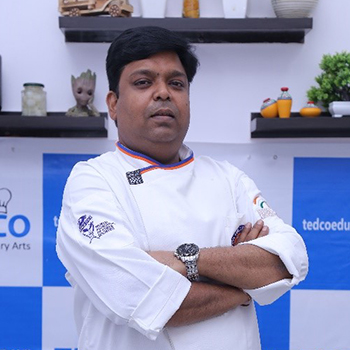
Centre Head & Head of Department
 Whatsapp
Click one of our representatives below to chat on WhatsApp or send us an email to
info@tedcoeducation.com

Counselor
Bakery and Pastry Courses
Counselor
Culinary Arts Courses
Click one of our representatives below to chat on WhatsApp or send us an email to
info@tedcoeducation.com
Counselor
Bakery and Pastry Courses
Counselor
Culinary Arts Courses

