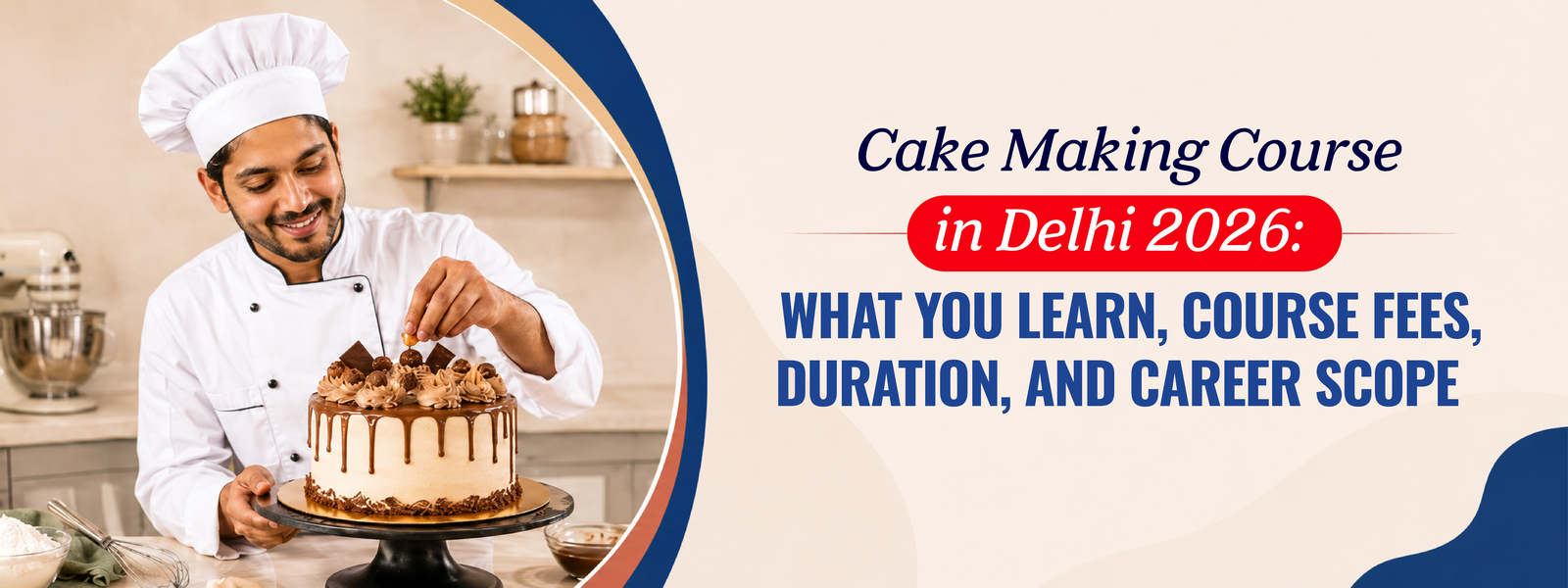
There is something genuinely exciting about the cake market in India right now. Custom celebration cakes, artisan layer cakes, designer desserts for weddings and corporate events, and the explosion of home-based cake businesses on Instagram have all converged to create one of the most dynamic and accessible food business categories in the country. And at the centre of all of this is a growing, urgent demand for people who can actually make cakes well, not just bake a passable sponge at home, but produce consistent, beautiful, professionally finished cakes that clients are happy to pay a premium for.
If you are someone who loves cakes and wants to turn that love into a career or a business, a professional Cake Making Course in Delhi is one of the most direct and focused starting points available. This guide walks you through everything you need to know before enrolling, what the course covers, what it costs, how to choose the right programme, and where a professional cake-making qualification can actually take your career in 2026.
This blog is for students who are serious about cakes as a career, not as a weekend hobby. Whether you are a 12th-pass student considering your options, someone who has been baking at home and wants to go professional, or a working adult who wants to pivot into the cake business space, this guide gives you a clear, honest picture of what a professional Cake Making Course in Delhi looks like and what it can lead to.
Already decided on TGCA? Skip to Section VIII for course details, 2026 batch dates, and how to book a free demo class at the Connaught Place campus.
There is a meaningful and important difference between knowing how to bake cakes and being professionally trained in cake making. A cake-making course at a professional institute is not a collection of recipes and tutorials. It is a structured, progressively challenging programme that builds real technical skill across every dimension of professional cake production, from understanding the science of how a sponge behaves under different conditions, to the precision of layering and filling, to the aesthetic discipline of professional finishing and decoration.
In a professional cake-making programme, every technique is taught in a deliberate sequence. You do not move on to advanced decoration until your baking foundation is solid. You do not attempt tiered cake construction until you understand internal support systems. The result is a graduate who can produce cakes consistently to a professional standard, not just recreate a specific recipe they have practiced once.
Self-learning from books, YouTube videos, and online courses can take you a long way in home baking. But it consistently falls short in three areas that matter enormously in a professional context. First, immediate, expert feedback: a professional instructor can observe your technique, identify what you are doing wrong, and correct it in the moment, something no video can do. Second, professional-grade equipment access: baking and decorating with commercial ovens, professional mixers, and specialist tools produces a fundamentally different result and builds the muscle memory that professional kitchen work requires. Third, assessment against professional standards: knowing your work has been evaluated by someone with real industry experience, and that you have met or exceeded their standard, is the foundation of the confidence a professional cake maker needs.
A well-structured Cake Baking Course at a professional institute in Delhi covers the full spectrum of cake making from foundational to advanced. Here is what a comprehensive curriculum typically includes:
The Cake Decoration Course modules within a comprehensive cake-making programme build progressively on the baking foundation. Piping techniques cover buttercream rosettes, ruffles, basket weave, and fine detail work using a full range of professional piping tips. Fondant sculpting introduces students to three-dimensional modelling, creating cake toppers, architectural elements, and textured surfaces. Advanced finishing methods include mirror glaze application, velvet spray finishes, and edible metallic effects that are increasingly popular in the premium cake market. Each of these techniques is taught in a professional kitchen environment with professional-grade materials, the same quality a client in a luxury patisserie or a 5-star hotel pastry section would expect.
Students researching the Institute of Baking and Cake Art options in Delhi will find two broad categories of programmes:
The right programme level depends on what you want to do after completing it. If your goal is to launch a home bakery or a custom cake business relatively quickly, a certificate programme can get you started while you continue developing your skills. If your goal is to work in a 5-star hotel pastry section, a luxury patisserie, or to eventually own a serious cake business with premium pricing and corporate clients, the diploma gives you the skill depth, the professional credibility, and the internationally recognised certification to make that happen.
Think of the certificate as the beginning of your cake career and the diploma as its strongest possible foundation. Both lead somewhere real. Only one builds the complete professional.
Understanding cake-making course fees in Delhi 2026 requires looking across the different levels and types of programmes available:
Before paying any amount, ask directly: Are the ingredients used in practical sessions included? Is the chef kit and uniform included? Is the City and Guilds certification examination fee included? Is placement support included or additional? What is the student-to-faculty ratio in kitchen sessions? What is the quality of the kitchen equipment?
These questions protect you from paying a low headline fee that does not include the materials, equipment, and support that make a course genuinely valuable. At TGCA, the fee structure is transparent and all-inclusive, with no hidden charges and EMI options available to make the investment accessible.
The career scope after a professional Cake Making Course in Delhi is genuinely wide in 2026. Here are the most realistic and rewarding paths available to graduates:
The difference between a home baker and a professionally certified cake maker is not just skill; it is credibility. A City and Guilds-certified graduate from an accredited institute of baking and cake art carries a qualification that employers, corporate clients, and wedding planners recognise and trust. That trust translates into the ability to charge more, access better opportunities, and build a business or a career on the foundation of a credential that actually means something in the market. Home bakers compete on price. Professionally certified cake makers compete on quality, credibility, and the confidence that comes from formal training.
Before enrolling in any cake-making course in Delhi, evaluate it honestly against these five factors:
The most reliable way to verify these factors is to visit the campus in person, speak to current students rather than institute representatives alone, ask for specific placement outcomes from the last two batches, and attend a demo class if one is available. Every serious, credible institute should welcome this level of scrutiny. If they do not, that is itself significant information.
Tedco Education's TGCA offers one of the most comprehensive Cake Baking Course programmes in Delhi through its Diploma in Bakery and Pastry Arts. The programme integrates cake making, pastry, bread, and decoration into a single coherent year of professional training, ensuring students develop complete baking professionals rather than narrow specialists in a single technique.
What makes TGCA specifically strong for cake-making students is the combination of technical depth, the full range of sponge types, filling techniques, advanced decoration, and tiered cake construction, with business awareness: food costing, kitchen management, and the foundations of running a professional cake business. Graduates leave with both the skill to make exceptional cakes and the knowledge to build a sustainable business around them.
Tedco Education's City and Guilds (UK) accreditation for the Diploma and Certificate in Bakery and Pastry Arts gives TGCA graduates internationally portable qualifications that are actively valued by employers across India and internationally. The professional pastry kitchen at the Connaught Place campus is equipped with commercial ovens, professional mixers, specialist decoration tools, and the full range of materials students need to develop skills to a genuine professional standard.
The professional cake decoration training in India available at TGCA is not limited to a single decoration style or technique. The curriculum covers classical and contemporary approaches, ensuring students are prepared for the range of styles that clients, hotels, and patisseries in India and internationally actually demand. 2026 batches are open now. Admission requires a 12th pass certificate from any stream. No prior baking experience and no entrance exam are required. EMI payment options are available.
A professional Cake Making Course in Delhi in 2026 covers the full range of cake baking and decoration skills, from foundational sponge types and layer cake construction through to advanced fondant work, sugar decoration, and contemporary finishing techniques. Fees range from Rs 20,000 for short standalone certificates to Rs 2.5 lakh and above for a comprehensive Diploma in Bakery and Pastry Arts with City and Guilds accreditation. Career scope includes hotel pastry sections, luxury patisseries, custom cake studios, cloud kitchen cake brands, and food styling. The qualification that carries the most weight across all of these paths is a City and Guilds-certified diploma from a reputable accredited institute.
For students who are genuinely serious about cakes as a career or a business, the investment in professional training pays back in ways that self-teaching and hobby classes simply cannot match. The credibility, the skill depth, and the professional network that a serious cake-making programme provides are what make the difference between a passion and a career.
The best way to decide whether a professional Cake Decoration Course or a cake-making diploma is the right choice is to experience it directly. Visit TGCA's campus at M-72, Connaught Place, New Delhi. See the pastry kitchen. Attend a free demo class. Meet the faculty. Ask every question you have about the curriculum, the fees, the placement outcomes, and what a day of training actually looks like. Then make your decision from a position of real information, not just marketing materials.
2026 batches are open, and seats are limited. The students who visit first are the ones who make their decision earliest and start building their cake career soonest. Book your free demo class today.
TGCA's Diploma in Bakery and Pastry Arts covers professional cake making and decoration as part of a City andGuilds-accreditedd programme. 2026 batches are open now. Book a free demo class today.
Visit tedcoeducation.com to apply or book a Free Demo Class Today!
Short-term cake-making certificates in Delhi range from Rs 20,000 to Rs 75,000. A Certificate in Bakery and Pastry Arts costs Rs 1 lakh to Rs 2 lakh. A full Diploma in Bakery and Pastry Arts at an accredited institute like TGCA ranges from Rs 2.5 lakh to Rs 4.5 lakh, all-inclusive.
Short-term cake-making certificates run for 1 to 3 months. A Certificate in Bakery and Pastry Arts takes 6 months. A full Diploma in Bakery and Pastry Arts takes 1 year. Duration directly reflects the depth of training and the level of professional qualification you receive at graduation.
Yes. Many TGCA graduates launch successful custom cake studios, home bakeries, and cloud kitchen cake brands after completing the Diploma in Bakery and Pastry Arts. The programme includes food costing and kitchen management training that gives graduates both the technical skill and business awareness to launch profitably.
No prior baking experience is required at TGCA. The Diploma in Bakery and Pastry Arts begins with foundational skills and builds progressively to advanced cake making and decoration. Any stream, any percentage, and no prior cooking experience are the eligibility conditions. Passion and commitment are the only real requirements.
TGCA's Diploma in Bakery and Pastry Arts is consistently one of the strongest options in Delhi for serious cake-making students, combining City and Guilds accreditation, a professional pastry kitchen, experienced faculty, small batches, and active placement support in a comprehensive one-year programme.
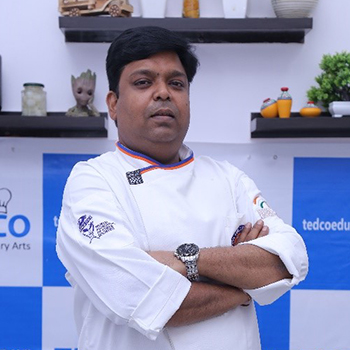
Centre Head & Head of Department
 Whatsapp
Click one of our representatives below to chat on WhatsApp or send us an email to
info@tedcoeducation.com

Counselor
Bakery and Pastry Courses
Counselor
Culinary Arts Courses
Click one of our representatives below to chat on WhatsApp or send us an email to
info@tedcoeducation.com
Counselor
Bakery and Pastry Courses
Counselor
Culinary Arts Courses

