The year is 2026. The hospitality industry has evolved. We aren't just talking about white tablecloths and stiff service anymore. We are talking about hyper-specialised cloud kitchens, sustainability-driven farm-to-tables, and chef-entrepreneurs who are building personal empires on social media.
Yet, despite this explosion of opportunity, the same old whispers circulate in the hallways of high schools and family dinner tables. "You don't need a degree to cook." "Just go wash dishes and work your way up." "Culinary school is a waste of money."
If you are standing on the precipice of your career, wondering whether to jump into education or dive straight into the deep end of a commercial kitchen, you need the truth. You don't need sugar-coated brochures, and you certainly don't need outdated advice from twenty years ago.
Let’s strip away the noise and bust the myths about culinary degrees that might be holding you back from your true potential.
This is the biggest lie of the digital age. Don't get us wrong, YouTube is a fantastic resource for inspiration. You can watch a video on how to temper chocolate or how to break down a primal cut of beef. But here is the problem: YouTube cannot taste your food.
A video can show you the colour of a perfect roux, but it cannot teach you the smell of flour just before it burns. It cannot correct your posture, so your back doesn't give out after six hours. It cannot teach you how to coordinate with a team of ten other people when the printer is spitting out tickets, and the dishwasher just broke.
Pursuing formal culinary degrees isn't about memorising recipes. Anyone can read a recipe. It’s about methodology. It’s about understanding the science of why an emulsion breaks and how to fix it in thirty seconds flat.
When you join a top-tier institute, you are paying for the feedback loop. You cook, a mentor tastes, they critique, and you improve. That loop is impossible to replicate with a pause button.
There is an old school of thought that says the "School of Hard Knocks" is the only one that counts. And yes, there is no substitute for the grit you develop on the line during a Friday night rush.
But in 2026, the ceiling for self-taught chefs is lowering. Why? Because the modern executive chef is not just a cook; they are a manager, a cost-controller, and a brand ambassador. Many culinary schools in India have updated their curriculums to reflect this.
If you start as a dishwasher without training, you might spend five years learning what a culinary student learns in one year. You are essentially paying with your time instead of tuition. A structured education acts as an accelerator. It fast-tracks you past the grunt work because you enter the kitchen already knowing knife safety, hygiene standards (HACCP), and the brigade system.
Think of it this way: You can learn to swim by drowning a few times, or you can get a coach. Both might get you across the pool, but one is significantly faster and less painful.
This is a dangerous assumption. The landscape of culinary arts colleges in India is vast and incredibly varied. You have the massive, government-run institutes that focus heavily on theory and general hotel management. Then, you have the specialised, boutique academies like Tedco that focus on hands-on craftsmanship.
Assuming they are all the same is like assuming all restaurants are the same. Some are factories; others are ateliers. When looking for the best culinary schools in India, you need to look at the faculty. Are they career academics who haven't worked a service in 20 years? Or are they active industry veterans? The quality of culinary degrees depends entirely on who is teaching you. In a trade like ours, knowledge is passed down from master to apprentice. If your master's has no recent industry relevance, your degree loses value.
If you look at the culinary career scope in 2026, the data tells a different story. The "Food Service" industry in India is one of the fastest-growing sectors in the economy. But the type of jobs has changed. It’s not just about becoming a Sous Chef at a 5-star hotel anymore (though that is still a great path).
Graduates with recognised culinary degrees are finding roles in:
The market is competitive for average cooks. For trained, disciplined, and professional chefs, there is actually a talent shortage. High-end establishments are desperate for reliability. They want professionals who show up on time, understand food cost, and treat the ingredients with respect. That is exactly what a degree signals to them.
Let’s address the elephant in the room: ROI. The question " is culinary degree worth it in India?" often stems from the fear of entry-level salaries. And let’s be honest, your first salary as a Commis Chef will not buy you a Ferrari.
However, a culinary career is exponential. The first few years are the grind, but once you break into the management tier (Chef de Partie, Sous Chef, Executive Chef), the pay jumps significantly.
Furthermore, a degree opens doors to international placements. Working on a cruise liner or in a kitchen in Dubai or London can see you earning in foreign currency, paying off your education costs in a fraction of the time. Without the certification, obtaining those skilled-worker visas is nearly impossible.
So, where does Tedco fit into this?
We realised a long time ago that the traditional "college" model was broken. Aspiring chefs didn't need three years of writing essays; they needed hours on the range.
At Tedco Education, we position ourselves differently from other culinary arts colleges in India. We operate more like a training camp than a university. Stop just studying and start training. Apply now.
Small Batches: You can't learn to filet a fish if you are in the back of a lecture hall with 60 other students. We keep it intimate so our chefs can guide your hand.
Global Standards: We align with international bodies (like City & Guilds) because we know your ambition has no borders.
The Reality Check: We don't hide the difficulty. We prepare you for the heat. When a Tedco graduate walks into a professional kitchen, the Head Chef knows they are ready to work, not just watch.
In 2026, the kitchen will be smarter, faster, and more demanding. You can try to hack it alone, and you might even succeed. However, if you want to build a career that lasts and commands respect and high value, you need a solid foundation.
Culinary degrees aren't just pieces of paper. They are your passport to the professional world. They are the difference between being a cook who follows recipes and a chef who writes them.
Legally? No. Practically? It is becoming essential. While some legends of the past were self-taught, modern hospitality groups prefer candidates with culinary degrees for senior roles. It proves you have the management, hygiene, and financial knowledge required to run a profitable kitchen, not just a tasty one.
Look for three things: Faculty, Facility, and Accreditation. Don't just look at the brochure; look at the kitchen. Is it modern? Do the instructors have industry experience? Does the school offer international certifications (like City & Guilds)? The best culinary schools in India, like Tedco, offer a blend of all three with a focus on practical hours over theory.
The scope is wider than ever. Beyond hotels and restaurants, graduates are entering food journalism, food styling, airline catering, and cruise lines. The rise of "Experiential Dining" in India has also created a massive demand for chefs who can create story-driven menus.
We love ambition, but we usually advise patience. A degree gives you the tools, but the industry gives you the speed. We recommend working for 2-3 years to understand operations on someone else’s budget before investing your own money. However, your education will make you a much smarter entrepreneur when you do launch.
Absolutely. In fact, it is often the only way to work abroad. Most work visas for skilled migration (to countries like Canada, Australia, or the UK) require a recognised vocational qualification. A diploma from a reputable institute acts as verified proof of your skills for immigration officers.
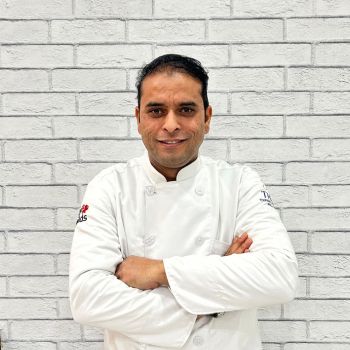
Pastry Instructor
 Whatsapp
Click one of our representatives below to chat on WhatsApp or send us an email to
info@tedcoeducation.com

Counselor
Bakery and Pastry Courses
Counselor
Culinary Arts Courses
Click one of our representatives below to chat on WhatsApp or send us an email to
info@tedcoeducation.com
Counselor
Bakery and Pastry Courses
Counselor
Culinary Arts Courses

