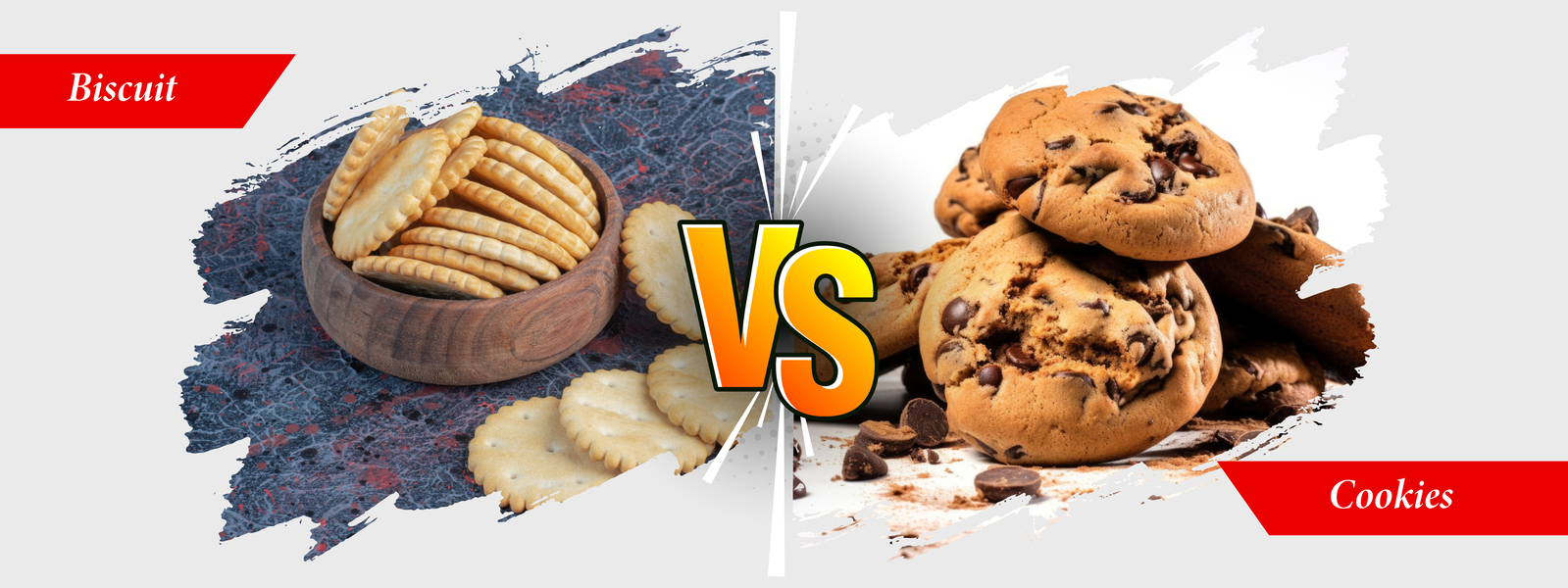
Let’s say hypothetically that you are at a cozy cafe in London, and you ask for a "biscuit" with your tea. You are handed a crisp, snappy, golden disc perfect for dunking. Now, transport yourself to a diner in the northern States of India. You order a "biscuit" with your breakfast. You are handed a fluffy, buttery, savoury bread roll smothered in gravy.
Confused? You aren't the only one.
One of the first hurdles our students face in our Pastry and Baking Classes at Tedco education is not mastering the perfect macaron shell or tempering chocolate, it's mastering the vocabulary. The world of baking is vast, but the terminology can be surprisingly tricky depending on where you are standing on the map. The battle of biscuit vs cookies is one of the classic culinary conundrums that has sparked arguments at tea times and breakfast tables for decades.
At our academy, we believe that to be a great baker, you need to understand not just the how, but the why (and the what). Whether you are looking for the best bakery course in India or just trying to figure out what to bake this weekend, let’s clear up the confusion once and for all.
Before we dive into the ingredients, we have to look at the map. The difference between biscuits and cookies is largely a linguistic one, rooted in the Atlantic divide.
In India and the UK, the word "biscuit" comes from the Latin bis coctus, meaning "twice-baked." It refers to a product that is baked until it is hard, crisp, and dry. Think of your Digestive, your Marie Gold, or your Parle-G. It’s a shelf-stable snack, usually not too sweet, designed to hold its structure when dipped in hot chai.
In the USA, however, a "biscuit" is a quick bread. It’s similar to what the rest of the world calls a savoury scone. It uses baking powder or soda to rise, resulting in a soft, flaky interior.
This is why the biscuit vs cookies India vs USA comparison is so fascinating. In India, if you ask for a cookie, you are usually asking for a specific type of biscuit, one that is richer, softer, and perhaps studded with chocolate chips. In the US, everything sweet and flat is a cookie, and the word "biscuit" is reserved strictly for that fluffy dinner roll.
Let’s put on our chef hats for a moment. If we strip away the geography, what is happening chemically? When we teach baking basics, we categorise these baked goods by their fat-to-flour ratios and mixing methods.
When most of the world says "Cookie" (think American-style chocolate chip), they are talking about a dough that is high in fat and sugar.
Texture: The goal is usually a biscuit vs cookie texture difference, where the cookie is chewy, soft, or fudgy in the centre.
The Rise: Cookies rely on the spread. As the butter melts in the oven, the dough spreads out. We often use brown sugar to add moisture and chewiness.
The Method: We usually use the "creaming method", beating butter and sugar until fluffy before adding eggs and flour.
The traditional biscuit is a stiffer dough.
Texture: It snaps. It crumbles. It is brittle. It needs to be dry to have a long shelf life.
The Rise: Minimal spreading. You want the biscuit to keep its shape (especially if it has an embossed design).
The Method: Often involves rubbing cold fat into flour (similar to shortcrust pastry) or mixing into a stiff dough that can be rolled out and stamped.
This is the outlier. It is a savoury bread.
Texture: Flaky layers. Soft crumb.
The Method: Cold butter is cut into flour to create steam pockets during baking, which pushes the dough up into layers.
Start your career with a Professional Baking Course in Delhi at Tedco education.
When you are in the kitchen, the debate between cookies vs biscuits baking and their processes feels quite different.
If you are baking Cookies, You are likely dealing with a sticky dough. You might be using an ice cream scoop to drop mounds onto a tray. You are watching the oven like a hawk because the difference between "perfectly chewy" and "burnt crisp" is about 60 seconds. You want them to look rustic and homemade.
If you are baking Biscuits (Indian style), you are rolling out a sheet of dough. You are using cutters to get uniform shapes. You might be docking them (poking holes) to stop them from puffing up. You bake them longer at a lower temperature to dry them out completely without burning them. Precision is key here.
You might be thinking, "Who cares? They are both delicious." And you’re right. But if you are aspiring to work in a professional kitchen, or even if you just want to bake the perfect batch for a client, terminology matters.
If a client asks for a "Tea Biscuit" and you serve them a soft, gooey chocolate chunk cookie, they might be disappointed. They wanted a "snap." Conversely, if someone asks for a "Cookie" and you give them a hard, dry shortbread, they’ll wonder where the chewiness is.
Understanding the difference between biscuits and cookies helps you manipulate texture. It teaches you how sugar affects moisture, how butter temperature changes the spread, and how baking time alters the "snap."
Interestingly, the lines are blurring in India. With the rise of café culture, the American-style soft cookie is taking over. We are seeing a shift where "Biscuit" remains the store-bought, tea-time staple, while "Cookie" is becoming the premium, artisanal, bakery-fresh treat.
In our classes, we see students eager to learn both the classic techniques of a crisp Viennese biscuit and the modern indulgence of a New York-style Levain cookie. It’s a testament to how global food culture is becoming.
Want to know more? Fill this form and our counsellors will get back to you shortly.
In the biscuit vs cookies debate, which one tests a chef’s skill more?
Cookies are forgiving. Even a "bad" cookie usually tastes good. If they spread too much, they are crispy cookies. If they don't spread enough, they are cakey cookies.
Biscuits (the crisp kind) require discipline. If you overwork the dough, they become tough, not crumbly. If you don't roll them evenly, they burn in spots.
Biscuits (the US kind) are all about the touch. If your hands are too warm, you melt the butter, and the flakes disappear.
This technical precision is exactly what we focus on in our professional courses. It’s not just about following a recipe; it’s about feeling the dough.
So, biscuit vs cookies; are they different? Technically, yes. Culturally, absolutely.
A biscuit is your reliable, crispy friend that loves a dip in hot tea. A cookie is your indulgent, soft, dessert-like treat that stands alone. And the American biscuit? Well, that’s a delicious breakfast bread that deserves a category of its own.
The next time you reach for that jar on the counter, take a second to look at the texture. Is it a snap or a bend? Is it for tea or for dessert?
If you find yourself fascinated by the science behind the snap and the chew, you might just have the heart of a baker. Why stop at eating them?
The main difference lies in texture and ingredients. In the UK/India, biscuits are hard, crisp, and dry, while cookies are softer and chewier. In the US, a "biscuit" is a savoury, flaky bread roll, and "cookie" covers all sweet, flat treats.
Generally, biscuits (like digestives or arrowroot) are lower in sugar and fat compared to decadent, soft cookies. However, both are treats. Cookies often have higher calorie counts due to extra butter and chocolate chunks used to create that chewy texture.
American biscuits evolved from British scones but adapted to available ingredients in the Southern US. They use buttermilk and baking soda to create a fluffy, savoury bread served with gravy or butter, rather than being a sweet tea-time snack.
No. Cookie dough has a high fat/sugar content designed to spread and stay soft. Biscuit dough (Indian style) is drier and stiffer to hold its shape. Biscuit dough (US style) is a soft, leavened bread dough. They are not interchangeable.
If your cookies are hard and dry, you likely overbaked them or didn't use enough fat/sugar. Cookies rely on underbaking slightly to stay soft. If you bake them until they are crisp all the way through, you have essentially made a sweet biscuit!
Bakery & Pastry Instructor
 Whatsapp
Click one of our representatives below to chat on WhatsApp or send us an email to
info@tedcoeducation.com

Counselor
Bakery and Pastry Courses
Counselor
Culinary Arts Courses
Click one of our representatives below to chat on WhatsApp or send us an email to
info@tedcoeducation.com
Counselor
Bakery and Pastry Courses
Counselor
Culinary Arts Courses

