

If you have started searching for a culinary academy of India, you have probably already noticed something: there are a lot of options. Big names, small institutes, glossy websites, impressive-sounding course titles. And somewhere in the middle of all that marketing, you are trying to make one of the most important decisions of your career, and it can feel genuinely overwhelming.
Here is the honest truth. Not all culinary academies are equal, even when their brochures look similar. The institute you choose will shape your skills, your first job, your starting salary, and how fast your career moves for years to come. This guide is designed to cut through the marketing and give you a clear, practical framework for making this decision well.
We are going to walk through exactly what to look for in a culinary academy of India, the difference between standalone culinary institutes and broader hospitality colleges, what eligibility and admission actually involve, what fees should and should not include, the course options available, and the career outcomes that different choices lead to. By the end, you will have a checklist you can actually use, not just a list of things institutes claim about themselves.
Strip away the marketing language, and every culinary academy can be evaluated honestly against six factors:
A well-known name can create a sense of trust, but a brand name alone does not guarantee any of the six factors above. Some of the best culinary schools in India are not the loudest names in advertising, they are the ones that consistently deliver on accreditation, infrastructure, and placement. These three factors in particular have a direct, measurable impact on your training quality and your career outcomes, which is exactly why they deserve more attention than a logo or a slogan.
Broadly, you will encounter two types of institutions when researching culinary education in India. Standalone culinary institutes focus entirely on culinary and bakery training, with curriculums built specifically around kitchen skills, techniques, and culinary career paths. Hotel management colleges, on the other hand, offer broader hospitality degrees that include front office, housekeeping, and food and beverage management alongside culinary modules, often as a smaller component of a larger degree.
If your goal is specifically to become a chef, a specialized culinary academy of India typically gives you significantly more hands-on kitchen time and depth in culinary technique than a broad hospitality degree, where culinary training is just one subject among many. For students who know that the kitchen is where they want to be, specialisation generally translates into stronger technical foundations.
The good news is that eligibility for most culinary arts colleges in india is genuinely accessible. A 12th pass qualification from any stream, Science, Arts, or Commerce, is typically all that is required. There is generally no entrance exam, no minimum percentage cutoff, and no requirement for prior cooking experience. The barrier to entry is low. The differentiator is what you do once you are in.
With low barriers to entry, the real work is in shortlisting. Start by identifying two or three academies that meet the six factors discussed earlier based on their websites and available information. Then, and this step cannot be skipped, visit in person. See the kitchen, meet faculty if possible, and ask direct questions about placement statistics and accreditation. Admission windows, particularly for batches starting in the months following board results, can close faster than expected, so starting this process early gives you the time to make a genuinely informed choice rather than a rushed one.
Fees for culinary programmes in India vary considerably depending on the level of the course and the academy's positioning. Short-term certificate programmes tend to sit at the lower end, while comprehensive one-year diplomas from accredited institutions represent a more significant investment. Among best culinary arts colleges in India, premium accredited programmes typically command higher fees, but this difference often reflects genuinely different kitchen infrastructure, faculty quality, and placement support, not just brand positioning.
Before committing to any fee, get clarity on exactly what is included. Does it cover your chef uniform and kit? Are ingredients used during practical training included, or charged separately? Is certification examination included in the quoted fee, or is that an additional cost? Are placement support services included, or do they come with extra charges? Asking these questions upfront prevents unpleasant surprises later and allows you to compare academies on a genuinely like-for-like basis.
Most reputable culinary academies offer a range of programmes designed for different goals and timelines. A Diploma in Culinary Arts, typically running for around a year, provides comprehensive training across global cuisines, kitchen management, and professional technique. A Diploma in Bakery and Pastry Arts follows a similar structure but focuses specifically on baking, pastry, and confectionery. Certificate programmes, shorter in duration, provide focused training for students who want a faster entry point or who want to test the field before committing to a longer programme.
The right course depends entirely on your goal. If you are aiming for a hotel kitchen career with the broadest possible foundation, a full diploma in culinary arts gives you the most comprehensive preparation. If you already know baking and pastry is your specific passion, a bakery-focused diploma is more directly aligned. And if your priority is entering the workforce quickly with the option to build on your qualification later, a certificate programme followed by further study can be a genuinely valid path.
Graduates from a strong culinary academy of India have access to a genuinely wide range of career paths. Hotel kitchens remain a major employer, with clear progression from entry-level roles upward. Restaurants, including fine dining and casual establishments, offer different working environments and growth paths. Pastry kitchens within hotels and standalone patisseries are a specialised but growing area. Catering companies and cloud kitchens represent the fast-growing food delivery and event catering sectors. And for graduates from internationally accredited programmes, international placements in hotels, cruise lines, and overseas kitchens become genuinely accessible.
Your first job sets a baseline, both for the role you start in and the salary you are offered. Graduates from academies with strong accreditation and placement support tend to start in stronger first roles, which in turn affects how quickly subsequent promotions and salary increases follow. Over a five to ten year career, the compounding effect of a stronger starting point is substantial, which is exactly why the choice of academy matters far beyond just the year or two you spend studying.
When measured against the six factors outlined at the start of this guide, here is how TGCA stands among culinary schools in india:
TGCA's placement cell maintains active relationships with hotels, restaurants, and food brands, supporting graduates from the Diploma in Culinary Arts and Diploma in Bakery and Pastry Arts as they enter the workforce. The international internship programme gives eligible students exposure to kitchens outside India, an experience that, as discussed in our career acceleration guide, genuinely compresses career timelines. For students evaluating their options among culinary arts colleges in india, 2026 batches at TGCA are open now, with admission based on 12th pass eligibility and no entrance exam required.
Choosing a culinary academy of India is not about finding the institute with the most impressive marketing. It is about evaluating accreditation, kitchen infrastructure, faculty experience, batch size, placement record, and curriculum depth, the six factors that genuinely determine whether your training prepares you for a real career. Add to that a clear understanding of fees, what they include, and how different course levels match different goals, and you have a framework that cuts through the noise.
The institutes that score well across these factors are the ones where your investment, of time, money, and effort, translates into real skills and real career outcomes.
The single best thing you can do before making this decision is to visit in person. See the kitchen. Talk to faculty. Ask about placements directly. TGCA welcomes exactly this kind of visit, a free counselling session where you can evaluate everything in this guide for yourself, no pressure, just information. Among top culinary academy India 2026 options, the ones worth choosing are the ones that welcome this kind of scrutiny. 2026 batches are open now.
Start with accreditation and kitchen infrastructure. An internationally recognised certification and a commercial-grade training kitchen form the foundation of quality education. Without these two, other factors like marketing or campus appearance matter far less.
For students specifically aiming to become chefs, standalone culinary institutes typically offer more hands-on kitchen time and deeper technical training, since culinary skill is the entire focus rather than one subject within a broader hospitality degree.
Most academies require your 12th mark sheet or admit card if results are pending, a valid ID proof, and passport-size photographs. Eligibility is typically open to any stream with no entrance exam required at most reputed institutes.
Not always directly, but premium accredited programmes often include genuinely better kitchen infrastructure, faculty, and placement support. Always ask exactly what a fee includes, uniform, ingredients, certification, and placement, before comparing institutes on price alone.
Very important. Genuine placement relationships with employers directly affect your first job opportunities and starting role. Ask for specific, verifiable information about placement partnerships rather than relying on general claims made in marketing materials.
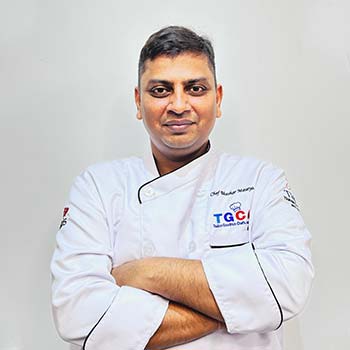
Culinary Instructor
 Whatsapp
Click one of our representatives below to chat on WhatsApp or send us an email to
info@tedcoeducation.com

Counselor
Bakery and Pastry Courses
Counselor
Culinary Arts Courses
Click one of our representatives below to chat on WhatsApp or send us an email to
info@tedcoeducation.com
Counselor
Bakery and Pastry Courses
Counselor
Culinary Arts Courses

