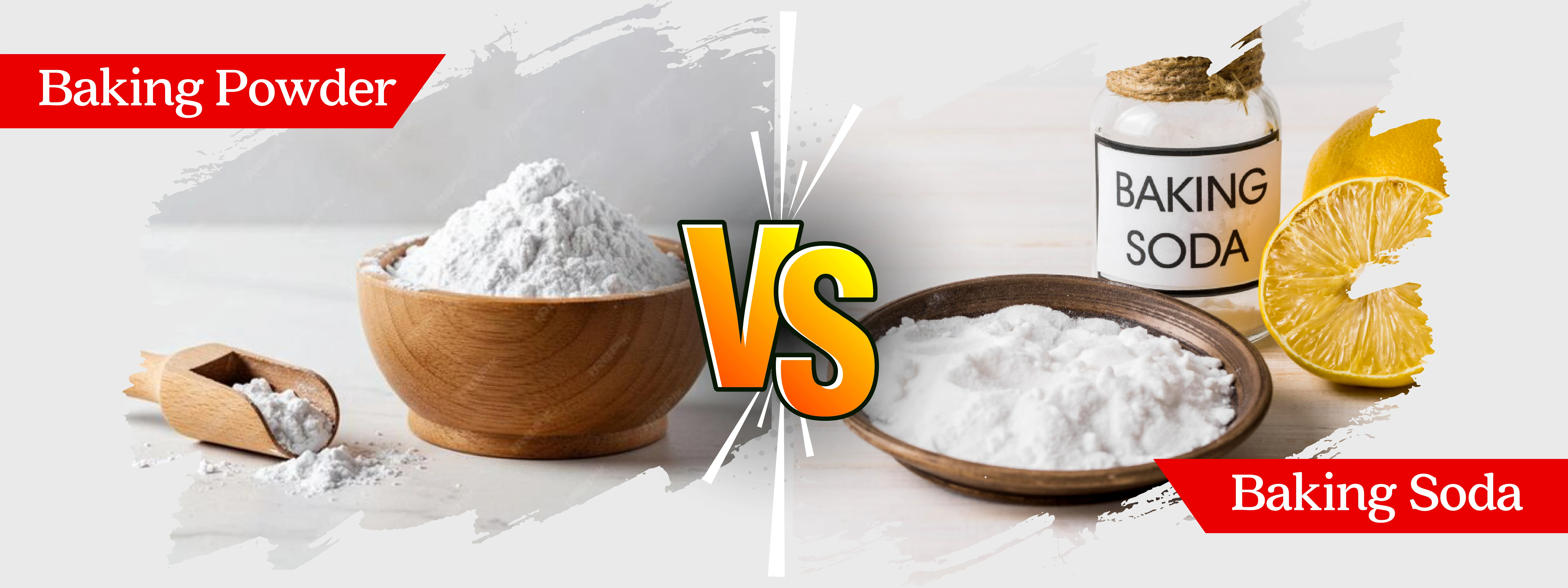
In baking, small ingredients create big results. A teaspoon too much or too little can completely change texture, height, and flavour. Among the most misunderstood ingredients are baking powder and baking soda. While they look similar and both act as leavening agents in baking, they function very differently. For students enrolled in baking classes in Delhi or pursuing a professional baking course, understanding the difference between baking powder and baking soda is foundational knowledge. Without clarity, cakes collapse, cookies spread too much, and textures turn dense. So what is the real difference, and when should each be used?
Leavening agents are ingredients that help baked goods rise. They produce gas, usually carbon dioxide, which creates air pockets inside the batter or dough. These air pockets expand during baking, giving structure and softness to cakes, muffins, cookies, and breads.
Both baking powder and baking soda are chemical leavening agents. However, the way they produce gas is not the same. Understanding this mechanism is part of baking basics every student must master.
Baking soda is pure sodium bicarbonate. It is a strong alkaline compound that requires an acid to activate. When baking soda reacts with acidic ingredients such as yogurt, buttermilk, lemon juice, vinegar, or cocoa powder, it releases carbon dioxide immediately.
This reaction starts as soon as the baking soda meets the acid. That means batters containing baking soda must be baked quickly after mixing. Otherwise, the gas escapes, and the final product becomes flat.
Baking soda also affects flavour. Because it is alkaline, using too much can leave a metallic or soapy aftertaste. Precise measurement is essential.
Baking powder is a complete leavening system. It contains baking soda, an acid (usually cream of tartar), and a drying agent like cornstarch. Because it already contains acid, baking powder does not need additional acidic ingredients to activate.
Most baking powder available today is double-acting. This means it produces gas twice: once when mixed with liquid and again when exposed to heat in the oven. This double reaction gives more flexibility and stability in baking.
For students in a professional baking course, learning how double-acting baking powder works is crucial for consistent results.
The difference between baking powder and baking soda lies in activation and composition.
Baking soda requires an external acid. Baking powder already contains acid.
Baking soda reacts immediately. Baking powder reacts in two stages.
Baking soda is stronger and used in smaller quantities. Baking powder is milder and often used in larger amounts.
Understanding this baking powder vs baking soda difference prevents recipe failures.
Choosing the correct leavening agent depends on the recipe’s ingredients.
Use baking soda when the recipe contains acidic components like buttermilk, yogurt, vinegar, brown sugar, or natural cocoa powder.
Use baking powder when there are no strong acidic ingredients present.
Some recipes use both. For example, certain cakes combine baking soda to neutralize acidity and baking powder to ensure extra lift.
This decision-making skill is emphasized in baking classes in Delhi because it directly impacts cake structure.
Cakes rely heavily on proper leavening.
If a cake recipe contains yogurt or sour cream, baking soda is often included to balance acidity and produce rise.
If a cake is made with milk and neutral ingredients, baking powder provides the lift.
Using the wrong one can cause cakes to sink, taste bitter, or rise unevenly.
Students in a professional baking course are trained to evaluate ingredient balance before choosing a leavening agent.
Baking soda tends to create a slightly coarser crumb because it produces a rapid burst of gas. It also encourages browning due to its alkaline nature.
Baking powder produces a finer crumb and more even rise because of its controlled double reaction.
Texture control is a major part of baking basics, and understanding this difference allows bakers to manipulate softness and structure intentionally.
Leavening agents affect flavour.
Too much baking soda leaves a bitter taste. Proper acid balance neutralizes that risk.
Baking powder has a neutral taste when used correctly, but excess amounts can cause a chemical aftertaste.
Precision in measurement is critical. Professional training emphasizes accurate weighing rather than guessing.
Baking soda has a longer shelf life and can remain effective for years if stored properly.
Baking powder loses strength over time, especially if exposed to moisture. Expired baking powder leads to flat baked goods.
Students in baking classes in Delhi learn how to test leavening agents before use to avoid failure.
Many beginners assume baking powder and baking soda are interchangeable. They are not.
Replacing baking powder with baking soda without adjusting acid levels results in poor rise and unpleasant taste.
Similarly, substituting baking soda for baking powder reduces leavening power.
Understanding these distinctions is part of professional baking discipline.
Chocolate cake made with natural cocoa powder typically requires baking soda because cocoa is acidic.
Vanilla sponge cake usually uses baking powder because it lacks acidic components.
Cookies often use baking soda for browning and spread. Muffins frequently use baking powder for height and softness.
These examples demonstrate why mastering leavening agents in baking is essential.
While home bakers may rely on trial and error, structured education ensures consistent results.
At Tedco Education, students enrolled in baking classes in Delhi gain hands-on experience understanding ingredient chemistry. The professional baking course covers leavening science, ingredient interaction, texture control, and advanced baking techniques.
Students learn not just what to use, but why to use it. That scientific understanding transforms average baking into professional craftsmanship.
Baking powder and baking soda may look alike, but they perform very different roles. Baking soda requires acid and reacts immediately. Baking powder contains its own acid and reacts twice.
Neither is better; each serves a specific purpose. The real skill lies in knowing when to use baking powder vs baking soda based on recipe composition.
For aspiring bakers, mastering these fundamentals builds confidence and prevents costly mistakes. Structured training ensures precision, consistency, and creativity in every bake.
Come get your hands dirty and master the art of professional baking. Enrol today.
Baking soda is pure sodium bicarbonate requiring acid to activate, while baking powder contains baking soda and acid combined, allowing it to react independently when mixed with liquid and heat.
Not directly. Baking powder is weaker and already contains acid. Substituting without adjusting ingredient balance may affect rise, texture, and flavor of the final baked product.
Baking soda is alkaline, which enhances the Maillard reaction during baking. This chemical reaction promotes browning and creates deeper color and richer flavor in cookies and cakes.
Add a small amount of baking powder to warm water. If it bubbles vigorously, it is active. Weak bubbling indicates reduced effectiveness and possible replacement necessity.
Beginner bakers should understand baking powder first because it is simpler to use. Later, learning baking soda teaches acid balance and advanced baking chemistry control.

Bakery & Pastry Specialist
 Whatsapp
Click one of our representatives below to chat on WhatsApp or send us an email to
info@tedcoeducation.com

Counselor
Bakery and Pastry Courses
Counselor
Culinary Arts Courses
Click one of our representatives below to chat on WhatsApp or send us an email to
info@tedcoeducation.com
Counselor
Bakery and Pastry Courses
Counselor
Culinary Arts Courses

