

Every year, interest in baking classes in Delhi spikes sharply in April and May as board results arrive and students begin seriously researching their options. But in 2026, that interest is not just seasonal. The longer-term trend of baking becoming a serious professional and entrepreneurial path in India has created year-round demand for structured, credible baking education in the capital, from 12th-pass students considering a full professional programme to working adults who want to pivot into the food business space.
What has changed is not just demand volume. It is the sophistication of what students are looking for. More and more people searching for baking classes in Delhi in 2026 are not looking for a casual weekend experience. They want to understand the difference between a hobby class and a professional diploma, what each one actually teaches, what it costs, and which one is worth their investment for their specific goal.
That is exactly what this guide provides. A complete, honest, structured framework for understanding the baking class landscape in Delhi in 2026 and making the right choice for where you want to go.
By the end of this guide, you will have a clear picture of the types of baking classes in delhi available, what to expect inside a professional baking programme, realistic fees across different course levels, how duration maps to career outcomes, the six factors that actually determine whether a baking class is worth your money, and why TGCA is consistently one of the strongest choices for serious baking students in Delhi.
Already know TGCA is the right choice? Skip to Section VIII for batch dates, course options, and how to book a free demo class.
The bakery courses in Delhi landscape in 2026 span a wide range of formats, and understanding the difference between them is the first step to making the right choice:
The right format depends entirely on what you want to achieve. If your goal is to explore baking as a potential hobby or passion, a weekend programme is a perfectly appropriate starting point. If you want to test whether professional baking is the right career for you before committing to a full programme, a short-term intensive course can help you make that decision. But if your goal is a professional career in a hotel pastry kitchen, a bakery brand, or your own baking business, a full professional diploma is the only format that builds the depth of skill and the level of certification that those paths require.
For students who have never attended a professional baking classes programme before, the experience is often more intensive and more structured than they expect, in the best possible way. A typical week in a professional diploma programme at a good baking institute in Delhi combines theory sessions covering baking science, ingredient function, and food safety with significant hands-on kitchen time in which those concepts are applied directly and repeatedly.
Training follows a structured approach with one day dedicated to theory and four days focused on hands-on practical learning each week. During the theory session, students learn the fundamentals of baking, including ingredients, techniques, food safety, and baking science. The remaining four days are spent in the kitchen, where students apply these concepts through extensive practical training. They gain experience in breadmaking, cake baking, pastry preparation, decorating techniques, and other bakery products under the guidance of experienced chefs. This balanced format helps students build confidence, improve their technical skills, and develop the practical expertise required in a professional bakery environment.
This distinction matters enormously and is one of the most important factors to investigate before enrolling in any baking institute in Delhi. A professional kitchen training environment uses commercial-grade ovens that replicate the equipment students will use in hotel and restaurant kitchens. It uses professional mixers, proving chambers, chocolate tempering units, and specialist tools. The physical environment trains students to work at a professional pace and professional standards from day one.
A home-style baking class, even a well-taught one, uses domestic equipment in a domestic setting. The skills developed in that environment transfer imperfectly to the professional kitchen, because the tools, the scale, and the pace are fundamentally different. If your goal is a professional career or a serious business, the environment in which you train matters as much as what you are taught.
You bake the way you trained. If you trained in a domestic kitchen, you bake like a home baker. If you trained in a professional kitchen, you bake like a professional.
Here is an honest picture of what baking classes in Delhi cost across different programme types in 2026:
Before paying for any baking class in Delhi, get written clarity on these points. First, are the ingredients used in practical sessions included? In a comprehensive baking programme, the cost of flour, butter, chocolate, eggs, and other ingredients across a year of training adds up significantly. Second, is the chef kit included? Chef uniforms, knives, and specialist tools are typically required for professional programmes. Third, is the certification examination fee included in the quoted amount? Fourth, is placement support included? Fifth, what is the student-to-kitchen-station ratio? This determines how much actual hands-on time each student gets, which is the single most important factor in how much skill you actually develop.
Duration is one of the most direct indicators of how much genuine skill a baking programme can build. Here is how duration maps to realistic outcomes for professional baking classes in Delhi:
If your goal is to enjoy baking as a hobby or explore it as a potential interest, a weekend or short-term class is appropriate. If your goal is to enter the professional baking industry in a hotel, a bakery brand, or your own business within the next 12 to 18 months, a certificate or diploma is the appropriate choice. And if your goal is the strongest possible career trajectory, including international placements and premium career opportunities, the 1-year diploma is the investment that consistently delivers the best outcomes.
When evaluating bakery courses in Delhi, these six factors separate the programmes that build real professional skill from those that feel impressive on a brochure but deliver limited value:
Price is a poor proxy for quality in baking education. Some of the most expensive programmes offer limited kitchen time and non-accredited certificates. Some of the most credible programmes, like those at the Baking Institute in Delhi, TGCA, combine international accreditation, commercial kitchen training, and active placement support at fees that are transparent and all-inclusive. Do not let marketing language or price alone guide this decision. Let the six factors above do it instead.
The career outcomes available after professional baking classes in Delhi depend significantly on the level of programme completed, but for diploma graduates from accredited institutes, the range is genuinely wide:
A hobby class does not lead to hotel employment. A short-term certificate may lead to entry-level roles in smaller bakery operations but limits access to 5-star hotel roles and international opportunities. A City and Guilds-certified diploma from an accredited institute opens every door: hotel pastry sections, luxury patisseries, international placements, and entrepreneurship with the credibility to price work at a premium. The level of the class you choose is one of the most consequential decisions in determining where your baking career can go.
Tedco Education's culinary academy TGCA is one of the few professional baking training Delhi providers that consistently delivers on all six factors outlined in Section VI. City and Guilds (UK) accreditation at both Level 1 and Level 2 gives TGCA graduates internationally portable qualifications that are actively valued by hotel and hospitality employers across India and globally. The commercial kitchen at Connaught Place uses professional-grade equipment from week one of training. Small batch sizes ensure every student gets individual attention and meaningful kitchen time in every session. And the active placement cell maintains real relationships with hotel chains, bakery brands, and food companies that translate into actual employment outcomes for graduates.
Tedco Education offers three primary baking programmes at TGCA: the Diploma in Bakery and Pastry Arts (1 year, City and Guilds Level 2), the Certificate in Bakery and Pastry Arts (6 months, City and Guilds Level 1), and a range of hobby and short-term programmes for students who want to explore baking before committing to a professional course. Admission requires a 12th pass certificate from any stream, with no entrance exam and no prior baking experience required. 2026 batches are open now. EMI and instalment payment options are available for both diploma and certificate programmes.
The best way to experience what the best baking classes in Delhi 2026 actually look like is to attend a free demo class at TGCA. You will see the commercial kitchen, meet the faculty, practice a foundational technique, and leave with a clear, honest understanding of what the programme involves and whether it is the right fit for your goals. Book your demo class today by calling 011-69240093, messaging on WhatsApp +91-8882595959, or visiting tedcoeducation.com.
Choosing the right baking classes in Delhi in 2026 is not complicated when you have the right framework. Understand what type of programme matches your goal, whether that is hobby exploration, a career entry point, or the most comprehensive professional foundation available. Compare programmes honestly against the six factors: accreditation, kitchen infrastructure, faculty experience, hands-on hours, batch size, and placement support. And get clarity on fees, what they include, and how the level of programme you choose affects the career opportunities available to you after graduation.
The programmes that score well across all six factors are the ones worth your investment, time, money, and effort. The ones that do not, regardless of how attractive their marketing is, are likely to leave you with limited career options and a certificate that does not open the doors you were hoping for.
Do not make this decision based on a website or a brochure. Come and see TGCA's Connaught Place campus in person. See the commercial kitchen. Attend a free demo class. Meet the faculty and ask them directly about their professional backgrounds and their students' placement outcomes. That hour or two of your time is the most valuable research you can do before investing in a baking programme. 2026 batches are open now, and seats are limited. Book your free demo class today.
TGCA's City and Guilds-accredited baking programmes offer professional kitchen training, small batches, and active placement support. Book a free demo class today and see the difference in person.
Visit tedcoeducation.com to apply or book a Free Demo Class Today!
The fees for baking classes in Delhi vary depending on the course type and duration. Hobby baking classes typically cost Rs. 3,000 to Rs. 15,000 per session, while short-term certificate courses generally range from Rs. 20,000 to Rs. 75,000. At TGCA, the 3-month Certificate in Bakery and Pastry Arts is priced between Rs. 1.5 lakh and Rs. 2 lakh and includes the chef uniform, kitchen kit, ingredients, and a TGCA Certificate. The 1-year Diploma in Bakery and Pastry Arts ranges from Rs. 3 lakh to Rs. 4.5 lakh and includes the chef uniform, kitchen kit, ingredients, the City & Guilds IVQ Level 2 Diploma, and eligibility for the international internship programme.
Professional baking programmes in Delhi vary in duration depending on the course structure. The Certificate in Bakery and Pastry Arts is a 3-month programme, designed to provide foundational baking and pastry skills through practical training. The Diploma in Bakery and Pastry Arts is a 12-month programme, offering advanced training and comprehensive knowledge required for a professional career in the baking industry.
TGCA at Connaught Place, New Delhi, is consistently one of the strongest options, combining City and Guilds UK accreditation, commercial kitchen training, small batch sizes, experienced faculty, and active placement support in programmes that produce graduates ready for professional baking careers.
Yes. TGCA's professional baking programmes are open to 12th pass students from any stream, with no entrance exam and no prior baking experience required. The curriculum is designed to build on foundational skills, ensuring every student develops professional-standard technique regardless of their starting point.
A hobby class teaches basic techniques in a domestic setting with no formal certification. A professional baking diploma provides comprehensive training in a commercial kitchen, leads to an internationally recognised City and Guilds certification, and opens professional career paths in hotels, patisseries, and food businesses.
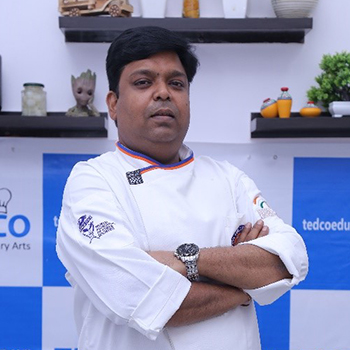
Centre Head & Head of Department
 Whatsapp
Click one of our representatives below to chat on WhatsApp or send us an email to
info@tedcoeducation.com

Counselor
Bakery and Pastry Courses
Counselor
Culinary Arts Courses
Click one of our representatives below to chat on WhatsApp or send us an email to
info@tedcoeducation.com
Counselor
Bakery and Pastry Courses
Counselor
Culinary Arts Courses

