

Is a bakery diploma worth it? It is genuinely the most common question students and parents ask before enrolling in any professional baking programme, and it deserves a genuinely honest answer rather than a sales pitch. If you are researching the Best Bakery Course in India and trying to decide whether a full diploma is the right level of investment for your specific situation, this guide is written for you. It covers the fees, the duration, the career outcomes, the honest comparison with shorter alternatives, and the specific conditions under which a bakery diploma is clearly worth it and the conditions under which it may not be the right first step.
There is no single answer that applies to every student. The worth-it question depends on what you want to do after graduation, what your budget and timeline allow, and what you are comparing the diploma against. This guide helps you answer it for your specific situation, not in the abstract.
This guide is for students who are seriously considering a bakery diploma course and want a clear, unbiased framework for making the decision. It is also for parents who want to understand the investment before committing. And it is for students who are weighing the diploma against a shorter certificate or a self-taught approach and want an honest comparison of what each option actually delivers in terms of career outcomes.
Already know a bakery diploma is right for you and want to see TGCA's programme details? Skip to Section VIII for course information, fees, and how to apply.
A diploma in bakery and pastry arts is a comprehensive, 1-year professional programme that covers the full range of professional baking, from foundational bread making and cake sponges in the early weeks through to advanced pastry techniques, chocolate work, sugar craft, and plated desserts in the later modules. It is not a collection of recipes. It is a structured professional education that builds understanding alongside skill, so that graduates can adapt, troubleshoot, and innovate in a professional kitchen, not just reproduce specific recipes they have practiced.
The curriculum of a well-structured bakery diploma at an accredited institute covers artisan and commercial breads, croissants and laminated pastry, sponge cakes and layer cakes, mousse and entremet, tarts and shortcrust pastry, choux pastry, crème pâtissière and custard work, chocolate tempering and decoration, sugar work and cake decoration, and food costing, kitchen management, and professional kitchen discipline. It culminates in an internationally recognised certification, City and Guilds Level 2 at accredited institutes, which is the most credible vocational baking qualification available in India.
The bakery diploma vs certificate question comes down to three things: depth of skill, level of certification, and career access. A short-term certificate covers a focused range of baking skills over 3 to 6 months. It produces a genuine career entry point and a City and Guilds Level 1 qualification at accredited institutes. What it cannot do in that timeframe is build the comprehensive professional foundation, the advanced technique mastery, and the kitchen management understanding that a full diploma develops over a year. A hobby class teaches techniques. A certificate builds a foundation. A diploma builds a complete professional.
Understanding bakery diploma fees and duration honestly is the starting point for evaluating whether the investment makes sense for your situation. Here is a realistic picture of what a bakery diploma costs in India in 2026 at different types of institutes:
Non-accredited institutes: Rs 80,000 to Rs 2,00,000 for a programme that may be described as a diploma but carries a self-issued or unrecognised certificate. Lower cost but significantly lower employer value and no international recognition.
Accredited institutes with City and Guilds certification: Rs 2.95 lakh for a genuine, internationally recognised Diploma in Bakery and Pastry Arts. At TGCA, this is an all-inclusive fee covering chef uniform, kitchen kit, all ingredients used in practical training, and City and Guilds Level 2 certification fees. EMI and instalment payment options are available.
The duration for a professional bakery diploma at accredited institutes is typically 1 year of full-time study. Some institutes offer accelerated 9-month formats. Anything shorter than this for a true diploma-level qualification should be examined closely, because the depth of curriculum required for diploma-level skill development cannot be genuinely achieved in significantly less than a year of consistent, intensive kitchen training.
The right way to evaluate a Rs 2.95 lakh investment in a bakery diploma is not to compare it to zero. It is to compare it to the career outcomes it makes possible. A City and Guilds Level 2 diploma graduate entering a 5-star hotel pastry kitchen at Rs 20,000 to Rs 28,000 per month will reach Rs 60,000 to Rs 80,000 at Sous Chef level within 5 to 7 years. A professional baker who uses their diploma to launch a custom cake business, a cloud kitchen, or a corporate gifting bakery has an income ceiling determined only by the size of the business they build. Measured against these outcomes, a well-chosen bakery diploma from an accredited institute is one of the strongest return-on-investment decisions available to any student who is genuinely serious about baking as a career.
The bakery diploma vs short course question is one of the most practically important decisions a baking student makes. Just as a Diploma in Culinary Arts builds more comprehensively than a short certificate in cooking, a bakery diploma is a fundamentally different level of education from a short-term baking certificate. Here is the honest comparison:
Duration: diploma takes 1 year. Short course takes 1 to 6 months. If time is your primary constraint right now, a short course is proportionate. If you can commit a year, the diploma is the stronger investment.
Certification level: The Diploma in Bakery and Pastry Arts leads to the City & Guilds IVQ Level 2 Diploma, a recognised qualification that helps graduates build credibility with hospitality employers, including 5-star hotels, international employers, and premium patisserie businesses.
Skill depth: a diploma builds comprehensive professional skill across the full range of baking and pastry. A short course builds focused skill in a specific area. For students who know exactly what they want to specialise in, a short course can be a perfectly valid starting point. For students who want the broadest possible professional foundation, the diploma is non-negotiable.
Career access: diploma graduates consistently access stronger first roles, faster promotions, and higher-tier employers than short course graduates with the same years of experience. This advantage compounds significantly over 5 to 10 years.
Entrepreneurship: for students planning to launch a bakery business, the diploma's coverage of food costing, kitchen management, and advanced product range gives them a significantly stronger business foundation than a short course, which covers technique but rarely covers the business dimensions of professional baking.
The bakery diploma worth it answer is not always yes, and it is important to say that clearly. A short course makes more sense than a diploma in three specific situations. First, if you are still uncertain whether professional baking is genuinely the right career direction and want to test the water before committing a full year and Rs 3 lakh. Second, if your budget or timeline makes a full diploma impractical right now, with a genuine plan to return for the diploma once you are earning and have more options. Third, if you have a highly specific, narrow skill goal that a focused short course addresses directly, and the broader diploma curriculum is not relevant to what you want to do.
A short course is the right starting point for students who need to test, defer, or specialise. A diploma is the right choice for students who are certain, ready, and ambitious. Know which one you are before you enrol.
This is where the bakery diploma career options picture becomes genuinely compelling. A City and Guilds Level 2 diploma from an accredited institute in India in 2026 opens a wider range of career paths than most students realise before they enrol:
The question of whether a bakery diploma is worth it in India becomes clearest when you look at the 5 to 10-year salary picture. A short course graduate entering the industry at Rs 15,000 per month typically reaches Rs 25,000 to Rs 35,000 at the 5-year mark, limited by their certification level and technical depth in competitive markets. A diploma graduate entering at Rs 20,000 per month with City and Guilds Level 2 certification typically reaches Rs 55,000 to Rs 80,000 at the same 5-year mark, with access to senior roles that the short course graduate cannot access at the same experience level. Over 10 years, the cumulative earning difference between a diploma and a short course, compounded through faster promotions and higher-tier employer access, significantly exceeds the initial fee difference. That is the return on investment argument for the diploma, and it is a compelling one for students who are genuinely serious about baking as a long-term career.
A bakery diploma course delivers its full value when four conditions are met. First, you are genuinely certain that baking is your career direction, not a tentative exploration. Second, you are choosing an accredited institute whose diploma leads to City and Guilds certification, not a self-issued local certificate. Third, you engage fully with the training, attend consistently, practice seriously, and treat every kitchen session as a professional development opportunity. Fourth, you use the placement support and internship opportunities the diploma provides to build real industry connections and experience alongside your qualification.
When all four of these conditions are met, a bakery diploma from a credible accredited institute is almost certainly worth the investment in terms of the career it builds and the income trajectory it enables.
Conversely, a diploma in bakery and pastry arts is not the right first step when you are still genuinely uncertain about whether baking is the right career direction. Spending Rs 3 lakh to Rs 4.5 lakh on a programme you are not certain about is a significant financial risk. In this situation, a hobby class, a short-term certificate, or a weekend programme is the proportionate and financially sensible first step. Test the passion, test the discipline, and test your commitment to the professional kitchen environment. If all three survive contact with real training, the diploma is your next step and you will be far more confident in it.
Not all bakery diplomas are equal, and this is one of the most important things to understand before paying any fees. A bakery diploma from an institute with City and Guilds (UK) accreditation is fundamentally different in employer value, international portability, and career access from a bakery diploma from an unaccredited institute with a self-issued certificate. The credential that appears on your CV after completing a diploma is what hotel HR teams, international employers, and premium clients evaluate. Getting that credential right is as important as the decision to pursue a diploma at all.
The five factors that determine whether a specific bakery diploma is worth the investment are City and Guilds accreditation, a commercial-grade professional kitchen environment, faculty with real hotel and patisserie experience, small batch sizes ensuring adequate hands-on practice time, and an active placement cell with verifiable graduate employment outcomes. An institute that delivers on all five consistently produces diploma graduates who access the career outcomes that justify the investment.
Before enrolling in any bakery diploma programme, get clear answers on: Is this programme City and Guilds (UK) accredited at Level 2? What is the maximum batch size per kitchen session? Can I visit the kitchen before I enrol? Where are recent graduates working? Is the fee all-inclusive of ingredients, kit, uniform, and certification? Is placement support included, and what does it actually involve? These questions separate the programmes that are worth the investment from those that are not, regardless of their marketing.
Tedco Education's TGCA Diploma in Bakery and Pastry Arts delivers on every factor that determines whether a bakery diploma is worth its investment. City and Guilds (UK) Level 2 accreditation gives graduates an internationally recognised, employer-trusted qualification. The professional pastry kitchen at Connaught Place, New Delhi, uses commercial-grade equipment from week one of training, building the muscle memory and professional standards that hotel kitchens expect. Small batch sizes ensure every student gets individual faculty attention and meaningful hands-on time in every kitchen session. And the active placement cell maintains direct relationships with hotel HR teams, patisserie brands, and food companies that translate training quality into actual employment outcomes.
For students comparing bakery and pastry courses, the right choice depends on their career goals, learning requirements, and preferred level of training. The Diploma in Bakery and Pastry Arts (12 months) at TGCA provides comprehensive professional training and leads to the City & Guilds IVQ Level 2 Diploma. The programme is designed for students seeking advanced skills, industry-focused learning, and opportunities to build careers in professional bakeries, hotels, and premium patisserie businesses.
Students looking for shorter training options can choose certificate-level programmes focused on building foundational baking and pastry skills. The ideal course depends on individual career aspirations and the level of expertise they want to achieve.
The honest answer to whether a bakery diploma is worth it in India in 2026 is: yes, if you are serious about baking as a long-term career, if you choose an accredited institute with City and Guilds certification, and if you engage fully with the training and the placement support it provides. The investment in a quality bakery diploma from an accredited institute is one of the most effective ways to build a professional baking career in India right now, with career paths that span hotel pastry kitchens, international placements, and bakery entrepreneurship at income levels that make the initial investment look very reasonable within 3 to 5 years of graduation.
If you are uncertain about your direction, start with a short course and test your commitment. If you are certain, choose the diploma, choose an accredited institute, and invest fully. The bakery diploma that is worth it is the one from the institute that delivers City and Guilds accreditation, professional kitchen training, and real placement support. Do not settle for less.
The best way to answer the worth it question for your specific situation is a real conversation with someone who knows the programme and the industry. Tedco Education's counselling team at TGCA does exactly this, without pressure and without a sales pitch. Visit the campus at M-72, Connaught Place, New Delhi, see the kitchen, and get an honest conversation about whether the bakery diploma is the right next step for you right now. 2026 batches are open. Book your free counselling session today.
TGCA's City and Guilds-accredited Diploma and Certificate in Bakery and Pastry Arts are open for 2026 batches.
Book a free counselling session and get a clear, honest answer to the worth it question for your specific situation.
Yes, for students who are serious about a professional baking career and choose an accredited institute with City and Guilds certification. The diploma's career access, salary trajectory, and international opportunities consistently justify the investment within 3 to 5 years of graduation.
At City and Guilds-accredited institutes like TGCA, a Diploma in Bakery and Pastry Arts costs Rs 2.95 lakh, all-inclusive of chef kit, uniform, ingredients, and certification fees. Non-accredited diplomas cost less but carry significantly lower career value.
A full professional Diploma in Bakery and Pastry Arts takes 1 year at most accredited institutes. Some offer accelerated formats. The 1-year duration is necessary to build the comprehensive skill depth that diploma-level professional training requires and that employers expect from diploma graduates.
A bakery diploma is a 1-year programme leading to City and Guilds Level 2 certification, covering the full range of professional baking and pastry skills. A certificate is a 12-month programme leading to City and Guilds Level 1, providing a genuine career entry point but with less depth and career access.
Bakery diploma graduates access hotel pastry sections, luxury patisseries, international placements, custom cake studios, cloud kitchen bakery brands, corporate gifting businesses, food styling roles, and culinary instruction. A City and Guilds Level 2 diploma opens the full range of these options domestically and internationally.
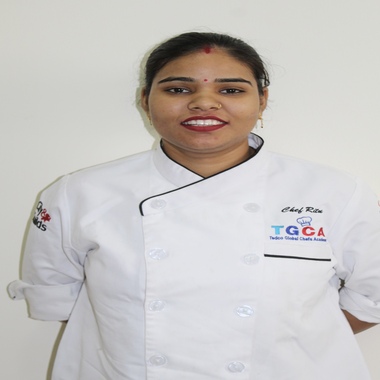
Bakery and Pastry Instructor
 Whatsapp
Click one of our representatives below to chat on WhatsApp or send us an email to
info@tedcoeducation.com

Counselor
Bakery and Pastry Courses
Counselor
Culinary Arts Courses
Click one of our representatives below to chat on WhatsApp or send us an email to
info@tedcoeducation.com
Counselor
Bakery and Pastry Courses
Counselor
Culinary Arts Courses

