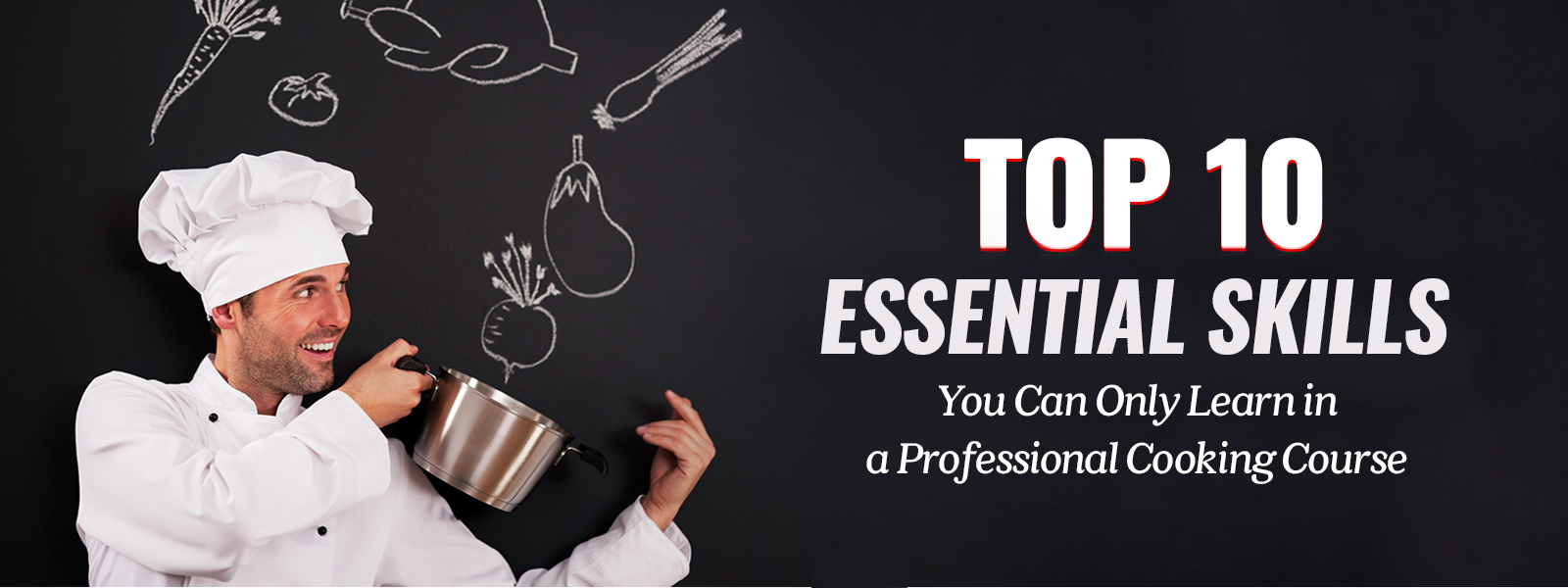
There is a moment that every young cook experiences. You are at home, you’ve made a perfect risotto for your family, and you think, "I could do this for a living." Then, you step into a real commercial kitchen. The noise hits you first. Then the heat. Then the realisation that cooking one dish perfectly is easy, but cooking fifty of them perfectly, while someone is shouting at you, and the printer is spitting out tickets like a machine gun? That is a different universe.
This is the gap. This is the chasm between "being a good cook" and "being a chef." Many people believe they can bridge this gap with YouTube tutorials and cookbooks. But there are certain things intangible, gritty, critical skills that no video can teach you. These are the skills that separate the amateurs from the pros. These are the skills you can only forge in the fires of a professional cooking course.
If you are serious about this life, you need to know what you are signing up for. Here are the 10 essential skills that define the professional chef.
"Mise en Place" isn't just a fancy French term for "everything in its place." It’s a state of mind. In a professional cooking course, you learn that your station is your temple.
At home, if you forget the garlic, you walk to the pantry. In a professional kitchen, if you leave your station during service, you sink the ship. You learn to organise your mind and your physical space so efficiently that you can cook blindfolded. You learn that clutter on the bench equals clutter in the brain.
Anyone can taste salt. But can you taste the difference between "salty" and "savoury"? Can you identify that a sauce is too flat and needs acid, not more spice?
Culinary classes train your tongue. Through endless tasting sessions (and many failures), you learn to balance the five key elements: Salt, Sweet, Sour, Bitter, and Umami. You stop tasting food as a consumer and start analysing it like an engineer. This sensory calibration is impossible to achieve in isolation.
You might be able to chop an onion. But can you burn five kilos of onions in 10 minutes, with every single cube being exactly 2mm x 2mm?
Uniformity isn't just about aesthetics; it’s about even cooking. If your cuts are uneven, your soup will have mushy bits and raw bits. A professional chef course drills these movements into your muscle memory until the knife becomes an extension of your hand. You stop looking at the blade and start looking at the prep list.
In a professional kitchen, time is the enemy. You have a steak that takes 8 minutes, a fish that takes 5, and pasta that takes 3. They all need to arrive at the pass at the same second.
This mental juggling act is one of the hardest skills learned in professional cooking course environments. You develop an internal clock. You instinctively know when 30 seconds have passed without looking at a watch. You learn to sequence your tasks so you are always moving, never waiting.
This is the ultimate truth: If you can't count, you can't be a chef. Restaurants run on razor-thin margins. A home cook throws away potato peels; a chef turns them into a garnish or stock.
In our training, we teach you the economics of food. You learn to calculate the yield of a fish, price a menu to ensure profit, and utilise every scrap of an ingredient. This financial discipline is often the difference between a restaurant that survives and one that closes in six months.
Cooking at home is a solo sport. Professional cooking is a team sport. You are part of a machine. You learn to communicate with "Yes Chef!" and "Behind!" You learn to trust that the person at the Garnish station will be ready when your protein is ready.
Cooking courses in India focus heavily on this soft skill. You learn that your ego doesn't matter; the plate matters. You learn to lead, to follow, and to support your brigade when they are in the weeds.
It sounds boring until you realise that you have people's lives in your hands. Cross-contamination can kill. In a professional cooking course, hygiene isn't a checklist; it’s a lifestyle. You learn about temperature danger zones, proper storage, and sanitation protocols that go far beyond "washing your hands." You become paranoid about cleanliness, and that is a good thing.
The first time you stand on your feet for 10 hours straight, your back will scream. You will get burned. You will cut yourself. And you will have to keep going. There is a unique mental and physical toughness that comes from the benefits of chef training. You learn to push through fatigue. You learn to stay calm when the kitchen is chaotic. This resilience, built day by day in the training kitchen, makes you unbreakable.
We eat with our eyes first. But there is a fine line between "artistic" and "messy." You learn the rules of composition: height, colour contrast, and negative space. You learn how to sauce a plate without it looking like a crime scene. These hands-on culinary skills turn a delicious meal into an experience.
How do you write a menu that flows? How do you balance heavy and light dishes? How do you design a menu that utilises your kitchen equipment efficiently so the fryer isn't overloaded while the oven sits empty? This is a high-level strategy. It requires understanding seasonality, customer psychology, and kitchen logistics, something you simply cannot grasp without expert mentorship.
You can read about these skills, but you can’t "read" experience. At Tedco Education, we don't just teach recipes; we simulate the industry. Our kitchen is a professional environment. When you join our professional course, you aren't just a student; you are a chef-in-training. Apply today and step into your professional culinary career.
We focus on the reality of the job. Our mentors have run kitchens. They know what it takes to survive and thrive. If you are looking for the best cooking courses in India, you need a place that prioritises the craft over the classroom.
Not at all. In fact, sometimes it's better if you don't. We love "blank slates" because you haven't developed any bad habits yet. Whether you are a complete novice or a home enthusiast, our professional chef course starts from the fundamentals and builds you up.
You can, but it’s the "hard way." In an apprenticeship, you are often stuck peeling potatoes for months. You learn what to do, but rarely why. A structured professional cooking course accelerates this process, giving you a holistic education in one year that might take five years to learn on the job.
The world is your oyster. These skills apply to hotels, fine dining restaurants, cruise ships, food styling, R&D kitchens, and even food entrepreneurship. The benefits of chef training are that the discipline and management skills you learn are transferable to almost any sector of the hospitality industry.
It is demanding. Cooking is a physical trade. You will be standing, lifting, and moving quickly. However, this builds the "chef stamina" you need for the real world. We ensure you learn ergonomic techniques to work safely and protect your body.
Yes, provided you choose the right institute. At Tedco, we offer certifications that align with international standards (like City & Guilds). This means the hands-on culinary skills you learn here are respected in kitchens from London to Dubai to Sydney.
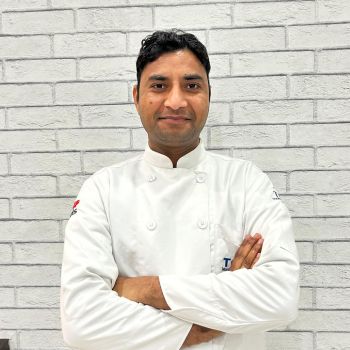
Bakery & Pastry Specialist
 Whatsapp
Click one of our representatives below to chat on WhatsApp or send us an email to
info@tedcoeducation.com

Counselor
Bakery and Pastry Courses
Counselor
Culinary Arts Courses
Click one of our representatives below to chat on WhatsApp or send us an email to
info@tedcoeducation.com
Counselor
Bakery and Pastry Courses
Counselor
Culinary Arts Courses

