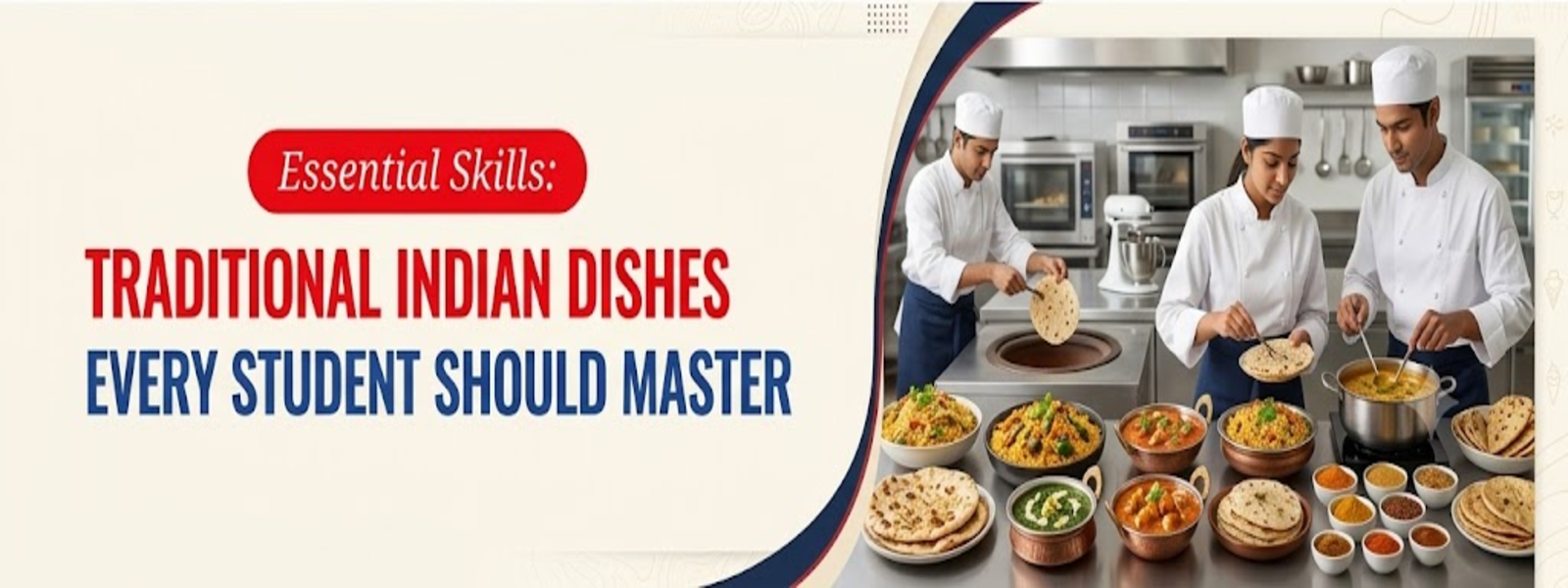
Indian cuisine is not one single culinary tradition. It is a collection of regional food cultures shaped by geography, climate, history, agriculture, communities and generations of cooking knowledge.
For a culinary student, learning traditional Indian dishes is therefore about much more than preparing familiar recipes. It is about understanding why a particular spice is added at a particular stage, why a curry is cooked slowly, how dough behaves when making bread, or how the balance of acidity, sweetness, salt and heat changes a dish.
Students pursuing a professional culinary arts course can use traditional Indian cuisine as a foundation for developing stronger cooking techniques and a deeper understanding of ingredients.
At TGCA, practical culinary education focuses on building professional kitchen skills alongside knowledge of different cuisines and cooking methods. The Diploma in Culinary Arts includes practical training in Indian, Western and Oriental cuisines, along with food safety, professional kitchen practices and food presentation.
The goal is not simply to memorise dishes. It is to understand the techniques behind them.
Imagine a culinary student preparing dal for the first time.
The recipe might appear straightforward. Lentils, water, spices and a tempering of aromatic ingredients.
But professional cooking begins when the student asks better questions.
How long should the lentils cook? When should salt be added? What consistency should the dal have? How does the tempering change the aroma? Which spices should be toasted, and which should not?
That way of thinking turns a recipe into a lesson.
Traditional Indian dishes teach students about:
One of the first lessons culinary students should learn is that there is no single definition of "Indian food."
The food served in Punjab can be dramatically different from food prepared in Kerala. A Bengali kitchen may use ingredients and techniques that are unfamiliar to someone from Rajasthan, while Goan cuisine reflects a very different relationship with seafood and coastal ingredients.
Broadly, students can explore culinary traditions from:
North Indian cuisine provides students with several important culinary foundations.
Butter chicken demonstrates how a rich gravy can be built around tomato, dairy, spices and properly prepared chicken.
Students can learn about marination, cooking meat appropriately and developing a balanced gravy rather than simply adding spices randomly.
Dal makhani is an excellent lesson in patience.
Its characteristic richness and texture develop through careful cooking, seasoning and finishing. Students can learn why slow cooking can transform relatively simple ingredients into a deeply flavoured preparation.
Chole introduces students to the cooking of chickpeas and the development of robust spice-based gravies.
It also demonstrates how texture matters. Chickpeas should be cooked sufficiently while still retaining an appropriate structure.
Indian breads provide a completely different technical challenge.
Students need to understand dough consistency, resting, shaping and cooking.
The difference between a soft, properly cooked naan and a dry or uneven one can come down to small details in dough preparation and heat management.
South Indian cuisine introduces culinary students to ingredients and techniques that are particularly useful for understanding fermentation, tempering and rice-based preparations.
Idli provides an introduction to fermentation and steamed food preparation.
Students can learn how batter consistency and fermentation influence the final texture.
Dosa takes those principles further.
A good dosa requires appropriate batter consistency, controlled spreading and correct cooking temperature.
The finished result should have the right balance between crispness and structure.
Sambar demonstrates how lentils, vegetables, spices and tamarind can work together.
It also teaches students about flavour balance, particularly the relationship between sour, spicy and savoury elements.
Rasam offers another lesson in balance.
Its lighter consistency does not mean it lacks complexity. Spices, acidity and aromatic ingredients need to work together without overwhelming one another.
Eastern Indian culinary traditions offer students another perspective on seasoning and ingredient combinations.
Bengali cuisine, for example, has a strong tradition of rice, fish, vegetables, mustard and distinctive spice combinations.
Students can explore dishes such as traditional fish preparations, vegetable dishes and rice-based meals while learning how mustard, spices and fresh ingredients can create distinctive flavours.
Odisha also provides valuable examples of regional cooking traditions, particularly through rice, vegetables, lentils and temple-influenced food traditions.
The broader lesson is important: regional cooking is often shaped by what grows locally and what communities have historically had access to.
Western India offers an especially broad culinary landscape.
Gujarati cooking demonstrates the possibilities of vegetarian cuisine through combinations of grains, lentils, vegetables, dairy and carefully balanced seasoning.
Maharashtrian food provides students with opportunities to explore spices, grains, vegetables and regional preparations with different levels of heat and intensity.
Goan cuisine introduces strong coastal influences, including seafood and ingredients associated with the region's history and geography.
Rajasthani cooking demonstrates how traditional food developed in an environment where ingredient availability and climate influenced culinary practices.
Dishes such as dal baati churma provide lessons in grains, lentils, baking or roasting techniques and traditional food combinations.
Northeast Indian cuisines deserve attention because they demonstrate just how broad India's culinary identity really is.
Different northeastern states have their own food traditions, ingredients and preparation methods.
Students can explore the use of local vegetables, herbs, rice, fermented ingredients and region-specific cooking techniques.
Rather than treating Northeast Indian food as a single category, culinary students should approach each regional tradition with curiosity and respect.
Bread-making is an important practical skill for culinary students.
Indian breads can introduce different approaches to dough preparation and cooking.
Students should become familiar with preparations such as:
Rice is central to many Indian culinary traditions.
Students can explore preparations such as biryani and pulao while learning about rice selection, washing, soaking, cooking and seasoning.
Biryani is particularly useful for understanding layering and moisture management.
A good biryani is not simply rice mixed with meat or vegetables. The cooking process needs to preserve the structure of the rice while allowing the flavours of the other components to develop together.
These details help students develop precision.
Indian gravies are another important area of study.
Students may encounter:
Dal may look simple, but it teaches several important professional skills.
Students need to understand soaking, washing, cooking, consistency and seasoning.
The final tempering can also change the character of the preparation dramatically.
This teaches an important culinary principle: the finishing stage can be just as important as the initial cooking process.
Indian cuisine provides an enormous range of vegetarian preparations.
Vegetables, paneer, pulses, grains and dairy can be transformed using different techniques and spice combinations.
For culinary students, this is an opportunity to understand how flavour can be developed through:
Indian snacks can teach students about contrasting textures and flavours.
Preparations such as samosa, kachori, pakora and chaat combine elements such as crispness, softness, acidity, sweetness, spice and freshness.
For example, a plate of chaat can contain several contrasting components at once.
This makes traditional Indian snacks useful for understanding balance and presentation.
Indian desserts introduce students to techniques involving dairy, sugar, frying, reduction and starches.
Examples include:
Spices are central to Indian cooking, but professional cooking is not about adding as many spices as possible.
Students need to understand the purpose of each ingredient.
Commonly used spices include:
Traditional Indian cuisine provides students with a wide technical vocabulary.
Tempering involves heating spices and aromatic ingredients in fat to release their flavours and aromas.
Slow cooking allows ingredients to develop deeper flavours and softer textures.
Tandoor cooking introduces students to high-temperature cooking and the preparation of breads and other foods.
Preparations such as idli and dosa demonstrate how fermentation can change flavour, texture and structure.
Steaming allows food to cook gently while retaining a particular texture.
These methods teach students how controlled, longer cooking can transform tougher ingredients and develop flavour.
Learning these methods is more valuable than memorising a list of recipes because the same principles can be applied to new dishes.
Professional chefs often innovate.
But innovation works best when it is built on understanding.
A chef who wants to modernise a traditional dish should first understand its original flavour profile, preparation and cultural context.
Only then can the chef make thoughtful changes.
This might involve changing presentation, adjusting texture or introducing a contemporary technique while maintaining the character of the original dish.
The objective should not be to make a traditional dish look unfamiliar simply for the sake of novelty.
Professional culinary education can provide students with structured exposure to Indian cuisine through demonstrations, practical kitchen sessions and supervised preparation.
At TGCA, the Diploma in Culinary Arts combines classroom learning with hands-on culinary training. The programme includes Indian, Western and Oriental cuisines, along with professional kitchen practices, food safety, food presentation and practical cooking techniques.
The programme is also a City & Guilds-accredited qualification and includes six months of classroom and practical delivery followed by six months of industrial training, according to TGCA's current course information.
This kind of structure allows students to move beyond simply watching demonstrations. They can practise techniques repeatedly and understand how professional kitchens operate.
There is a major difference between watching someone prepare a dish and preparing it yourself.
A demonstration can show you how a chef makes naan.
Practical training makes you responsible for the dough.
You feel whether it is too soft or too dry. You learn how to shape it. You discover how heat affects the final result.
The same principle applies to curries, breads, desserts, rice preparations and every other part of professional cooking.
Practical training develops control, consistency and confidence.
It also teaches students how to work cleanly, organise ingredients and manage their time in a kitchen environment.
Traditional Indian cuisine can provide an excellent foundation for aspiring chefs because it combines a wide variety of ingredients and techniques.
A student who understands Indian cooking can develop skills in:
Traditional Indian dishes are much more than recipes passed from one generation to another. They are lessons in technique, ingredient behaviour, regional identity, flavour balance and culinary discipline.
For students exploring culinary arts courses after 12th, learning dishes such as dal makhani, dosa, biryani, naan, samosa, traditional sweets and regional vegetable preparations can build a stronger understanding of how Indian kitchens work. This exposure can help students develop practical skills while appreciating the diversity of India's culinary traditions.
More importantly, students should learn the principles behind the dishes, not simply memorise their ingredients.
When traditional knowledge is combined with structured practical training, professional kitchen discipline, and exposure to different cuisines, aspiring chefs gain a broader foundation from which they can develop their own culinary identity.
That is why Indian cuisine deserves an important place in professional culinary education. Before a chef can reinterpret tradition, the chef first needs to understand it.
Culinary Instructor
 Whatsapp
Click one of our representatives below to chat on WhatsApp or send us an email to
info@tedcoeducation.com

Counselor
Bakery and Pastry Courses
Counselor
Culinary Arts Courses
Click one of our representatives below to chat on WhatsApp or send us an email to
info@tedcoeducation.com
Counselor
Bakery and Pastry Courses
Counselor
Culinary Arts Courses

